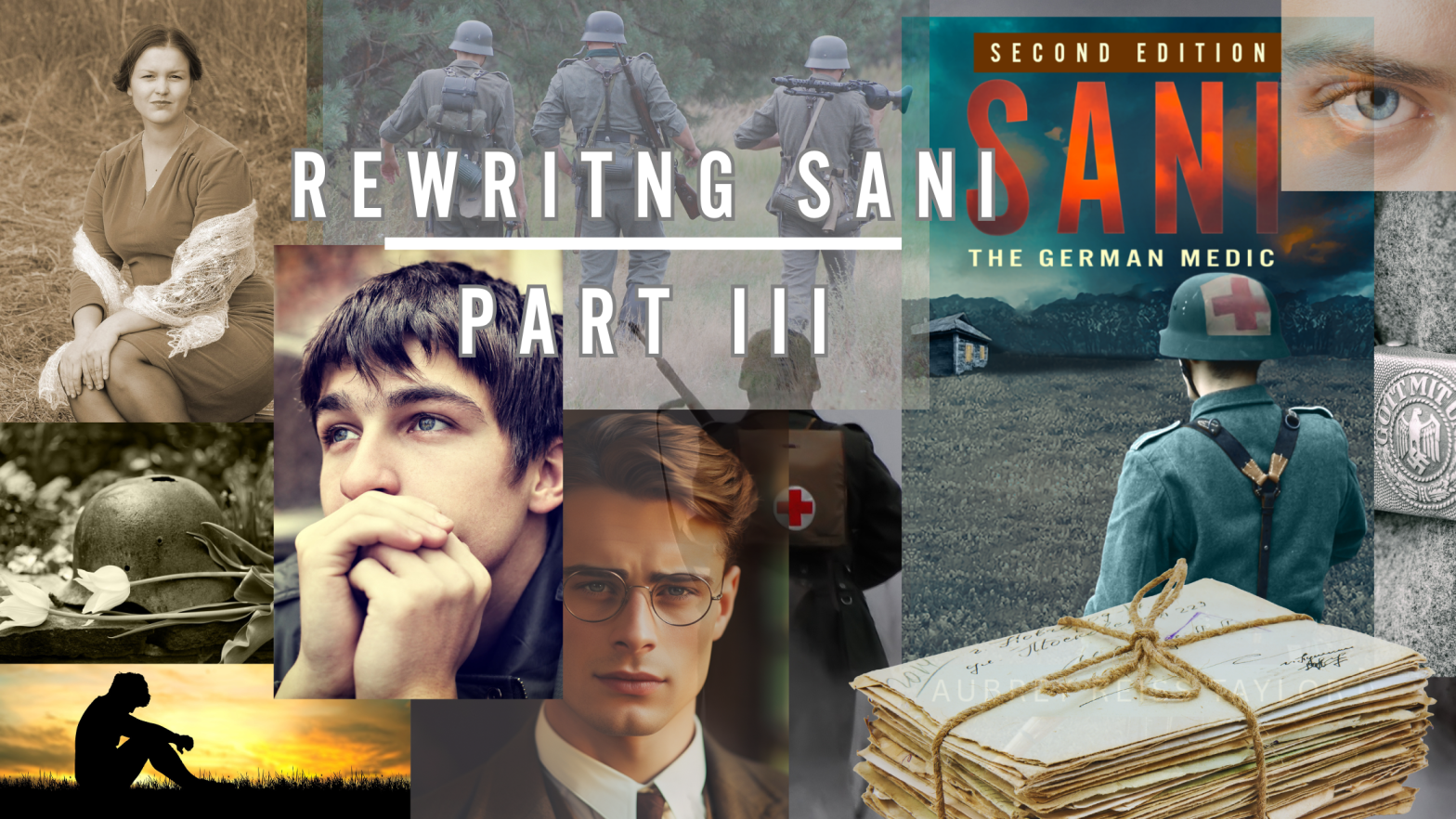
This book brought me to tears many times when I wrote it back in 2021. At its heart, it will always be a faith-based novel, but between 2021 and 2023, I discovered that I felt the need to address realities of life that don’t fit well in the Christian Fiction market.
It’s not that I write smut, or that there’s a ton of swearing in my books. I simply don’t want to pull punches (that phrase has become cliché for me…but it describes my feelings well). I’m not afraid to treat life the way it is for many people—and that includes portraying life choices that make some Christian readers uncomfortable. My primary interest is addressing the nuances of history, not addressing faith issues.
History wasn’t my primary concern when I started out. I was cocooned in a church environment, and I never imagined writing anything that wasn’t primarily concerned with communicating a faith message appropriate for church bookstore shelves.
To my surprise, Sani was well-received by Christians and non-Christians alike, although a few folks noted that they could’ve done without the faith elements. What made them love it so much? Perhaps it was an engaging story. Perhaps they loved having their brains turned inside out by the German perspective. Perhaps they just loved Frederick. He’s relatable. He feels “real.”
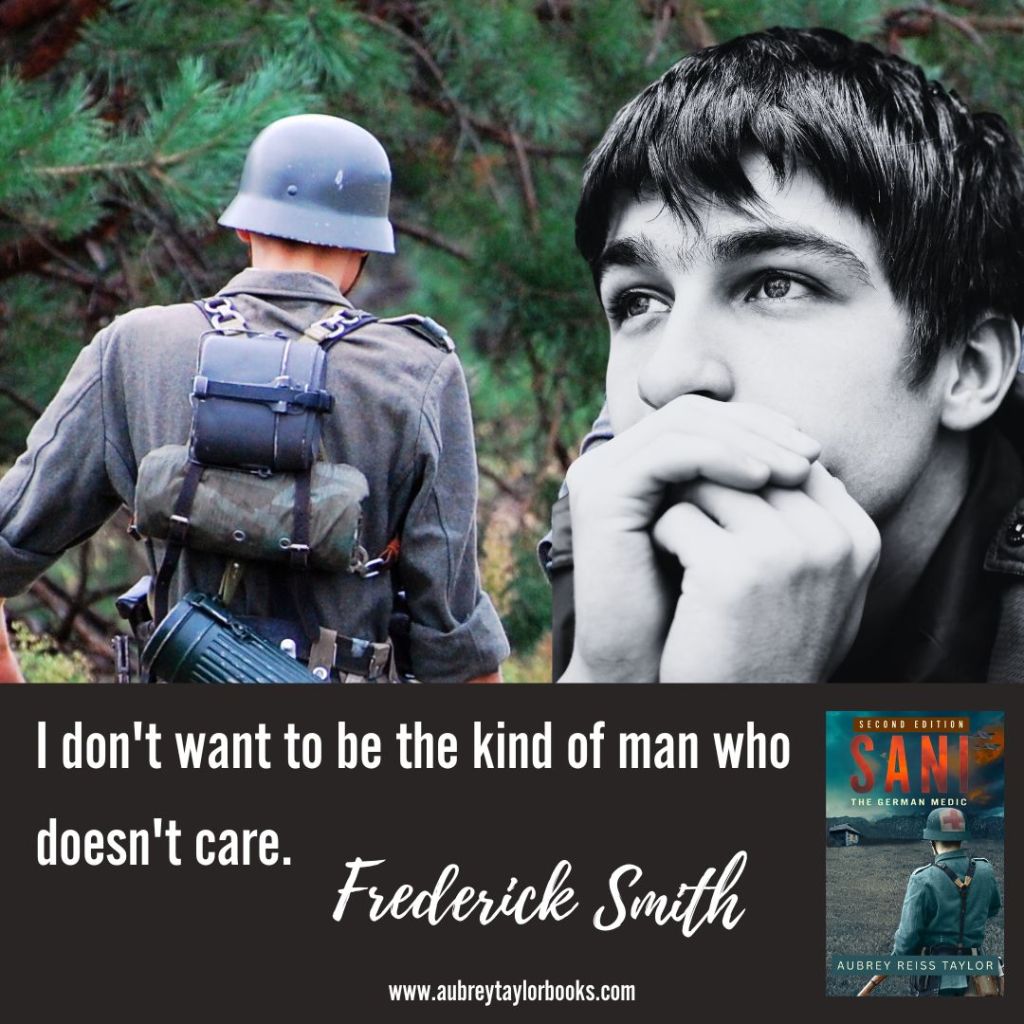
I’ll be honest: besides feeling the need to write about gritty topics that push the boundaries of Christian Fiction, I want my books to appeal to a broader audience. Of course. To achieve that, and have people want to continue the series, I knew I needed to make it enjoyable for a broader audience.
Readers often talk about how we can avoid “pulling the reader out of the story.” I don’t think there’s anything wrong with faith content and it’s certainly not something to be ashamed of, but too much can definitely pull readers out of a story. I am a devoted follower of Christ, but even I have felt, at times, like the faith content in a book is too forced. How much more so if a person is not used to reading it, or can’t understand the idioms that Christians throw around every day?
Speaking of idioms…
Growing up in church, you are surrounded by certain words and phrases that are part of the culture. You can make references to things from the Bible beyond Noah’s Ark or David and Goliath, and the folks around you know what you mean. There are inside jokes and pat answers. That’s normal in any subculture. However, more than once I’ve had people outside the church say, “I’m not sure what you mean by…” Sometimes, the things we say sound trite, and for some, church-speak (some call it Christianese) may even dig up painful memories. (I admit that that can happen with other topics as well, prompting some authors to include content warnings…a topic for a different time.)
Another thing I reexamined were scenes where God was “audibly” speaking (albeit in Frederick’s head). My own experience proves that the idea of hearing God’s voice is easily misunderstood and misconstrued, and I didn’t want to contribute to that for anyone else. Yes, God seems to speak audibly on occasion, and perhaps He speaks to some people more than others, but there was a lot of that in the First Edition. It gave off a vibe I was no longer comfortable with, and I knew it might be strange for others as well.
I cut lengthy scripture passages down, only allowing the key lines to remain. Besides pulling readers out of the story, I also did not like using scripture to support the idea that the Germans were the only guilty party in WWII *gasp* Yes, I know that is the prevailing opinion in the West and that it is considered “revisionist” to assert anything else. However, if you have been around my blog for any length of time, you know I feel there is much more to the story.
This is an area in which faith and historical content combine.
We have long used the good-versus-evil narrative as the go-to for WWII, but do we not want to acknowledge that many Germans truly saw themselves fighting evil in their war against communism. We have accepted the lie that they were all convinced Nazis, or that they were only deceived by Hitler into believing they were fighting communism.
Regardless of what the NS leadership’s agenda was, many of Germany’s fighting men (and the Europeans who fought alongside them) were keenly aware of the very real threat from Russia. Yes, they saw it as a fight of good versus evil. All one needs to do is examine what happened in Russia in the decades before WWII (not just the Holodomor, but the many millions that died in the revolution or were slaughtered by the Cheka, and the inroads communism did make into Europe). That fear resurfaced after WWII; there was very a strong fear of communism in the US during the Cold War.
That said, it is right to own up to the ugly truth: the Germans did do horrific things during WWII. That is why I did not leave out the incriminating passages completely, why I addressed Klaus’s war crimes, and ultimately, why the whole story was conceived in the first place. God does extend grace to the sinner—even to the war criminal.
It is the way I went about portraying God’s grace that changed.
Originally, I cast Frederick as an evangelist. In the new edition, his role is closer to that of a priest or pastor, alongside the battalion chaplain (more on him in a moment). I felt this was warranted. Rather than having no exposure to Christianity or having rejected it altogether, it is conceivable that Freddie’s comrades would’ve sought prayers or a return to the faith that they had known as children, especially those who were injured or lying at death’s door. This is a fair assessment and appears again and again in the lives of Heinrich, Rüdiger, Klaus, and, most notably, Jakob (whose backstory you can read in the other books in the series).
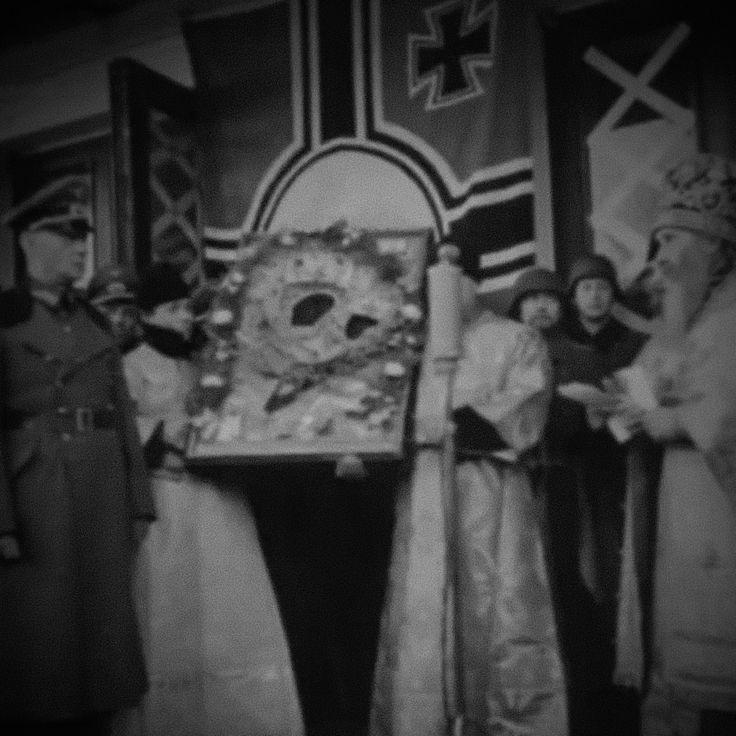
There is the assertion that National Socialism sought to eradicate Christianity from Germany, or at least tried to force the churches into their mold, and many of us are familiar with the conflict between the German Church and Bonhoeffer’s Confessing Church. Yet it would surprise a lot of people to know that in the 1920s and 1930s, many Christian men joined the National Socialist (“Nazi”) party because they saw it as the only viable means of fighting atheistic Communism in the East and liberal, materialistic Capitalism in the West.
(I don’t often cite sources directly because there is a long list of recommended reads on this site and people can do their own research if they are so inclined. Here, I will say that my assertion is based on a pamphlet from 1937 entitled Positive Christianity in the Third Reich…While it seems that many people discount primary sources that came out of the Third Reich as pure propaganda, I disagree–as with any other era, primary sources are essential to understanding the context of the times.)
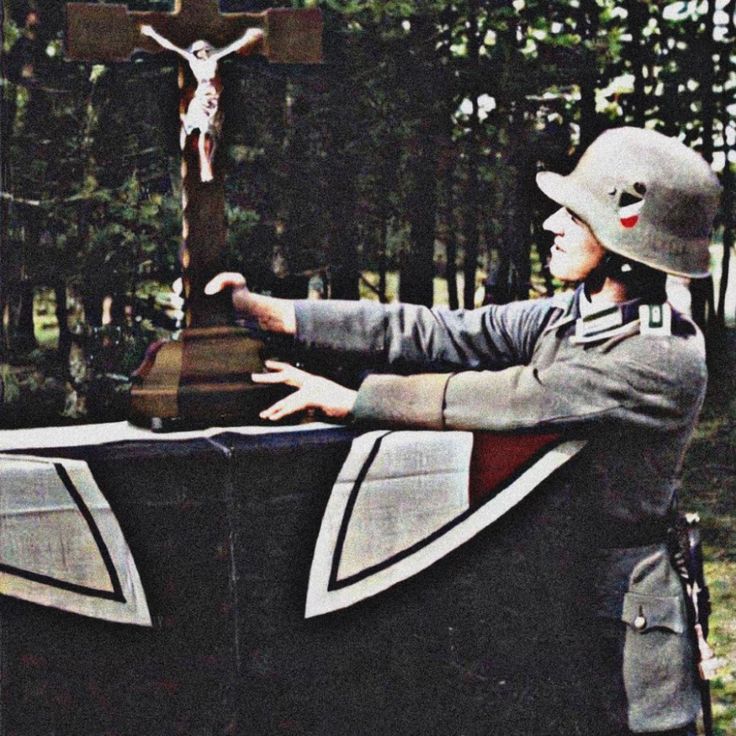
Hollywood, school curricula, and mainstream WWII fiction often gives the impression that Nazi Germany was so pagan that they could not possibly have had military chaplains, field services, Eucharist, or Christian burial for soldiers. Perhaps many German men were only nominally Christian, but they still saw the struggle against communism as a battle for the survival of Christendom.
The style and personal convictions of German military chaplains varied, and I’m sure many towed the Nazi party line, but certainly not all. I became so enamored by the idea that I had to create one of my own Chaplain Schmidt, who ended up becoming my favorite character and forced himself to the forefront of the story, despite Frederick’s reservations. Chaplain Schmidt ends up with many of the best lines and communicates a lot of spiritual and practical wisdom, because that’s his job.
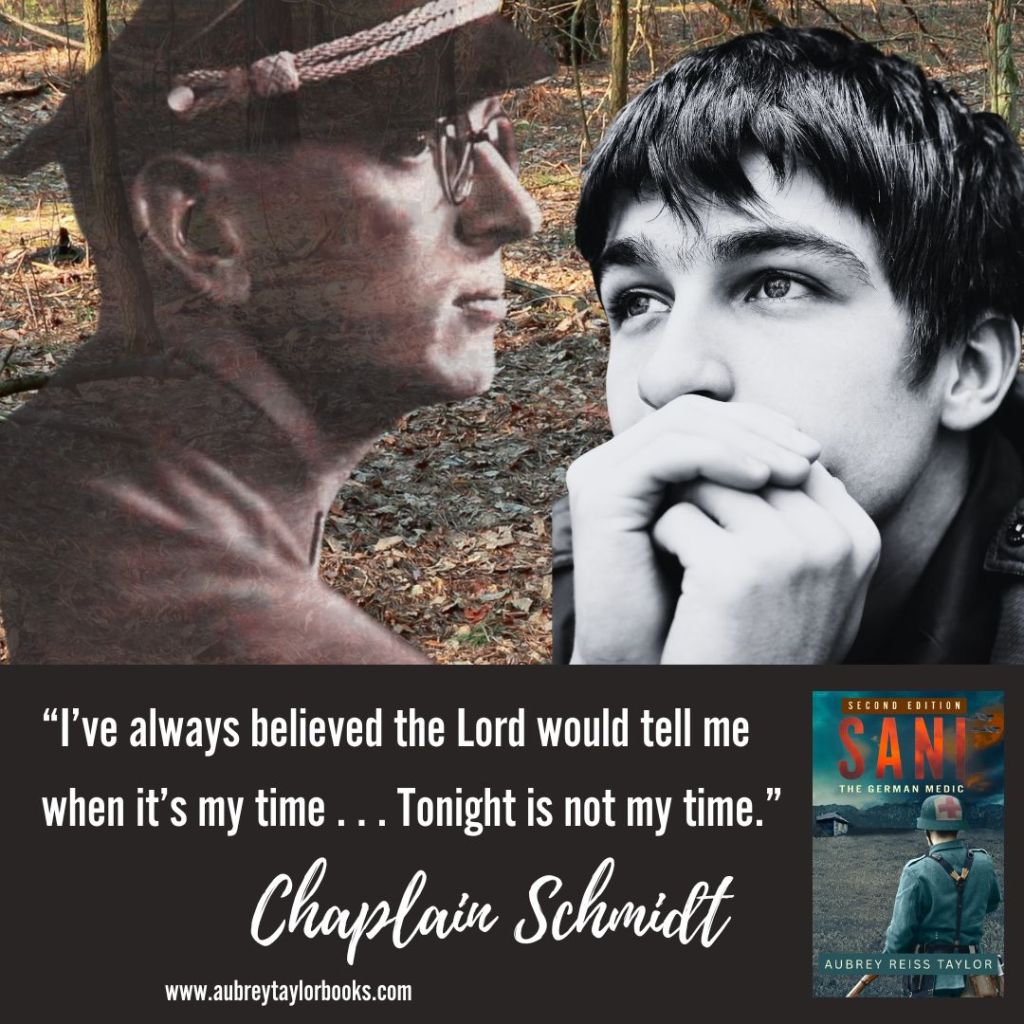
One final thing I could not compromise on: the places where God opened doors for Frederick and did things in a supernatural way. I’m speaking from my own life experience here: stuff happens that blows my mind.
“[Frederick] had made a promise. If God allowed him to escape Germany because some eccentric sergeant was willing to stick his neck out, he had to take the chance.”
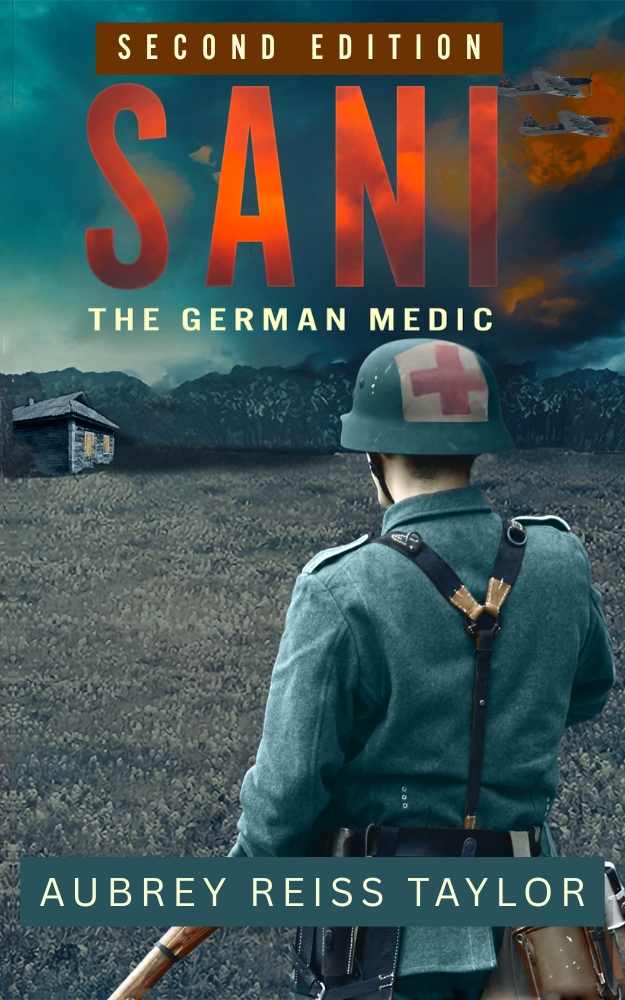
Sani: The German Medic (Second Edition)
I’ll leave it at that, because to say anything more would risk giving spoilers.
I hope I’ve touched on some things that those who loved the original book might be wondering. On the other hand, people who haven’t read it might be asking, “What’s the big deal?” Well…I know what it’s like to be a reader and find an author you love, only to pick up a new release and be deflated. It was tricky for me to rewrite this book and maintain its heart while navigating my shift to the General Market.
I’m an indie. I can write whatever I want, but I’m working on streamlining my body of work. While I’ll never fully meet genre or market expectations, I want readers to have an idea of what they can expect from my books. It’s true, some of my books are more “war fiction” and some are more “historical fiction.” Some appeal more to male readers, others to female readers.
My books will always be honest about life. There will always be hints of faith, but there will also be things that make “readers of faith” uncomfortable. There will be a strange mix of home life and war front, and romances that don’t necessarily end the way we want them to. There might be a few swear words. There will never be graphic sex. And as my son joked the other day, there will probably always be a “menagerie of Nazis.” (Sorry, that cracked me up, but he’s right—I strive to give a more objective view of the situation in Germany than most authors do, because after 80 years, it’s time.)
The Second Edition of Sani: The German Medic is releasing soon! The eBook comes out on April 28th, and is up for preorder now. The paperback will be available May 5th.
If you want to be informed about the latest on the Aubrey Taylor Books Blog, sign up below. Posts happen between 1 and 3 times a month, and focus primarily on writing, German history and travel, as well as films and books. I will also introduce you to other authors in a variety of genres, so drop your email to stay up-to-date!