
Rothenburg ob der Tauber is one of Germany’s iconic places. Its name means the Red Castle Above the Tauber (River). The medieval city sits inside well-preserved city walls and gives one the feeling of stepping back in time.

We came on the day after Christmas, December 26th, which for the Germans is a holiday and known as (unsurprisingly) the Second Day of Christmas, or Zweiter Weihnachtsfeiertag.
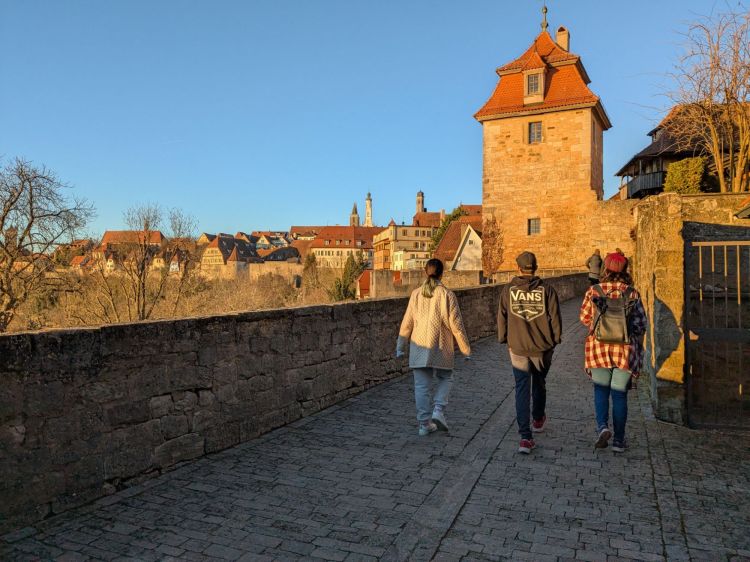
When we arrived, we immediately went up the stairs and walked back and forth on the city walls.
*Don’t forget to click on the pictures in the galleries for a larger view!
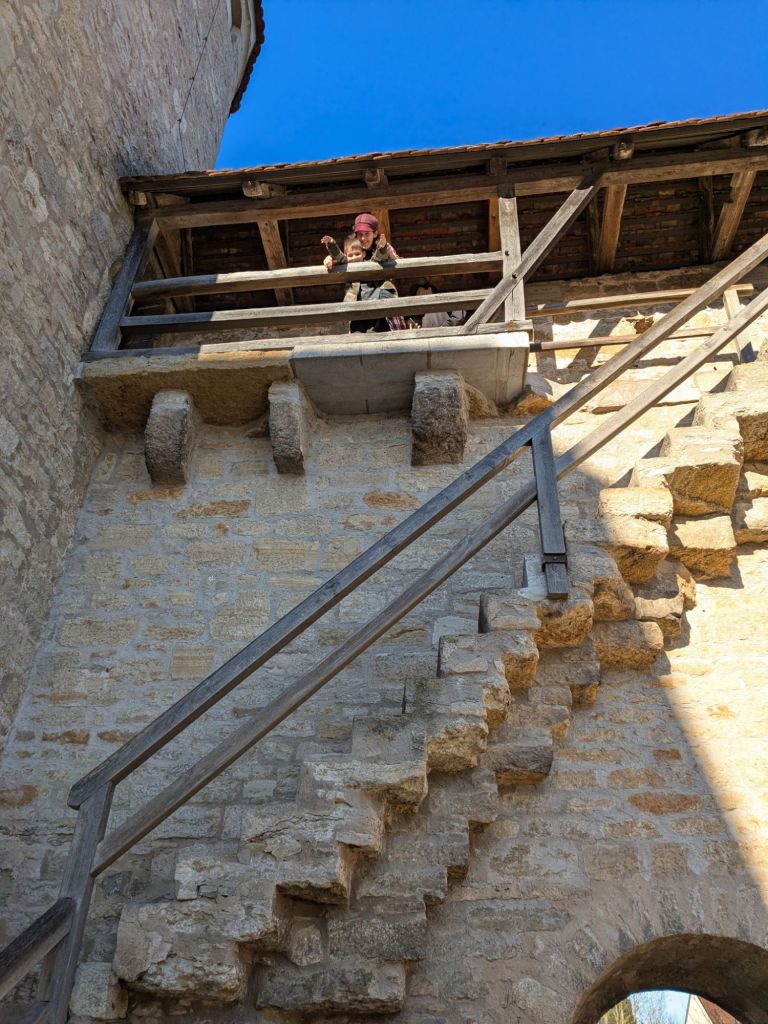


Walking along these ancient stone passages made me wish, for a moment, that I was a writer of historical fiction of an earlier time–or perhaps an author of fantasy. Then I remembered, These walls lived through the world wars too! Actually, at least 40% of Rothenburg ob der Tauber was destroyed in Allied bombing raid on March 31, 1945. Weather caused the planes to be diverted from their original target, and sixteen Allied bombers dropped their deadly cargo on this idyllic German city instead.
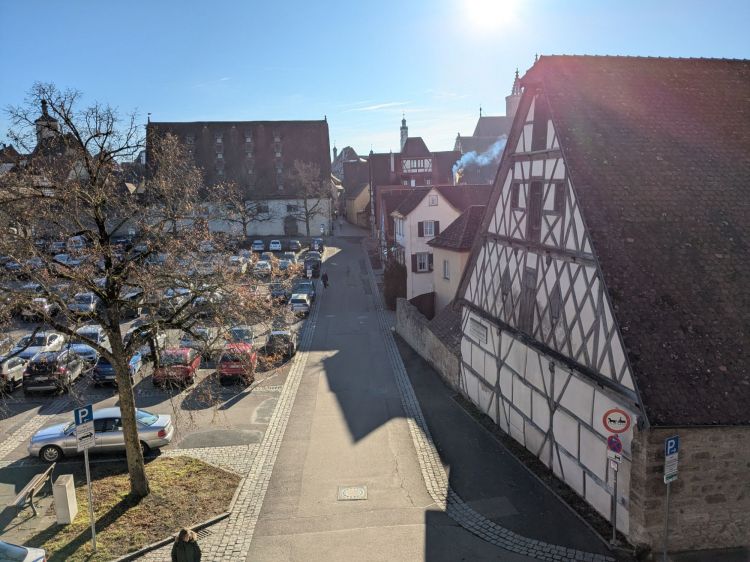
Back to the present day, where there was near total quiet, save for the pitter-patter of little feet running back and forth on the well-worn walkways. After suffering some embarrassment in front of a few other tourists who had unfortunately chosen to stroll along the wall at the same time we did, I tempted my youngest down with the promise of food.
My trusty Google Maps app saved the day by directing us to one of the few restaurants that were open, a little spot serving Franconian fare.
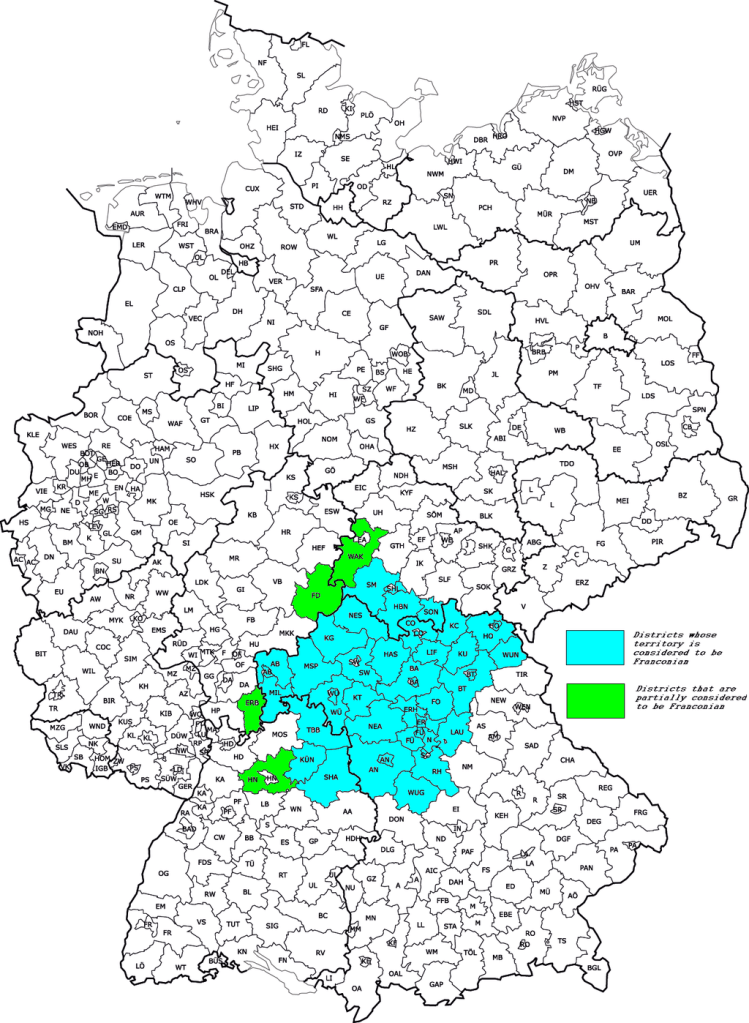
Though I have come across the term Franconia a number of times in my reading, I had never looked it up specifically and therefore had only a loose idea of where or what it was. It is not one of Germany’s modern sixteen states, but rather a region composed of parts of a number of states which share similarities in culture, cuisine and dialect. At one time, like the rest of Germany, it would’ve comprised many small kingdoms. Here is a map I found helpful:
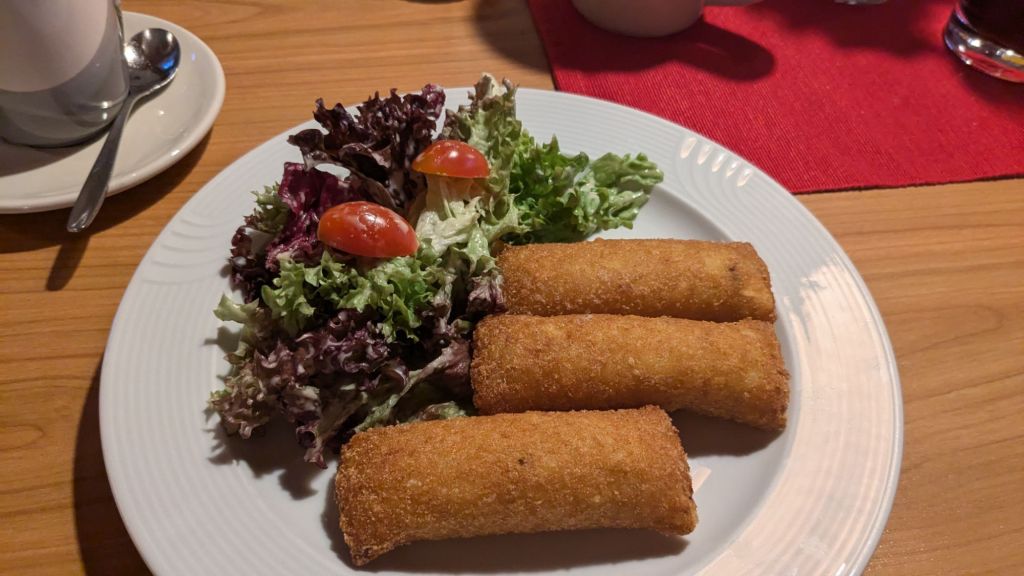
Like I did in my Nuremberg post, I have to give a plug to the restaurant we found open on a national holiday, the Landsknechtstübchen (“land servant’s room”). It was warm and clean, and the food was simple and delicious.


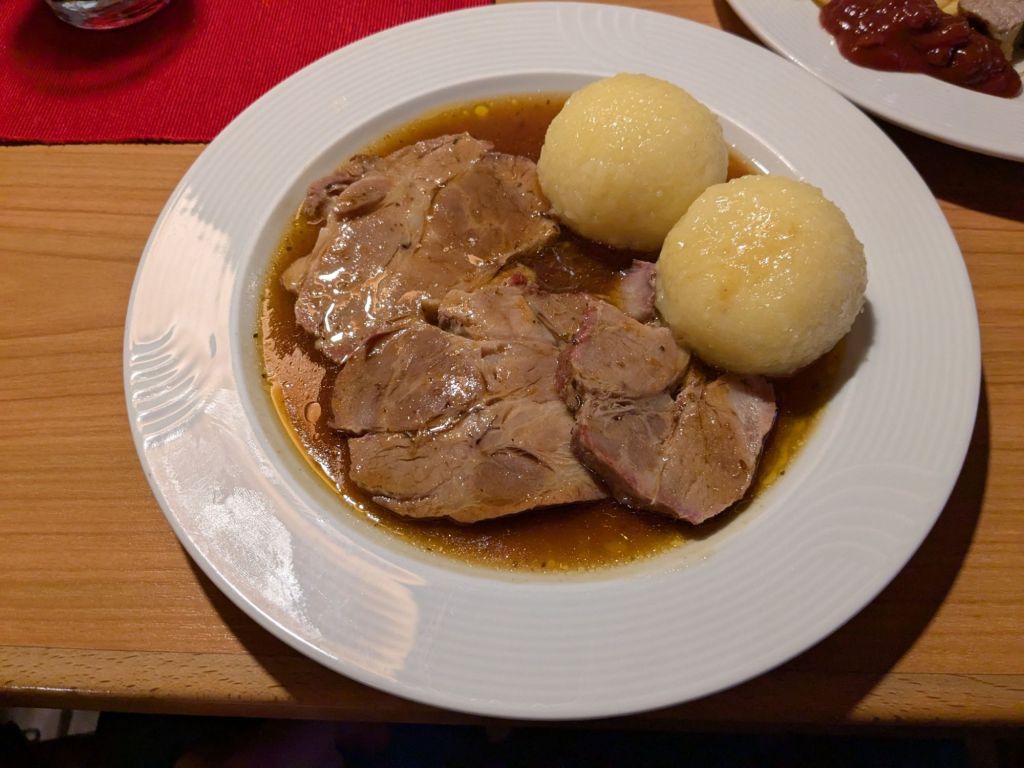

Our bellies full, we stepped back out onto the street and set out to find the iconic and picturesque Altstadt. The Christmas market was now abandoned, making me wish we had taken the hour-and-a-half journey a few days earlier.


Because our visit was slightly impromptu, we also did not go to the Medieval Crime Museum, though it was open and we might’ve stopped in there if we had had more time.

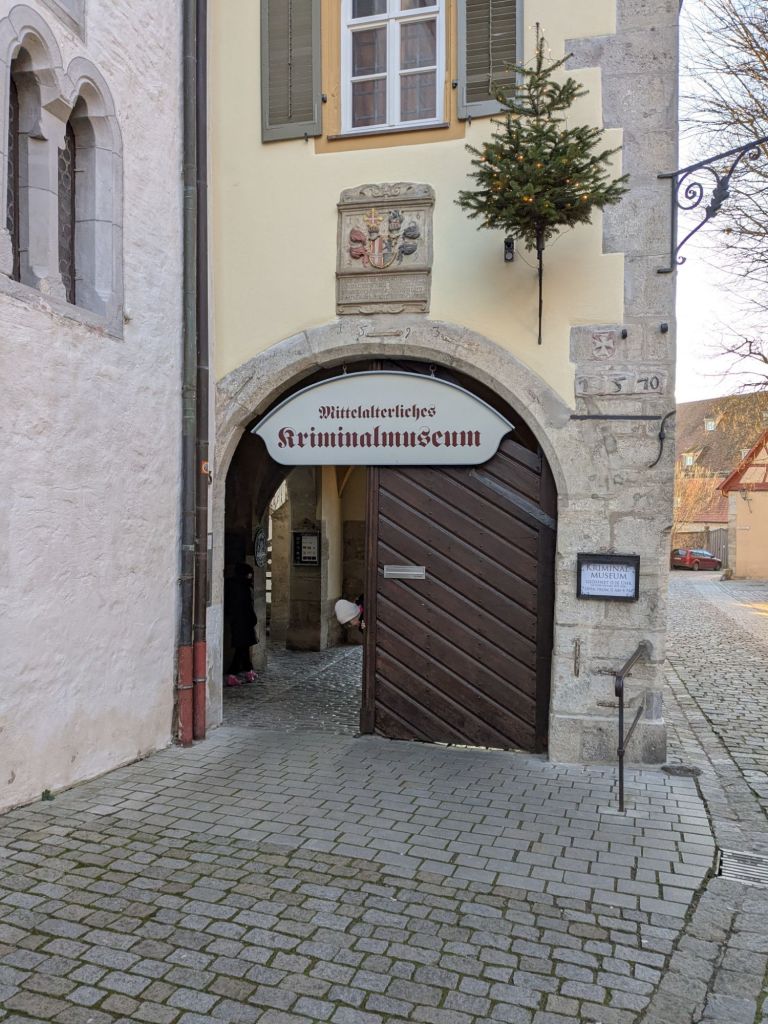
We may have skipped the museum, but we did spot the the Henkersturm, or Hangman’s Tower, built into the city wall. The position of town executioner was a very real thing in the middle ages, and as they were seen as outcasts, they often lived somewhat apart from everyone else.


Unless you are a sensitive reader, I highly recommend Oliver Pötzsch’s The Hangman’s Daughter if you are interested in seeing life through the eyes of a medieval executioner. The book (and the series that follows) is based on Pötzsch’s real-life ancestors, the Kuisl family of Schongau, from which came eleven generations of executioners. Pötzsch is a voracious and driven researcher, and I’ve learned much about many aspects of medieval life, superstition, herbal medicines, German law, history, and tradition, and of course… hangmen.
The town of Schongau is quite a bit farther south in Bavaria, and we actually intended to visit it, but family matters preempted this as they did our trip to Austria. So ist das Leben.
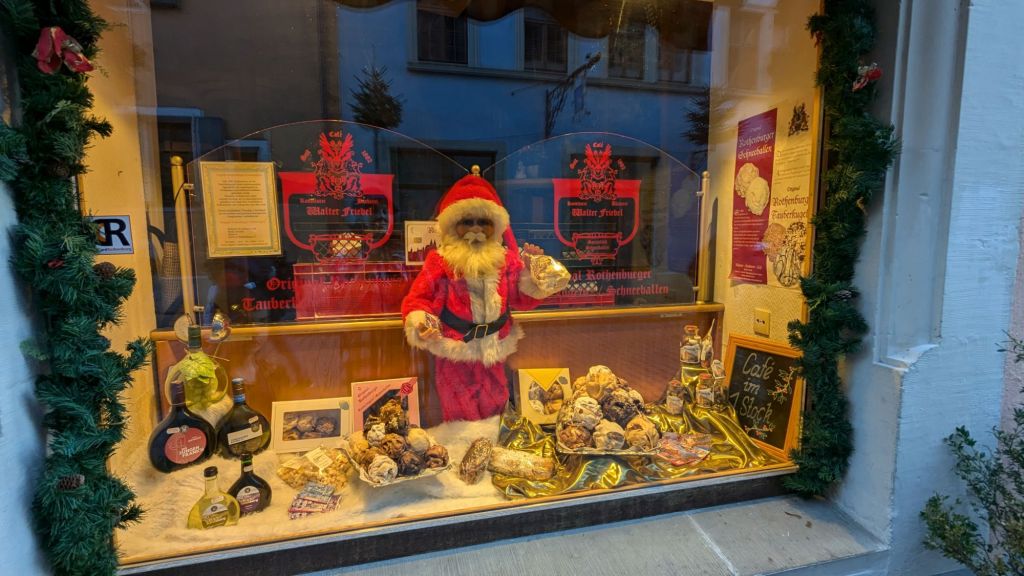
Rothenburg ob der Tauber has become a tourist area over the years, but the shops are quaint and even on a day when almost everything is closed (Sundays and holidays), it is wonderful to walk around. The restaurants and coffee shops that were open on the Second Day of Christmas were making a killing because of the large number of tourists who had little to do but sight-see and rub their hands together.
Don’t let these pictures fool you–there were hordes of tourists, nearly shoulder to shoulder in some places.
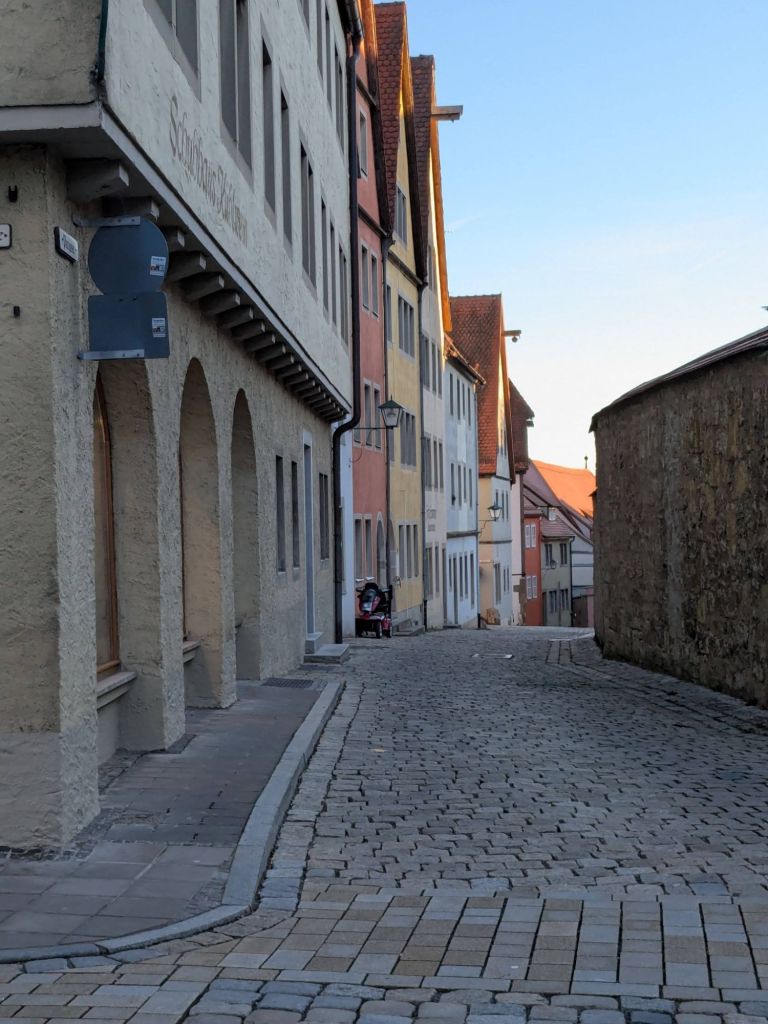


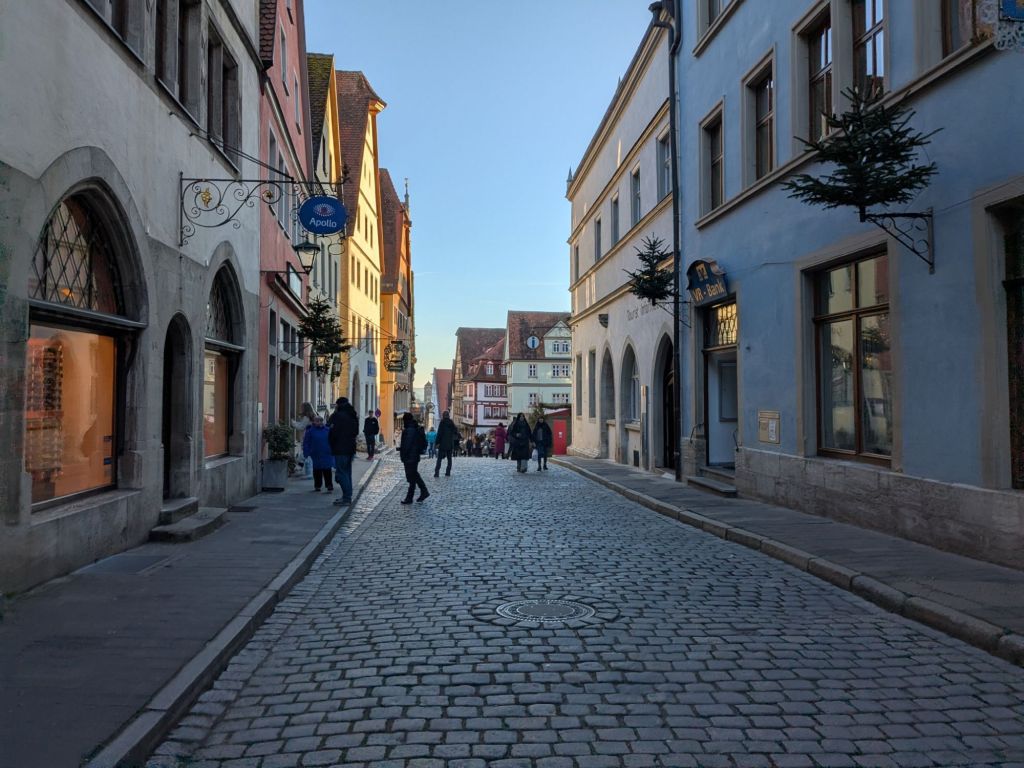

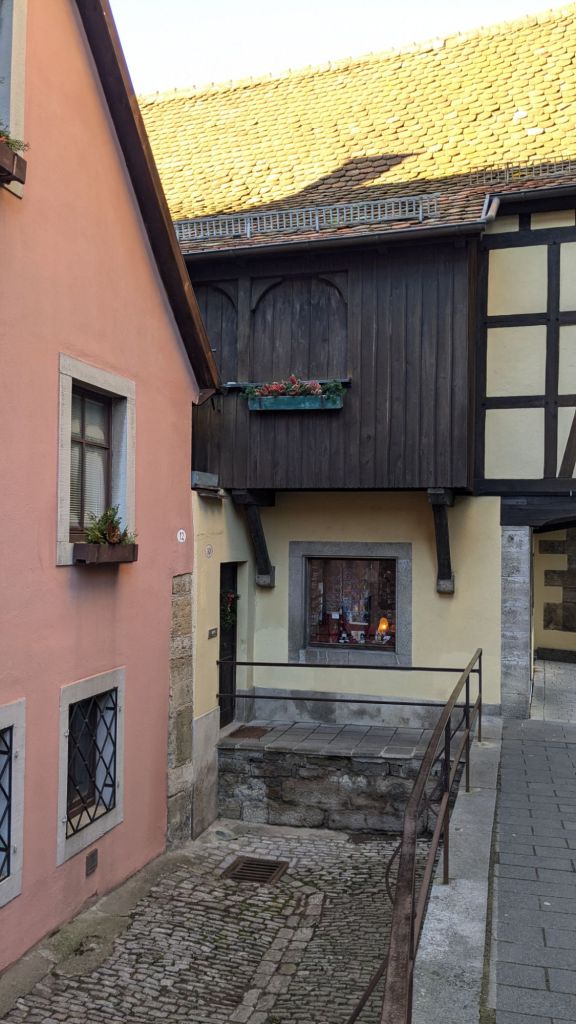
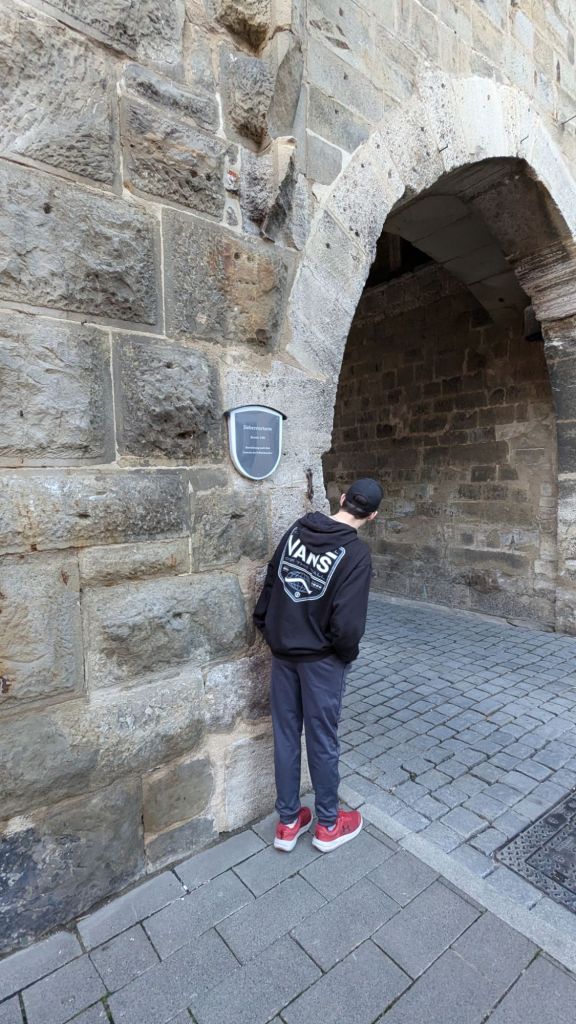

Below is, of course, the most photographed spot in Rothenburg.

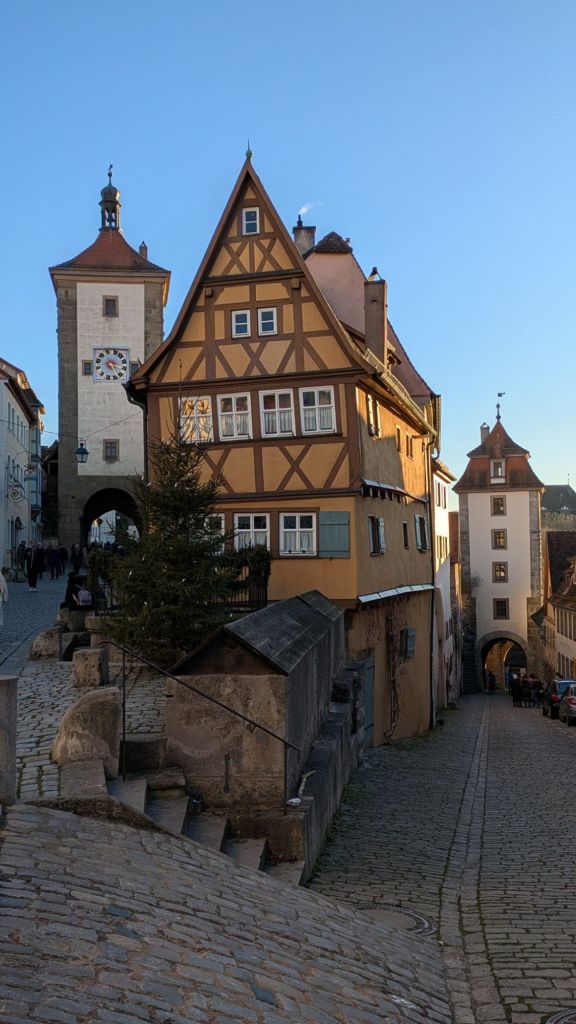
Once we passed through town, we discovered that the fortress overlooks a beautiful valley. It was the golden hour, the hour or so before sunset, the time to take the best photos.



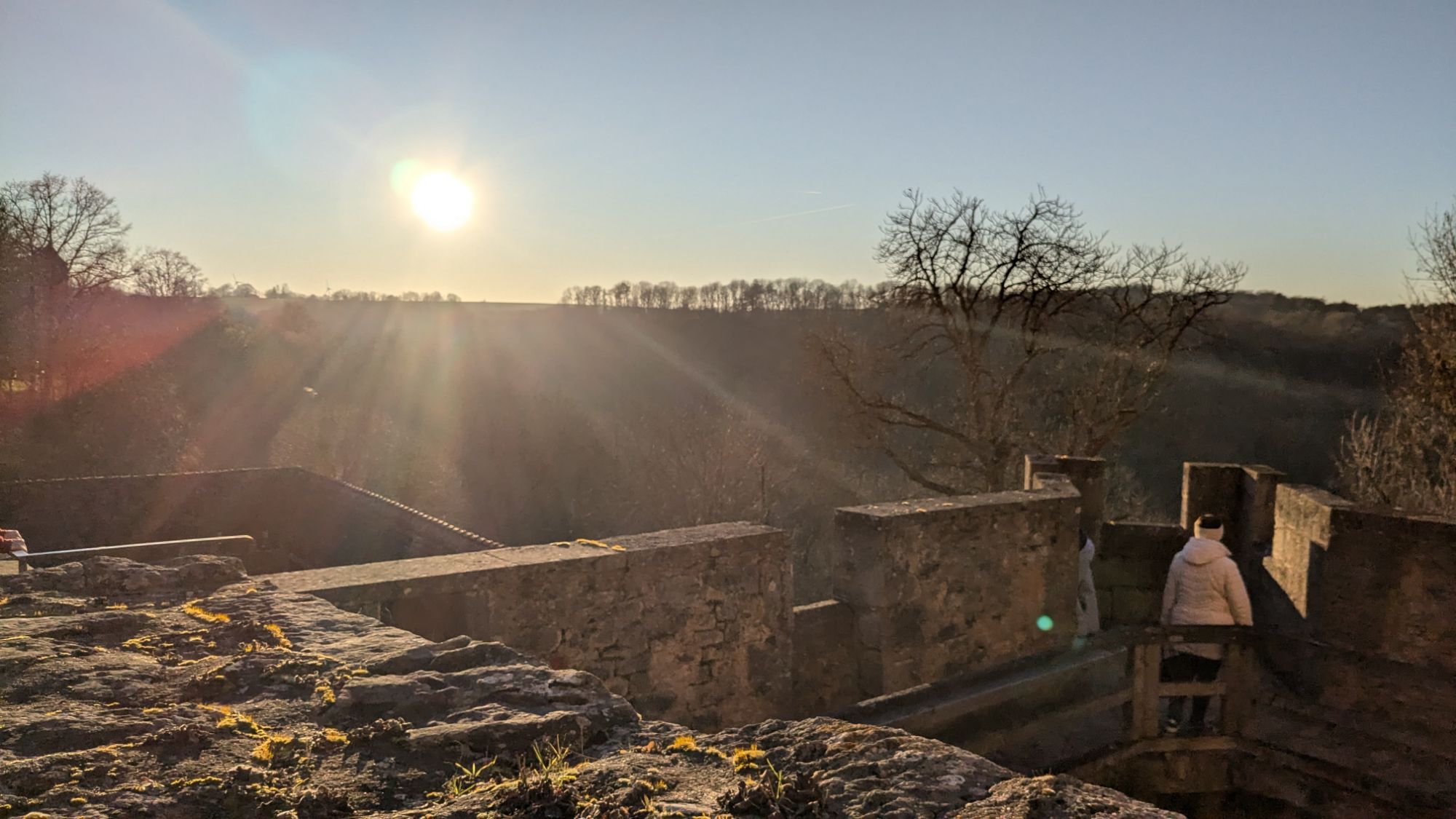
It was already a cold day in Rothenburg, and as the sun went down, the temperature dropped along with it. We took a slightly meandering, roundabout route back to the car, which waited in public parking just outside the city walls, and began the rest of our drive to Munich.
In general, my daughter is not keen on my interest in Germany, but even she agreed: this is a place we need to come back to!

Have you pre-ordered Dearest Gunter? I am so excited to share this book with you, the first book in my Separate Ways series. Check it out on Amazon, and pre-order to receive the eBook directly on your Kindle March 28th! (A paperback edition will also be available.)
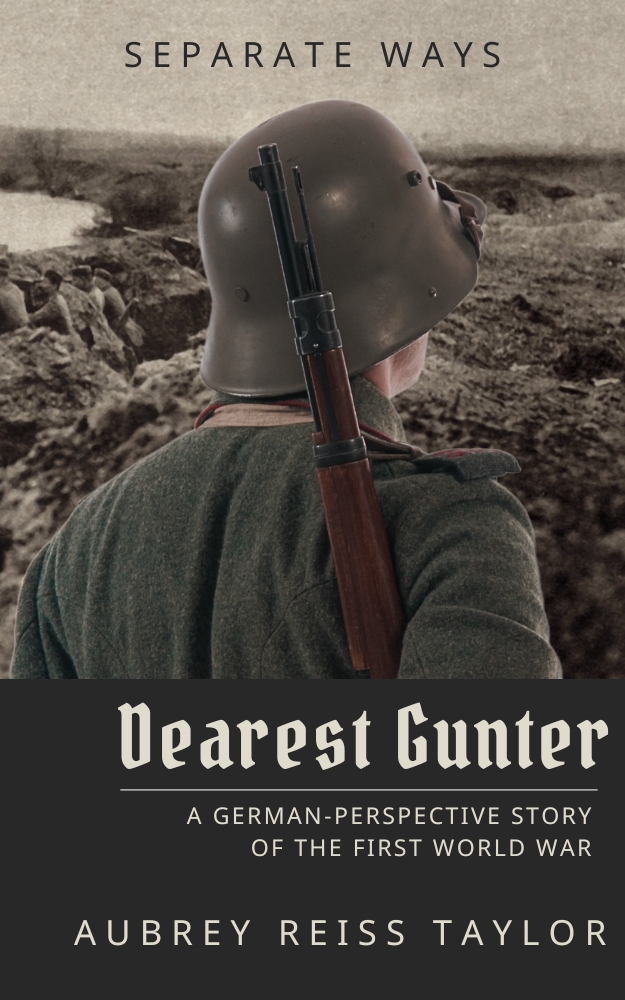
Gunter Schrader was left behind when his brothers went to war in 1914. Two and a half years later, he makes his way to the front, though it means leaving the young woman he loves and lying to his widowed mother.
The need to fight refuses to let him go, even after the guns fall silent in 1918. Reunited with his brother Jochen and hungry to continue the struggle to secure Germany’s borders, it is only the desire for a deeper connection that threatens Gunter’s plans.
Discharged and no longer bound to his oath as a soldier, he is faced with a choice:
Love for a woman, or love for his nation?
***
DEAREST GUNTER is the first book in SEPARATE WAYS, a German-perspective Historical Saga that spans the First & Second World Wars. Balancing intense battle scenes with heart-wrenching love stories and an honest treatment of history, this new series promises a next-level experience in the character-driven fiction for which Aubrey Taylor Books publications are known.
If you want to be informed about the latest on the Aubrey Taylor Books Blog, sign up below. Posts happen between 1 and 3 times a month, and focus primarily on writing, German history and travel, as well as films and books. I will also introduce you to other authors in a variety of genres, so drop your email to stay up-to-date!

 Aubrey Taylor Books
LikeLiked by 1 person
Oh, Deb, thank you so much. Means a lot to hear from you 😘 God bless!
LikeLike