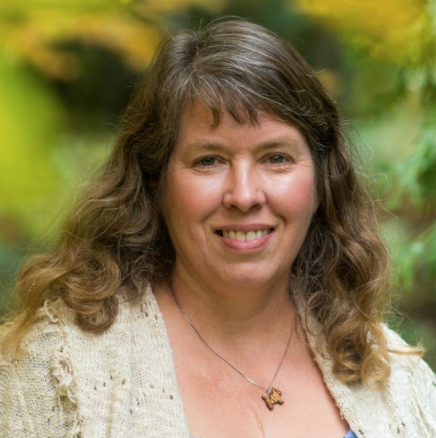
Today’s guest is Rebecca Reed, a fellow member of the Brave Authors Collab. Rebecca writes Contemporary Romances filled with discovery, hope, and horses, but today, she’s shifting her focus, taking a step back in time, and sharing some reflections on a trip she took to Dachau in 2019.
Because the German perspective of WWII has always been the focus of my research and writing, I challenged Rebecca to share something she learned or encountered that struck her about the nuances involved in the story of WWII and the Holocaust. I’m sure we’d both love to hear your thoughts in the comments.
Welcome, Rebecca!
In 2019, I had the opportunity to lead a tour of students and adults from Indiana to the exciting city of Munich and nearby Dachau, site of one of the first Nazi concentration camps in Germany. First of all, let me give a shout out to our group’s Tour Director, Andreas. What an excellent source of insider knowledge, in-depth conversation, and pleasant personality he was! We were fortunate to tour under his guiding hand.
We toured Munich on foot and by bus, but some of us also had the opportunity to visit Olympic Park, pass by a heavy metal concert and make a stop at a folk festival where we listened to a three-woman group from Yemen. The next evening, we visited a make-shift Michael Jackson Shrine and the local Hard Rock Cafe. We also made a tiny stop for gelato! Mmm.
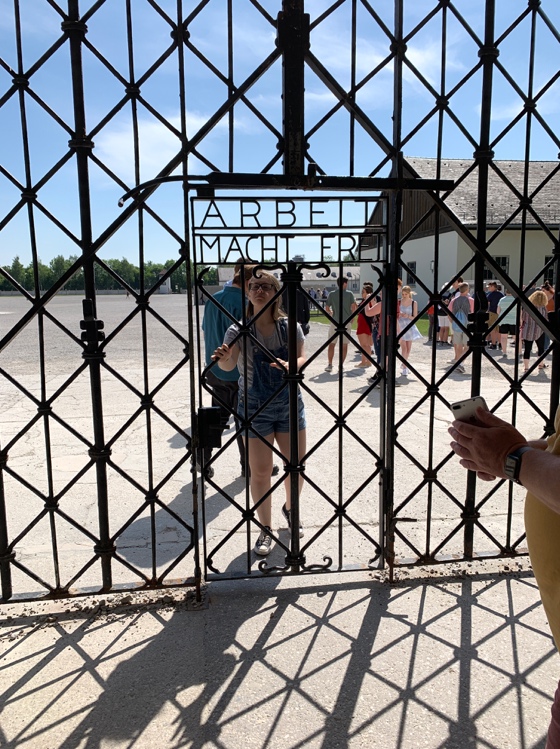
Our visit to Dachau was a study in contrasts. Walking through the gate with its inscription, Arbeit Macht Frei (work makes you free), I imagined myself as a prisoner, leaving behind all personal freedom and knowing in my heart that the phrase was a lie – that the only freedom I might find here would be in death. Then I thought of myself as an Allied soldier marching through the gate in triumph to free those left alive. In that sense, the soldier’s work did produce freedom, though precious few received it. The echoes of heartache, calculated cruelty and diminished humanity whispered from each building, each display, each crunch of gravel.
What would it have been like as a German soldier assigned to the camp? Would the propaganda of the time have blinded me or dehumanized me enough to make the increasingly horrific overcrowding, overwork, and lack of compassion seem justified? Would it have required a backbone of steel to stand by and watch the desperation of those confined there, or would I have become hardened and immune to the suffering? Would I have believed each prisoner deserved their fate or would it have ground away at my soul until I no longer existed except as a hollow shell?
I’m sure there were guards who fit into each of the above descriptions depending on their moral code, trust in those in charge, and propensity toward darkness and cruelty. We may never know, but I’m certain there were those who wished they could have done something kind rather than brutal. Spoken softly or offered a hand or a bite of food. Likely, fear of retribution and overall indoctrination kept most from action. Caught in similar situations, our own courage would likely falter as well. Second-guessing is simple when surrounded by comfort and the benefit of hind-sight.
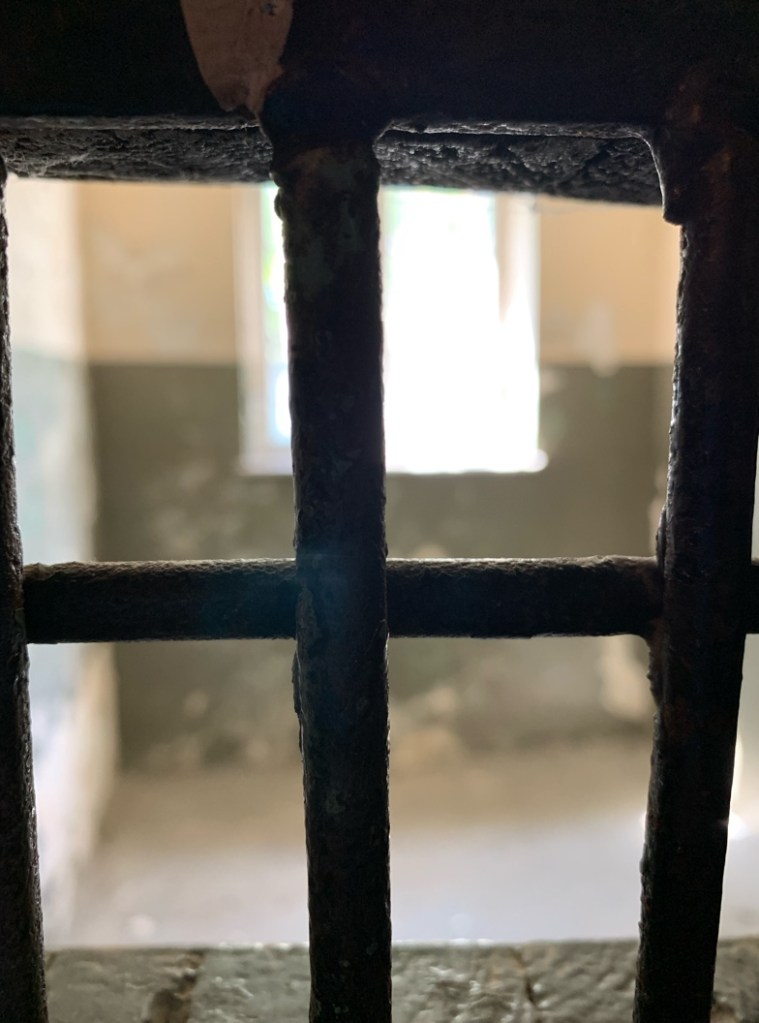


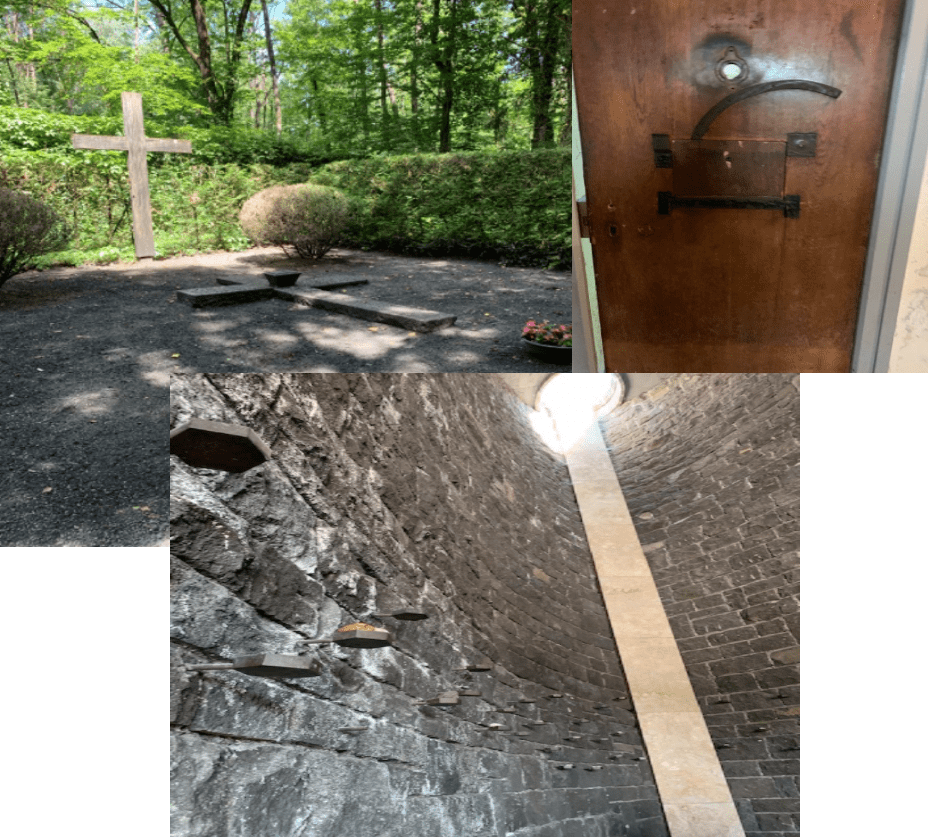
Compassion for everyone caught in Dachau’s ugliness welled up during my visit. Dachau’s many memorials reminded me of the importance of educating the our youth not just about the important facts of history, but of the causes and effects, the why and hows, too. Memorizing a few names, dates, and places that are soon forgotten will not prevent the horrific events of humanities’ past from recurring. Only by studying and recognizing the causes and methods by which those events were begun and advanced will allow future generations to understand and predict, then influence and alter, an errant, destructive or selfish course before it becomes impossible to resist as happened in the case of Hitler’s pre-war Germany among other examples.
Second-guessing is simple when surrounded by comfort and the benefit of hind-sight.
By the time those who would resist realized they needed to do so, taking that step was virtually impossible without huge risk. And it wasn’t only the individual placing him or herself at risk, but also the families, neighbors, and acquaintances. With so many lives in danger, taking a stand becomes all the more difficult. I imagine this is the reason most resistance took place in the shadows which kept loved ones a bit safer.
It is important to demand that whys be taught. We must never simply follow mindlessly. Dare to ask the hard questions and stand firm until satisfactory answers are given. Don’t just exist on the surface of the pond. Search below the calm waters to the churning beneath. This, along with offering love and support to fellow humans, is how we can best protect the continued existence of our world.
If you agree with me, please reblog, share and comment. If you don’t agree, rail at me in the comments. I am looking forward to all of your reactions and thoughts.
May the light and peace found in Heaven bring you hope!
I’m grateful to Rebecca for taking the time to share this reflection with us. I posted about my own visit to Dachau some time ago in my blog about Munich, so feel free to give that a read if this topic interests you. And don’t forget to visit Rebecca’s website and socials!
You can also access two FREE short stories on her website:
Hope for a Dove: A Scottish Fantasy
Pay it Forward: 1980’s Spokane, Washington
If you want to be informed about the latest on the Aubrey Taylor Books Blog, sign up below. Posts happen between 1 and 3 times a month, and focus primarily on writing, German history and travel, as well as films and books. I will also introduce you to other authors in a variety of genres, so drop your email below to stay up-to-date!
Next Up: Matthew J. Elliot shares on October 23rd as part of the Pen Works of the Word Blog Tour!


 Aubrey Taylor Books