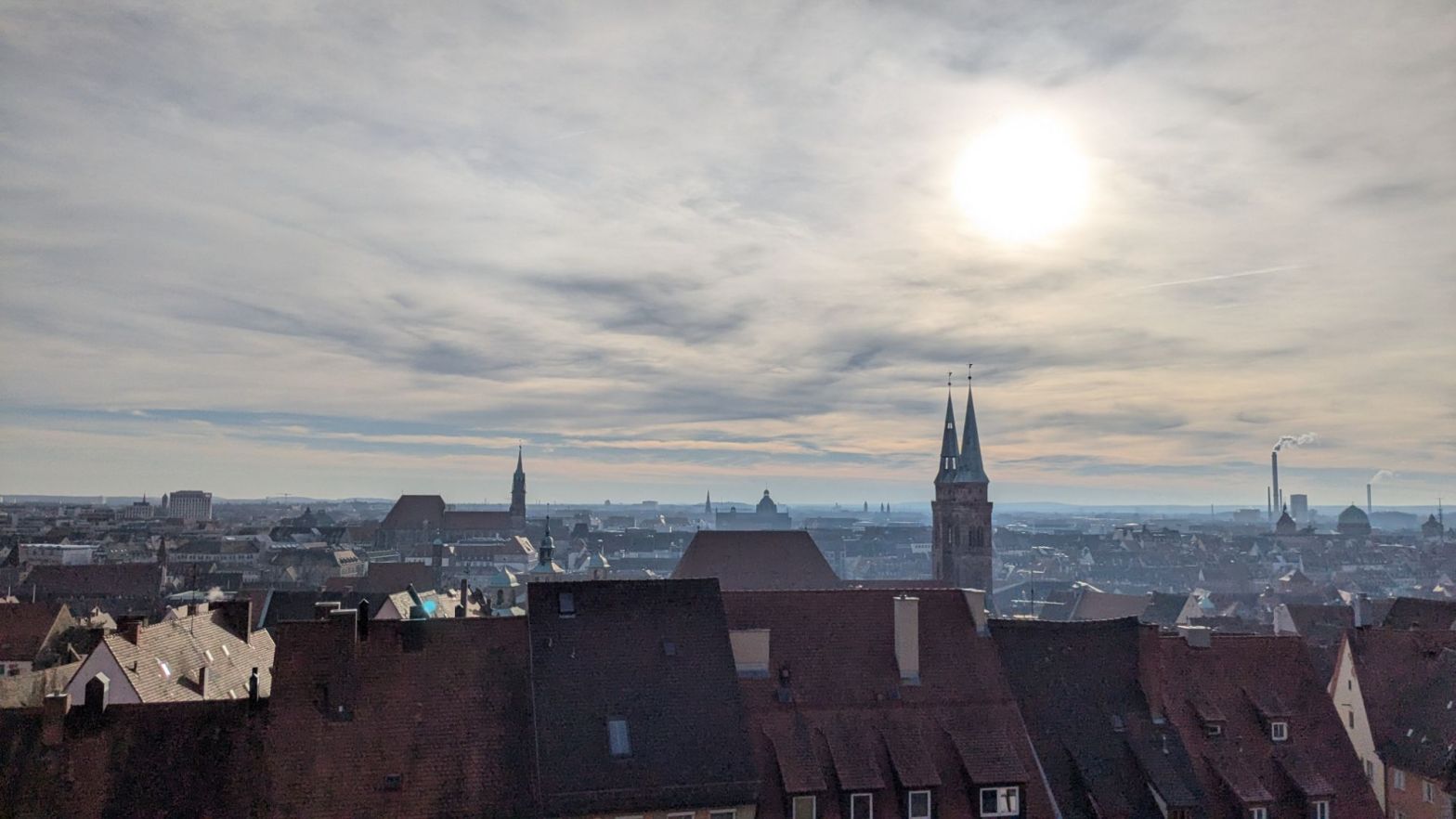
Back in 2017, my husband and I took a Viking River Cruise on the Danube to celebrate our 10-year anniversary. The route took us from Budapest to Nuremberg, and while I enjoyed every moment in every port we visited, I found my place in Germany. Those three days in Passau, Regensburg, and Nuremberg were the start of the journey that I’m still on today.
The cruise offered a choice of two tours in Nuremberg: a general tour and one that was WWII-specific. In spite of my life-long fascination with the Second World War, I chose the general tour. I think wanted the bigger picture, and I knew that the general tour would take us past WWII-related sites anyway.
Our 2017 tour was primarily a drive-by tour which ended inside the old city walls. The tour guide described how after the war, this part of Nuremberg was intentionally rebuilt to look old, but most of what we were seeing was indeed postwar construction.
Though it had no military significance, Nuremberg was targeted by the Allies because it was an ideological and cultural center, and at that point the war, the goal was to destroy the morale of the German people.
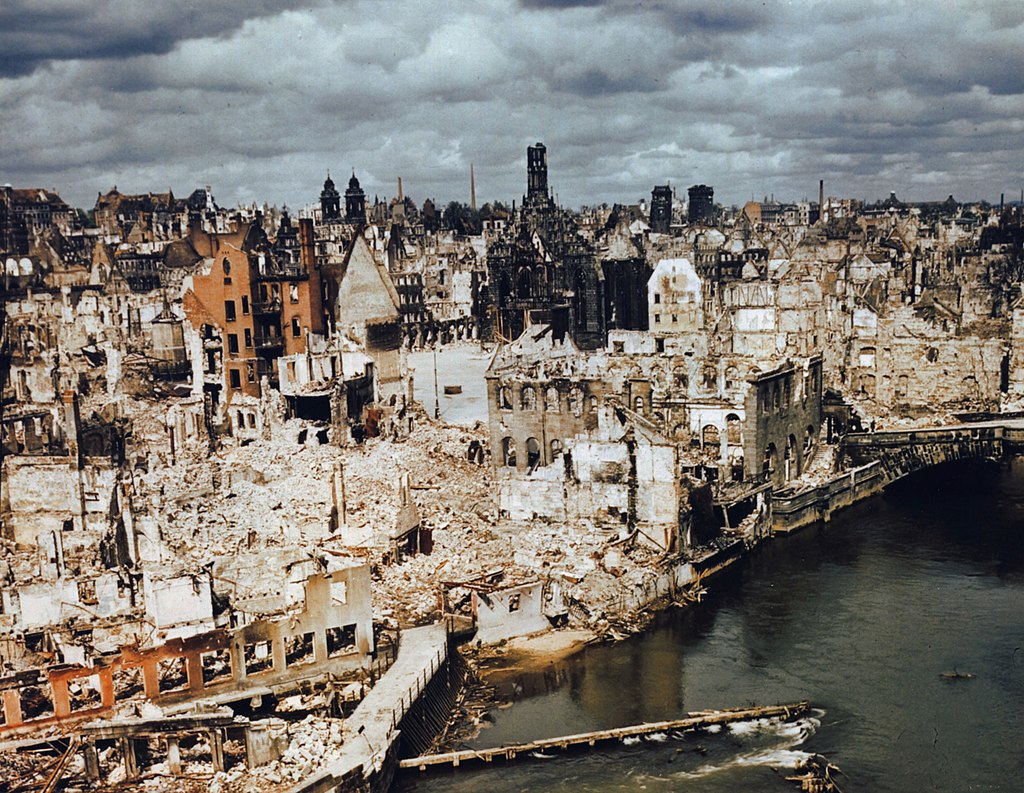
USAAF, Public domain, via Wikimedia Commons
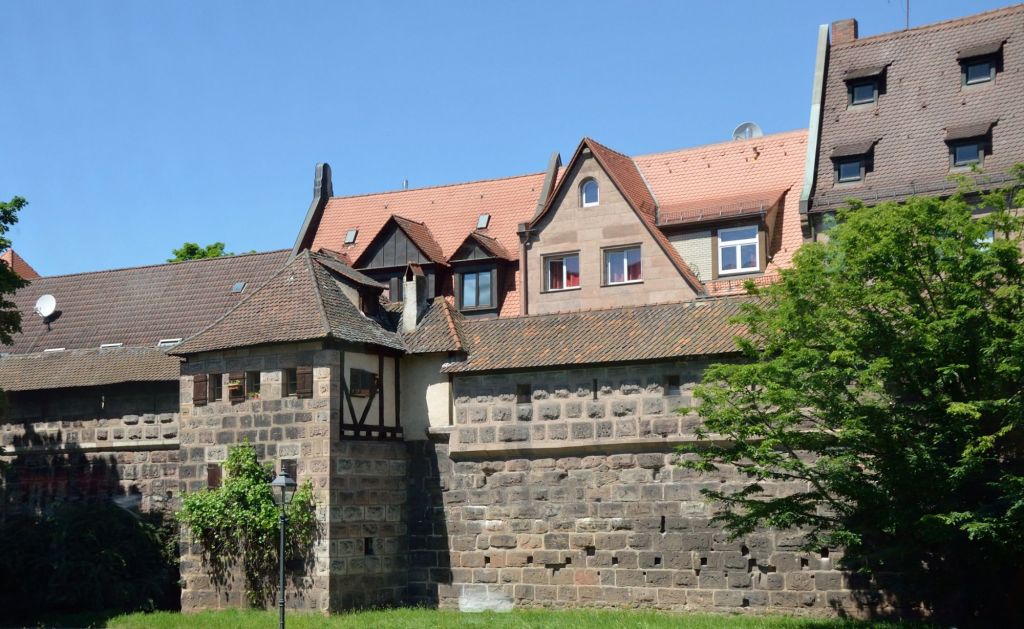
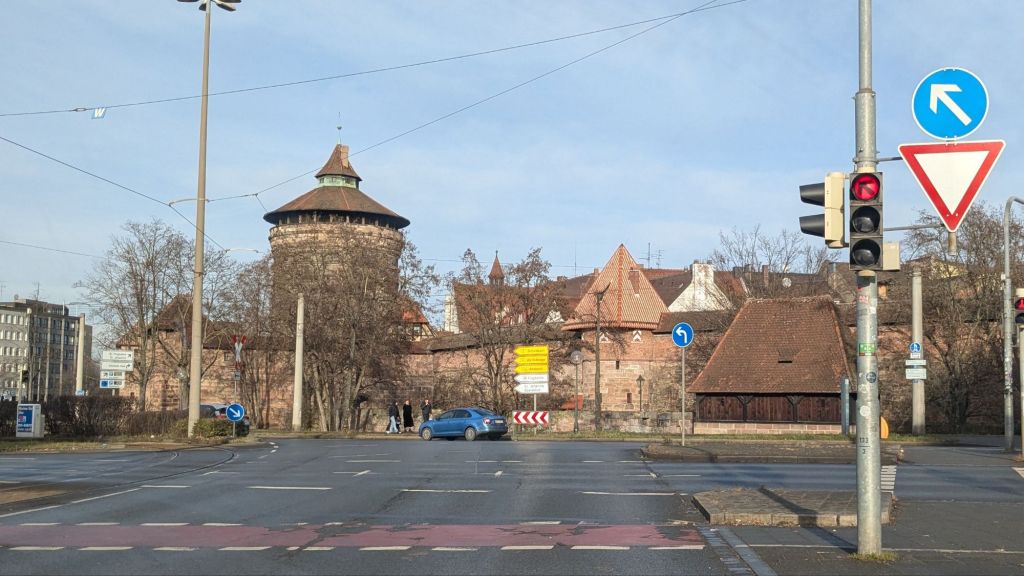
There are very few cities left in Europe with an intact city wall. Nuremberg is one of them. Like the rest of the city, it too went through extensive repair after the war.
*Note that with the galleries in this post, you can click on any picture to see it enlarged.*

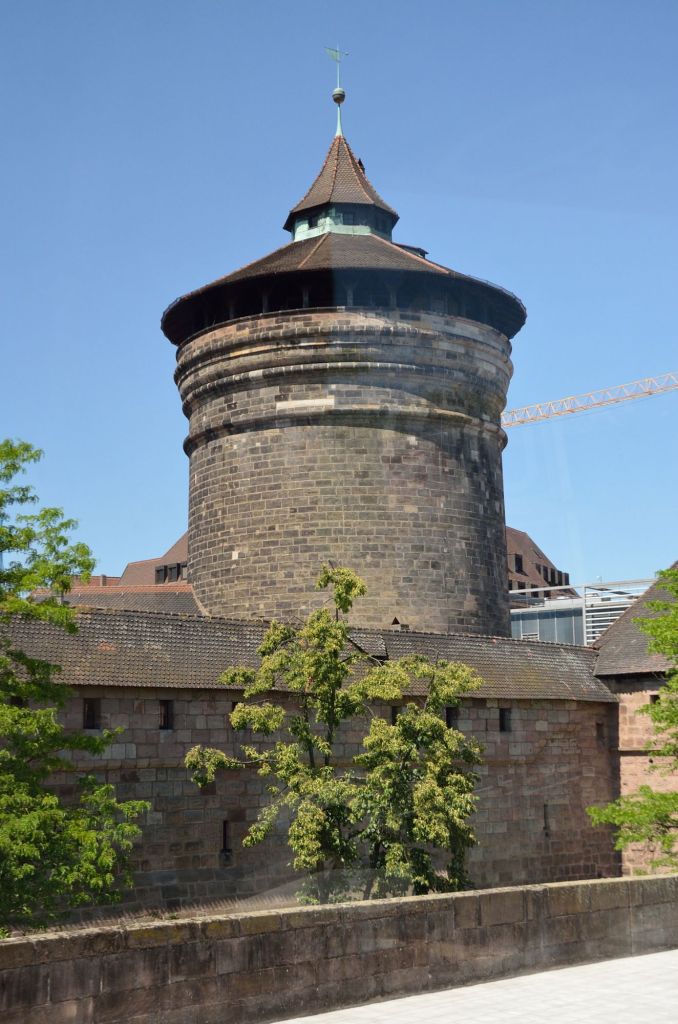
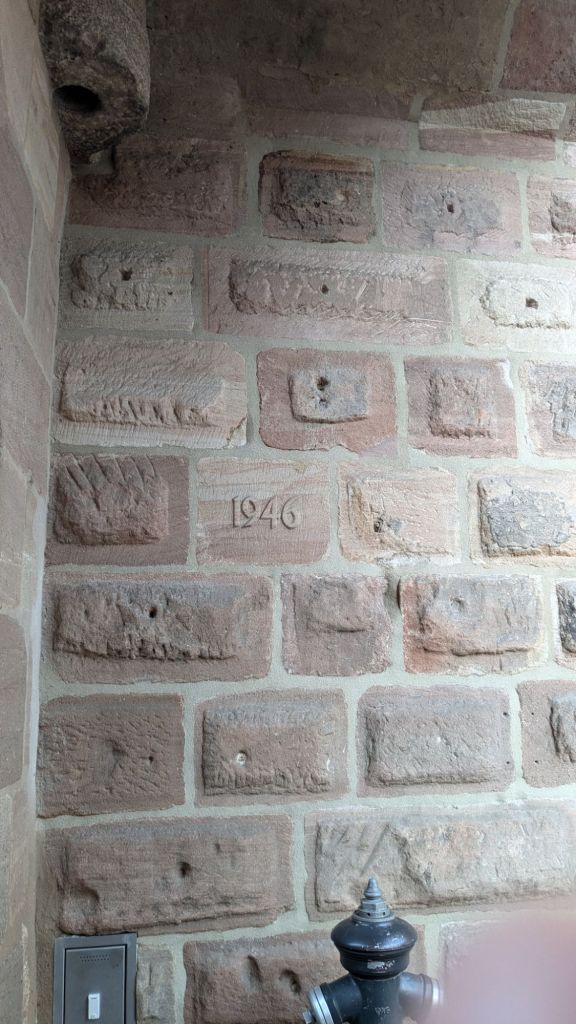
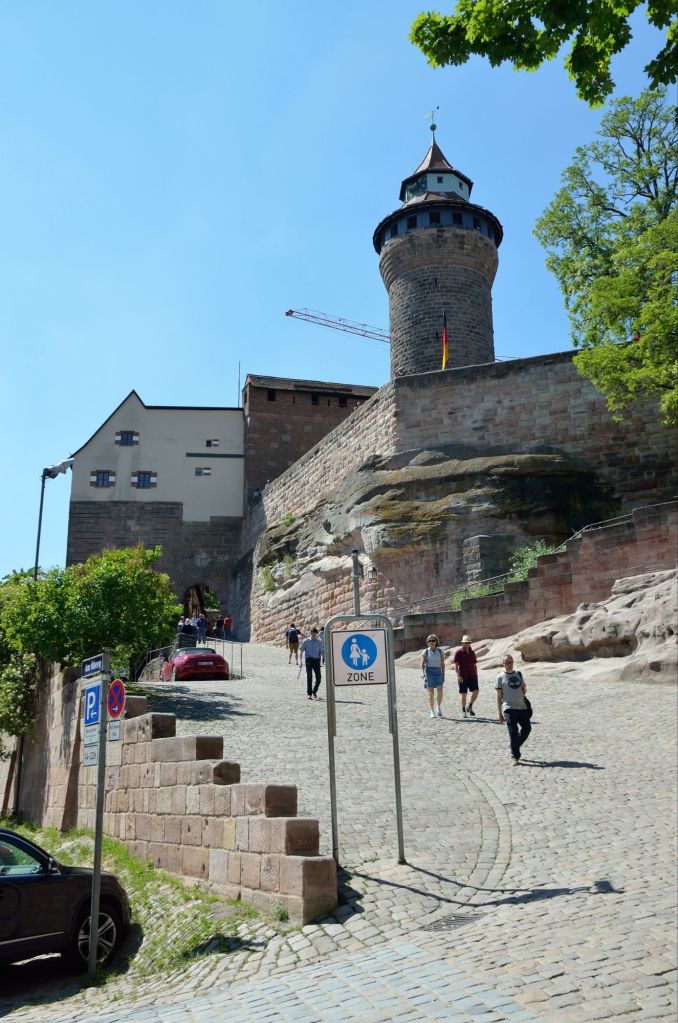
The fortress has also been restored to its beautiful medieval condition after being nearly destroyed by Allied bombs. I found this stone in an inconspicuous location inside the fortress:
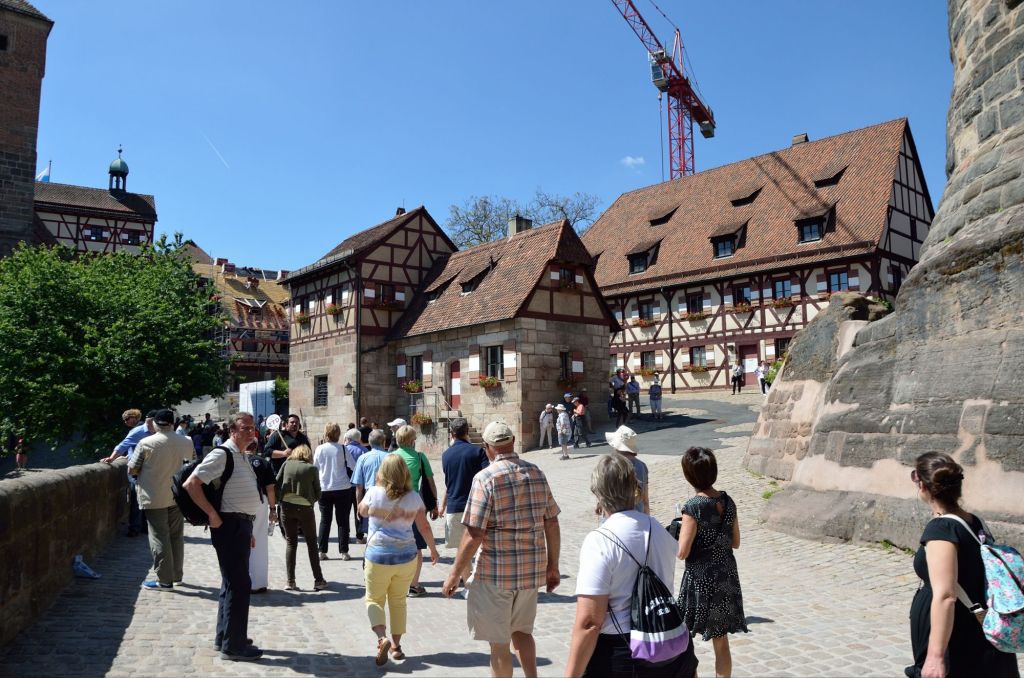

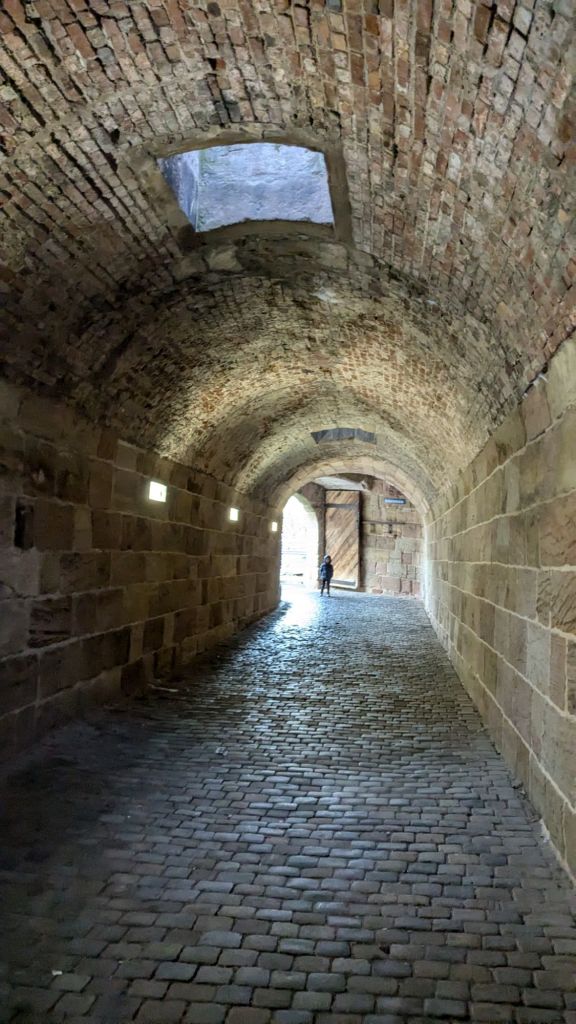

In the warm, late-spring sunshine of May 2017, we walked on toward the market place where we hoped to experience our first real European market. Unfortunately, the vendor stalls had been moved a block or two away due to a volleyball tournament. It would not be the last time an athletic competition would prevent me from enjoying a historic site in Germany.
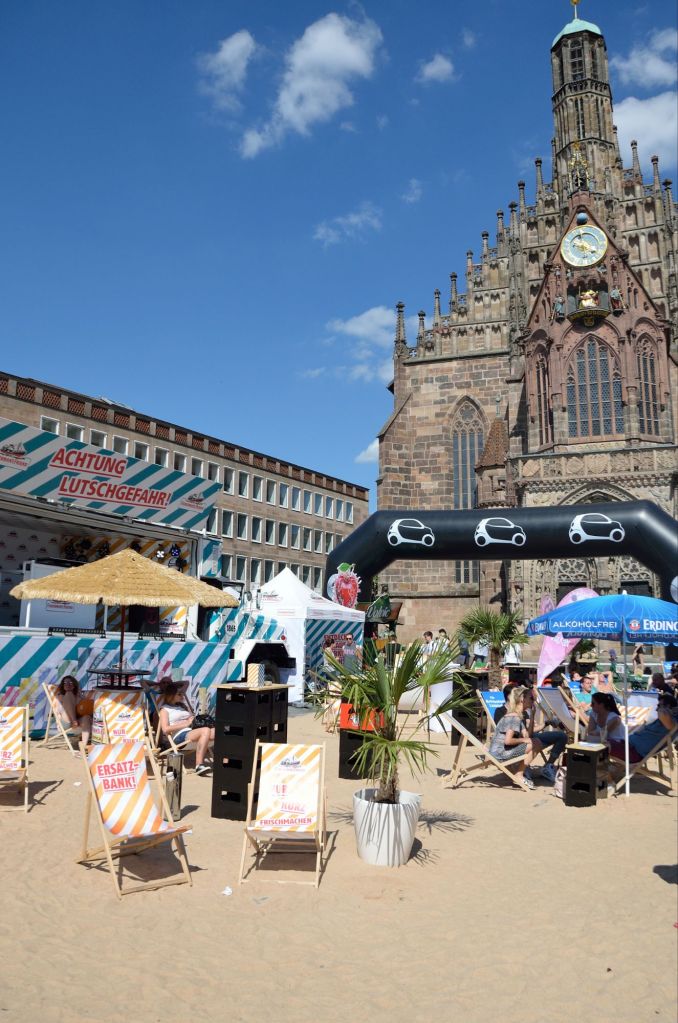
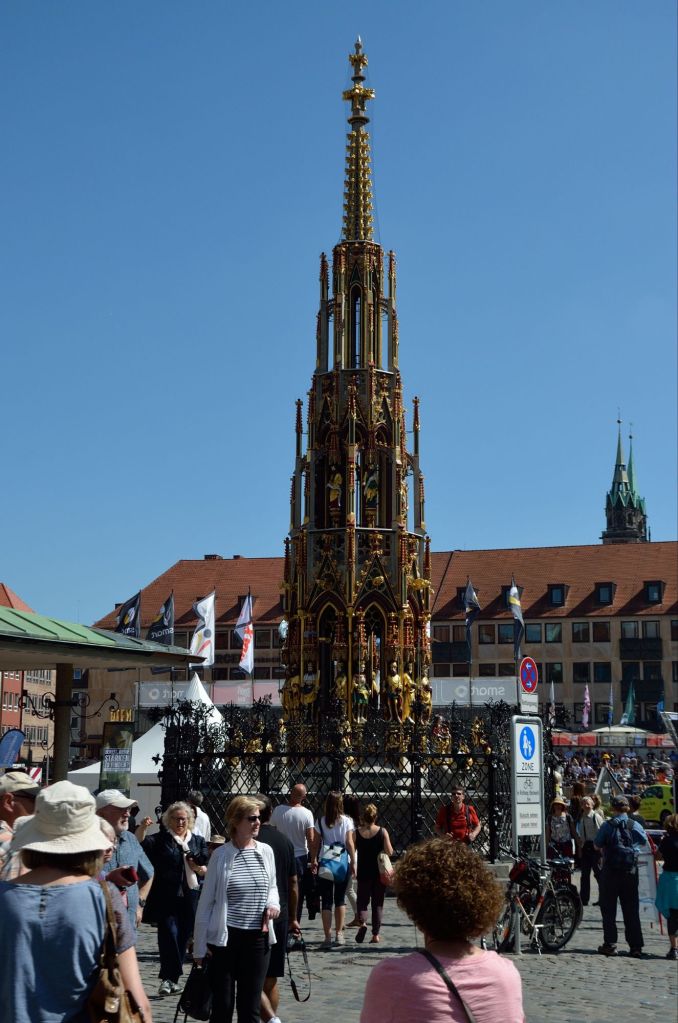
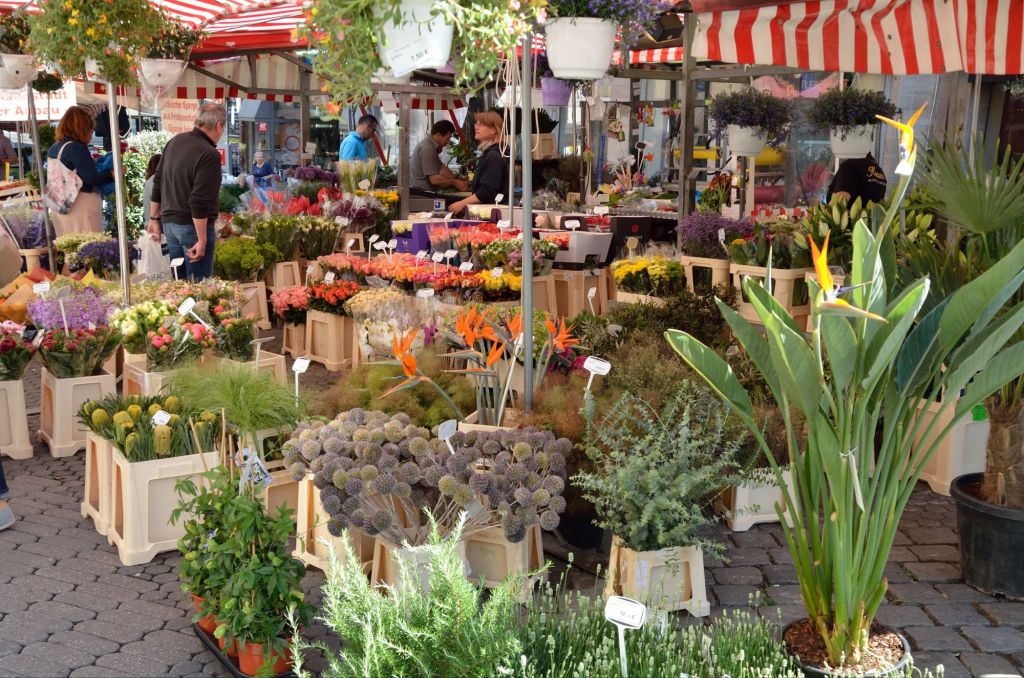
Volleyball tournament or not, we were able to enjoy the sights, sounds, and smells of the market, as well as authentic Nuremberg Lebkuchen (gingerbread).



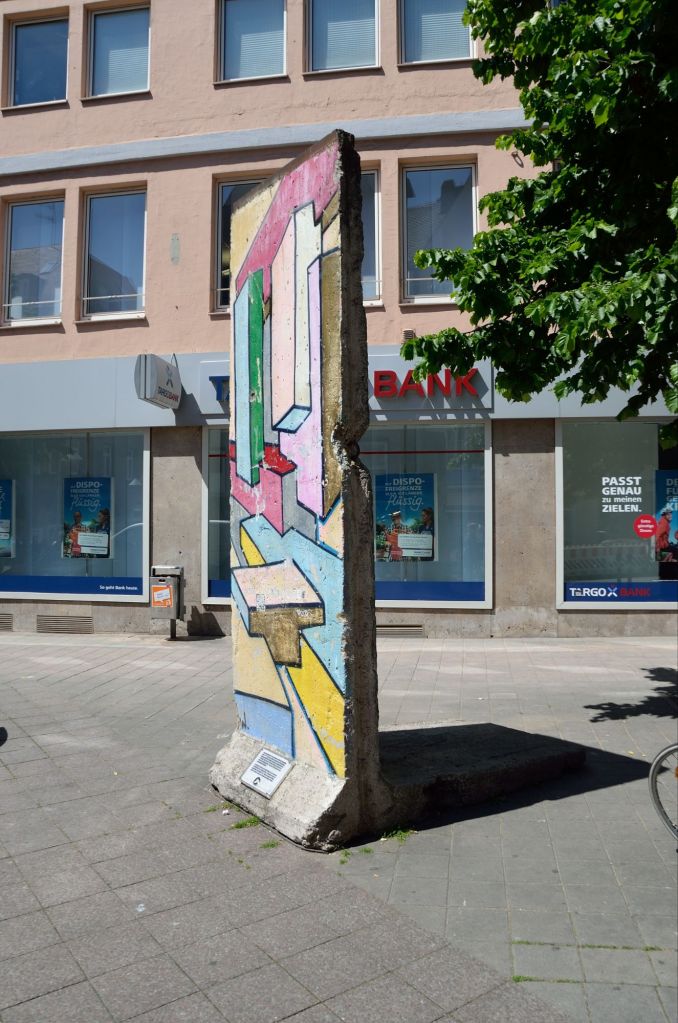
We also spotted this piece from the Berlin Wall, gifted to the city on the 20th anniversary of the wall coming down:
During our 2022 trip, we bypassed Nuremberg on our drive from Munich to Leipzig. Not for lack of wanting to visit again, but we were interested in seeing places we had not yet been. In 2023, we stayed very close to “home” in Baden-Württemberg, so it was not until the first day of 2025 that we finally stopped back in Nuremberg. Unfortunately, it was just that: a stop. We were on our way from Munich to Frankfurt to return to the States *insert sob here*. It was also New Years Day. We knew everything would be closed. After some searching we were surprised to find a Mexican restaurant open, making this only the second time I have eaten Mexican food in Germany. Both restaurants happened to be in Nuremberg!

As I mentioned, we visited Nuremberg on New Years Day. The night before, we had been “treated” to fireworks displays all over Munich. While it was an amazing spectacle for us as tourists, it is a yearly concern in Germany, because while many people have enjoyed setting off fireworks on Silvester (New Years Eve) for years, there has been an increase in carelessness, injury, and death in recent years.

We saw it for ourselves as our neighbors shot rockets from the bushes in front of their house, one of which went directly towards a few women who were just coming from the U-Bahn platform.
The debate rages as to why this is happening and whether fireworks should be illegal on Silvester as they are the rest of the year.
Along with its safety, Germany has long been known for its cleanliness. This was not the case on New Years’ Day, and increasingly less true in general. In both Munich and Nuremberg, we found piles of empty fireworks boxes left out on the streets:

I bring this up because, while the increasing danger and mess of Silvester is a matter that crops up once a year, it is a concern for many Germans, and evidences the larger political issues being weighed in their upcoming federal election on Feb. 23rd.
Moving on from that PSA (sorry, I had to), I would be remiss if I didn’t take a moment to share about a place where medieval and modern history meet, St. Sebald’s Cathedral. This was the church where Pachelbel, famous for his Canon in D, played the organ.

Like many of Germany’s beautiful historic buildings, it lay in ruins in 1945. In some places, you can easily see the parts of it that are very old juxtaposed against the parts that have been rebuilt. There is also a collection of medieval artwork alongside artifacts from before the war and ancient relics.


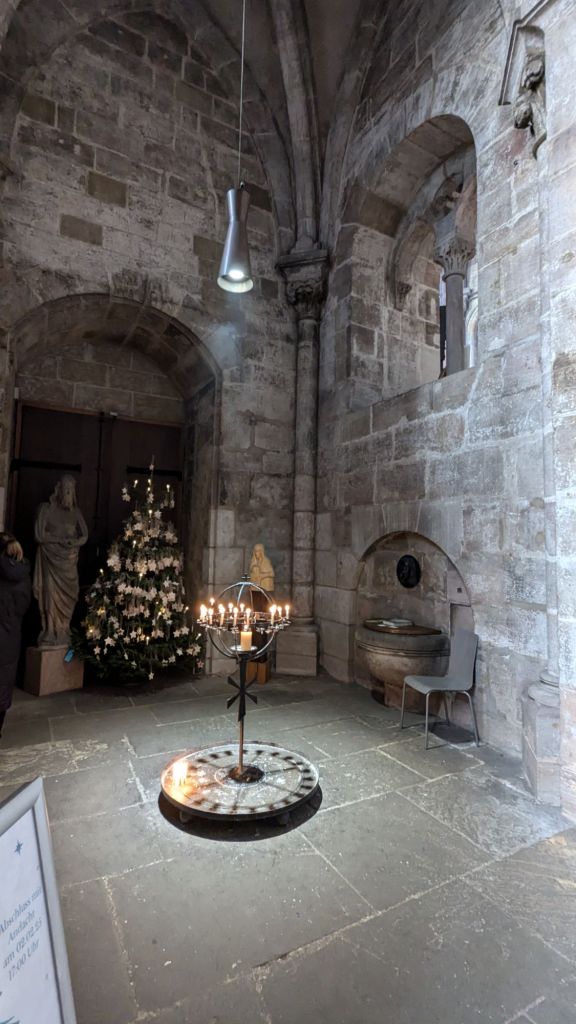
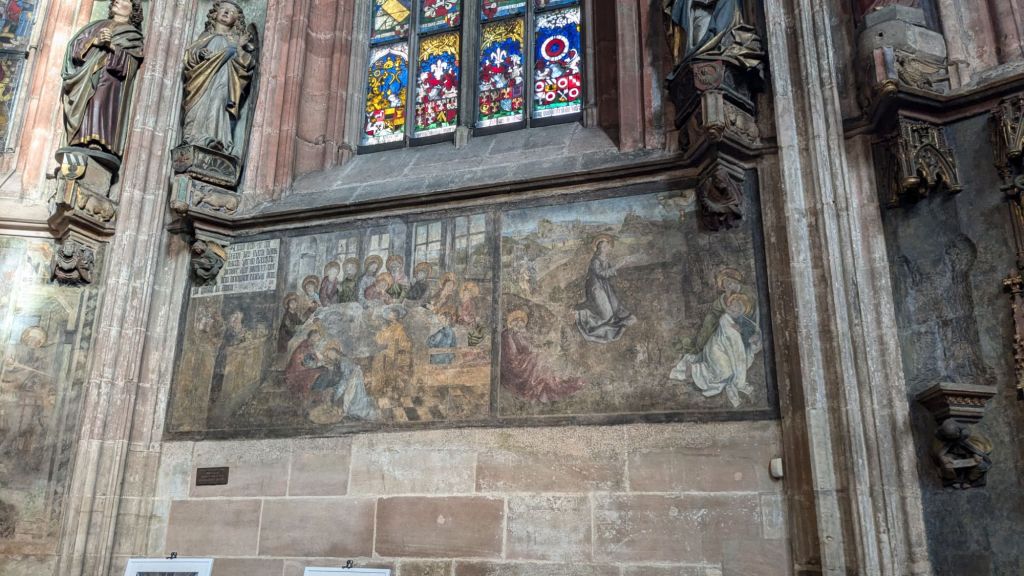

Unfortunately, it is a difficult place to visit with three children on the last day of a two-week vacation. Where one would like to walk slowly, read inscriptions, ponder, mourn, and pray, one is forced to keep shushing mouths and slowing little feet. To say nothing of the constant fear that someone will touch something.
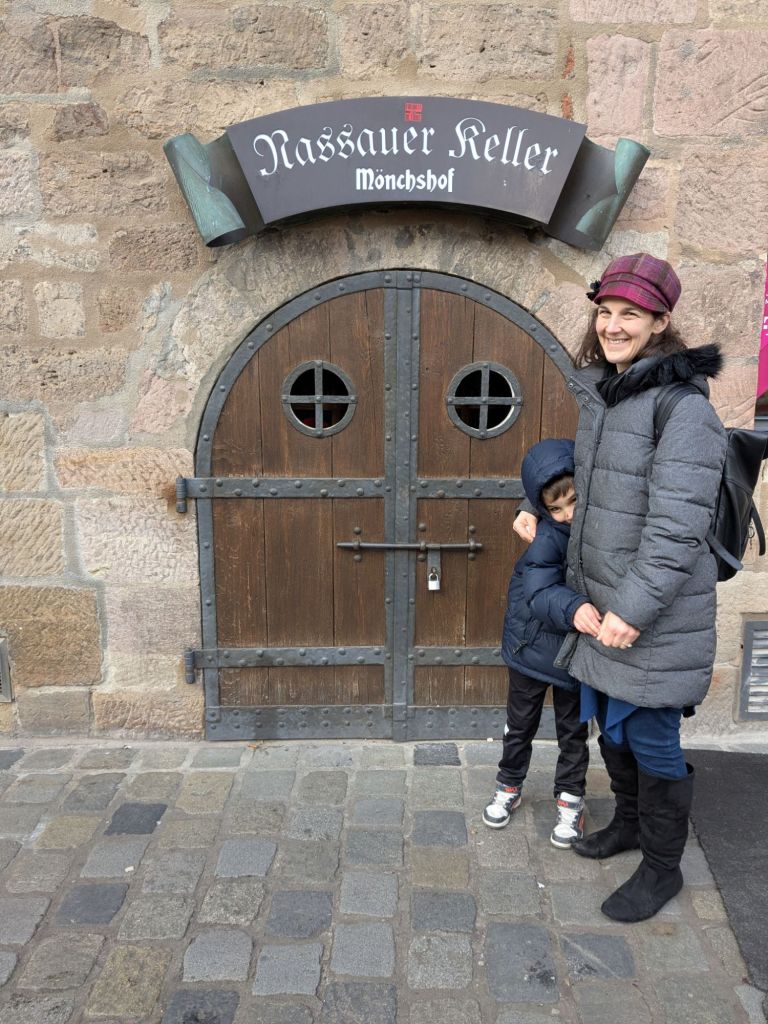
On the subject of little feet, I have to do something I rarely do here and that is share a photo of one of my children. We had an excellent, though perhaps not ideal, opportunity for a “then and now” shot of me with our youngest, who was in utero when we visited on 2017.

Don’t ever let anyone tell you there’s nothing to do in Germany on a Sunday. Most Germans use this as a day to rest from work and take a long walk. Often, they will hike in the forest, but as a tourist, if you are in or near one of the cities, there are plenty of sights to be seen, even when everything is closed down. Our visit began with a stroll down the Weissgerbergasse, “the most beautiful street in Nuremberg.”


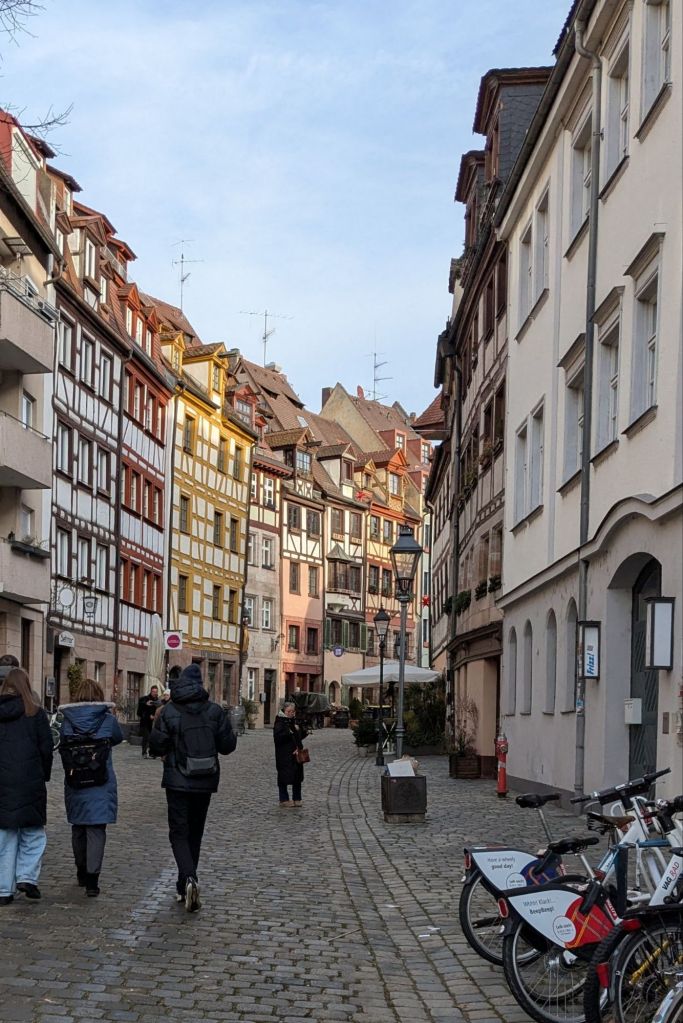
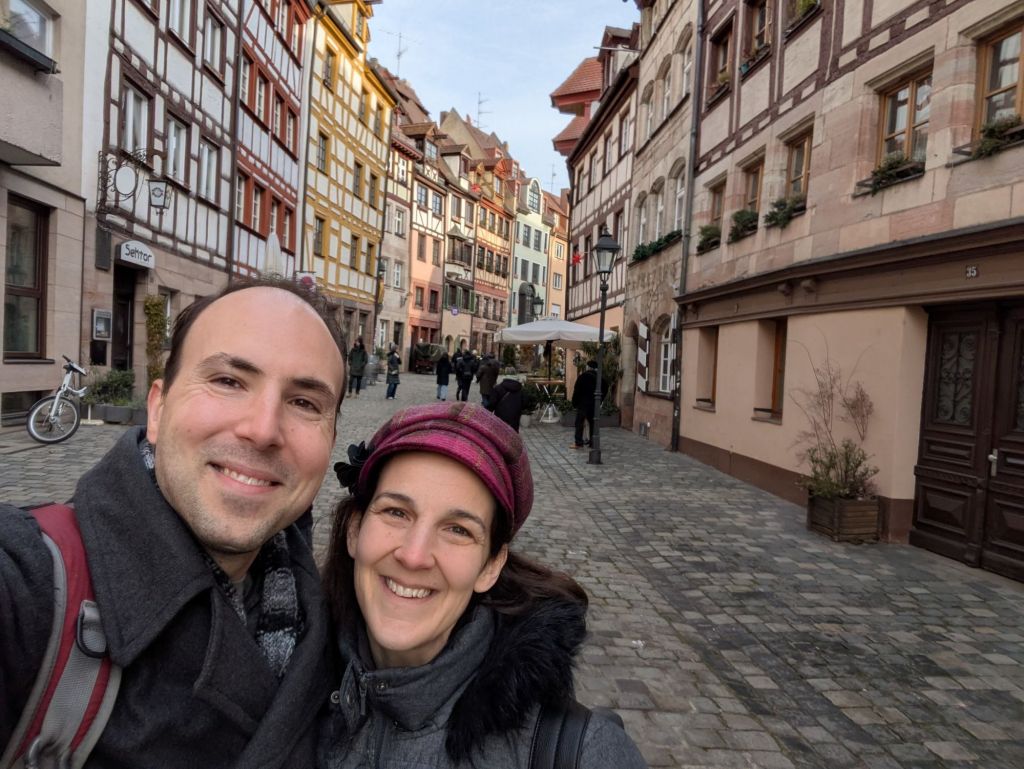
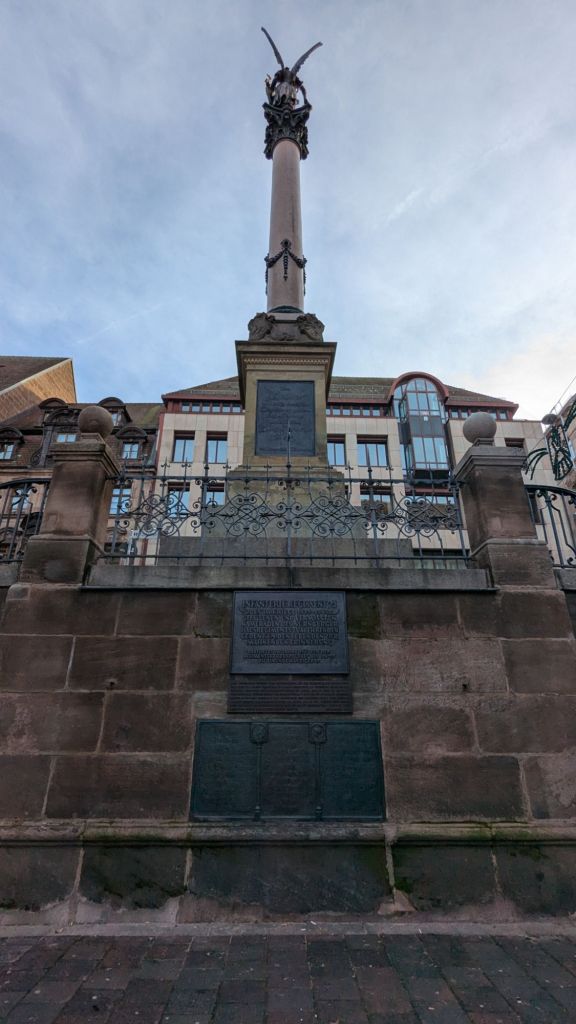
Along with our delicious meal at Enchilada’s, we managed to find an open coffee shop, listen to the street musicians and enjoy the scenic Pegnitz River. As is my custom, I also visited the war memorial (although this discovery was somewhat accidental).


After wandering around town a bit more, we revisited a few of the WWII-related sites we had seen back in 2017. Once again our view of the Palace of Justice, where the Nuremberg Trials took place, was a drive-by. As I recall, there was some drama from the backseat too, and therefore any pictures I tried to get weren’t worth posting.
I suppose it goes without saying that I am currently focused on the earlier part of the story anyway, because that is the time period about which I write, and I do so from the German perspective. Its not as though the Nuremberg Trials have no effect on the world today, quite the contrary. However, my goal for four years has been to get to understand what was going on in Germany–in the hearts and minds of the Germans, and all they experienced–in the 1920s, 30s, and 40s before the end of the war.
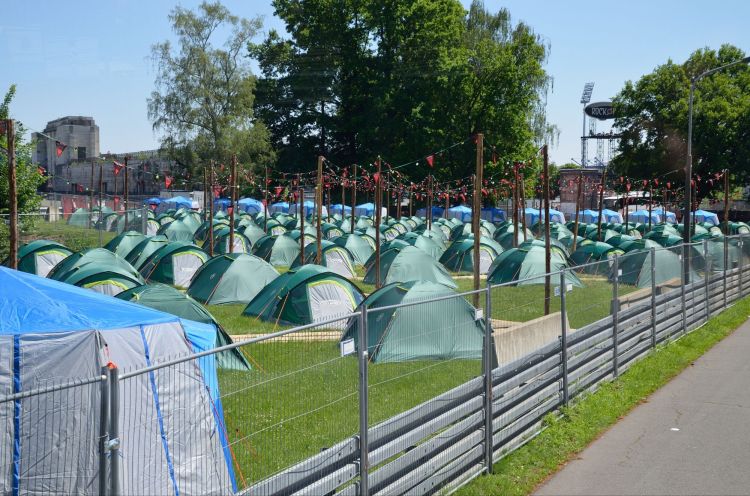
Before I digress into musings and the complexities of my thoughts, I’ll take you to our next stop, the Kongresshalle, which is an incomplete structure commissioned by the National Socialists but never finished due to the war. My husband drove around for a bit but we could not actually find a way into the structure. As happens quite regularly in Nuremberg, the grounds set aside by the National Socialists for their annual party rally was being used for modern purposes. This time, I believe it was some kind of circus, but I could be mistaken (apparently, Christmas circuses are a thing in Germany, but my kids seem to have an aversion to circuses, so we avoided these! haha)
Here are three pictures from our tour in 2017, followed by an exterior shot I obtained from Wikimedia Commons. You can see that the interior of the structure would’ve been significant, a stadium intended to hold 50,000 people.
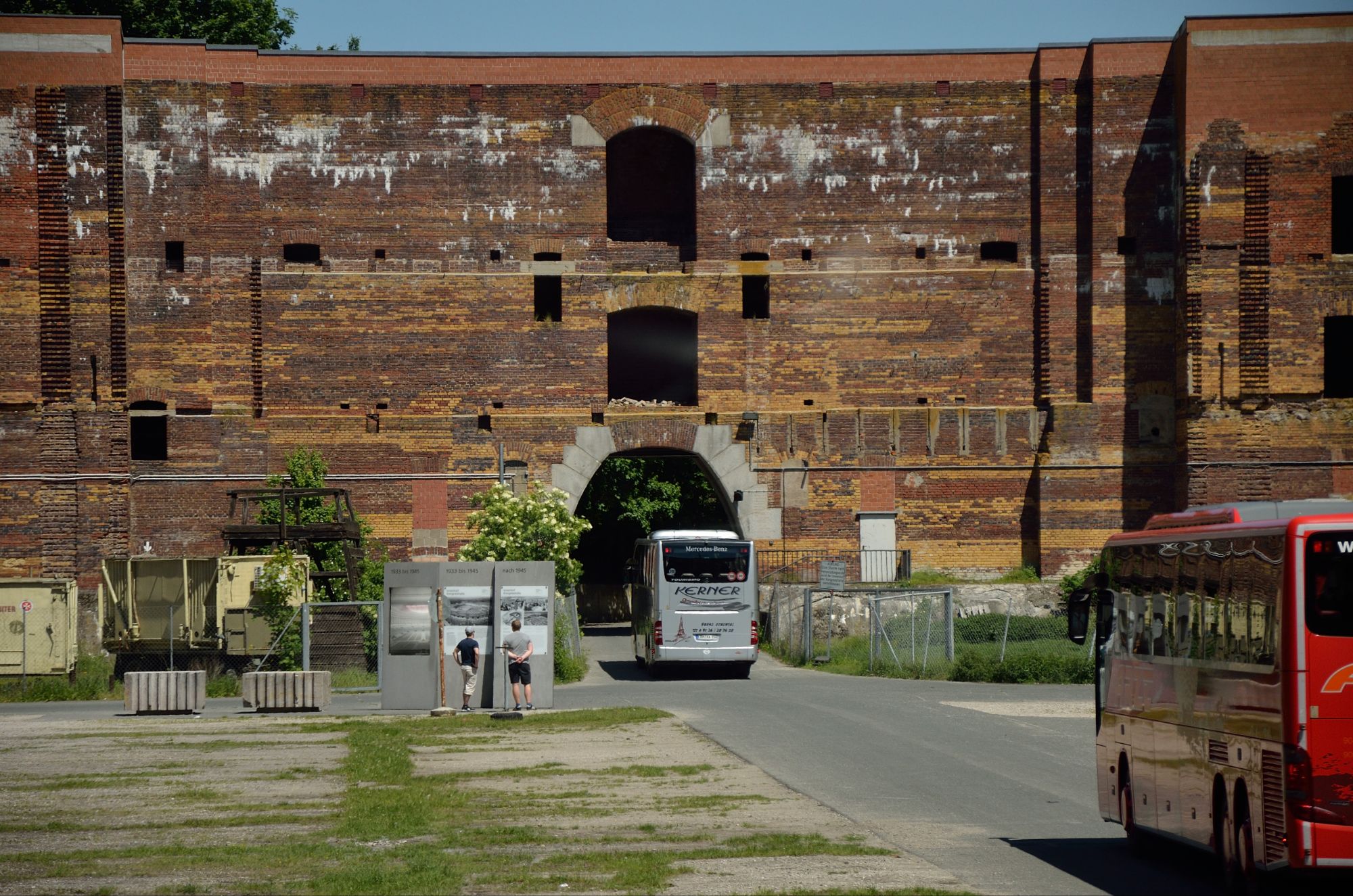


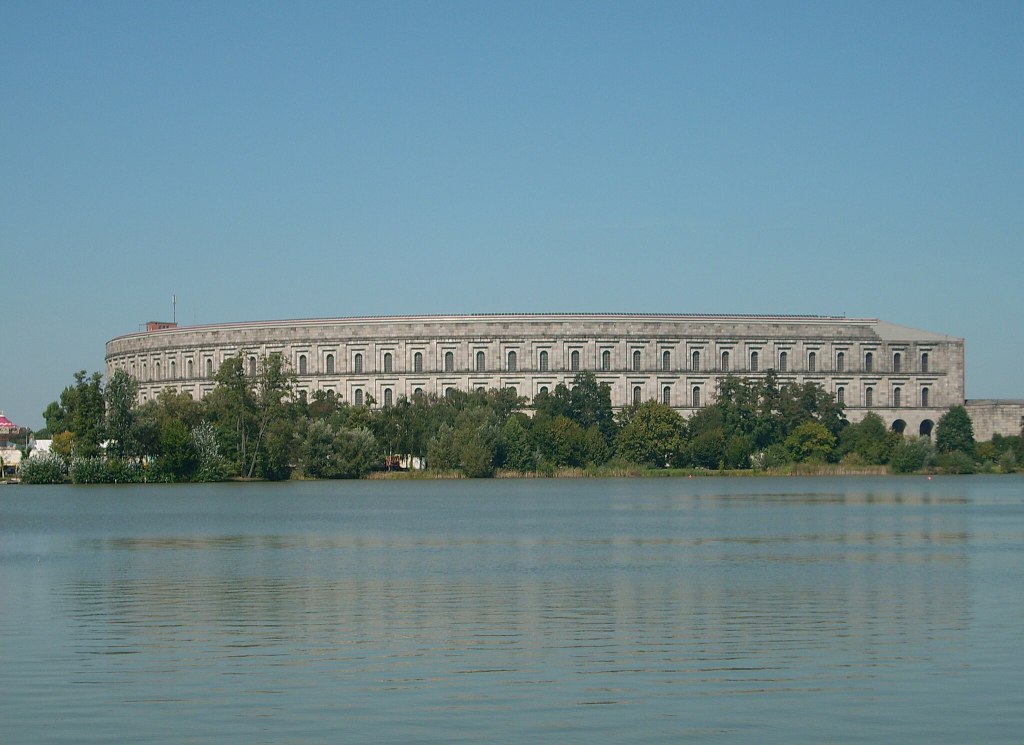
You can see how large it is, and yet this is only part of a large complex planned and partially built during the Third Reich. Our tour guide told us in 2017 that it has been left standing all these years as a reminder of the past, but as I mentioned above, it is also being put to use. Currently, the NS-Documentation Center is housed at the Kongresshalle. (NS-Documentation Centers can be found all over Germany, providing exhibits and education on what took place during the National Socialist era.) There are also plans to expand the structure into a cultural and artistic center.
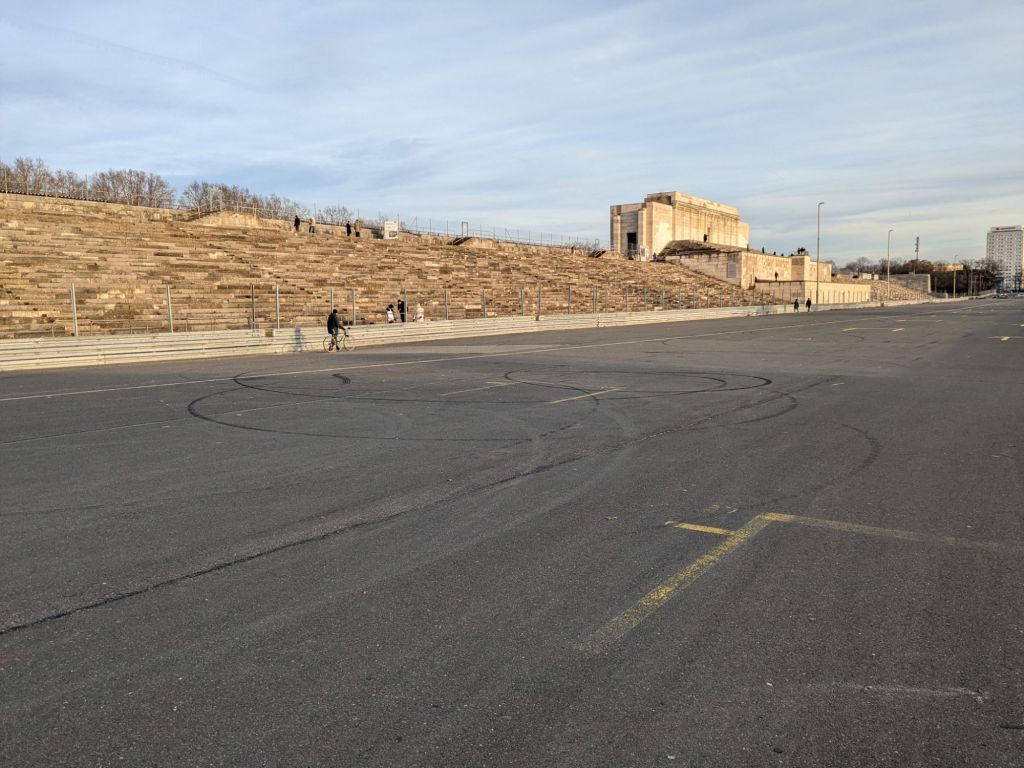
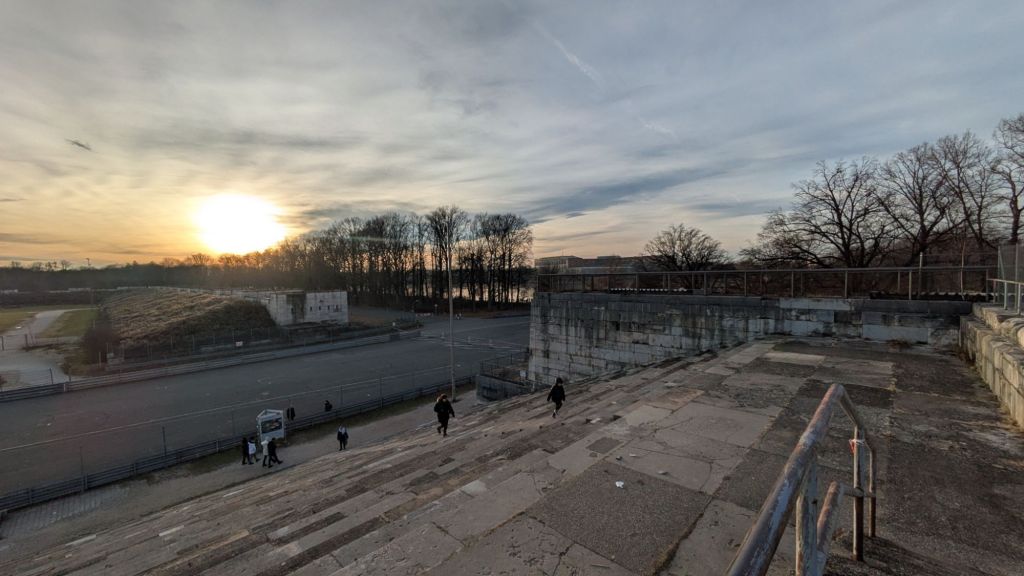
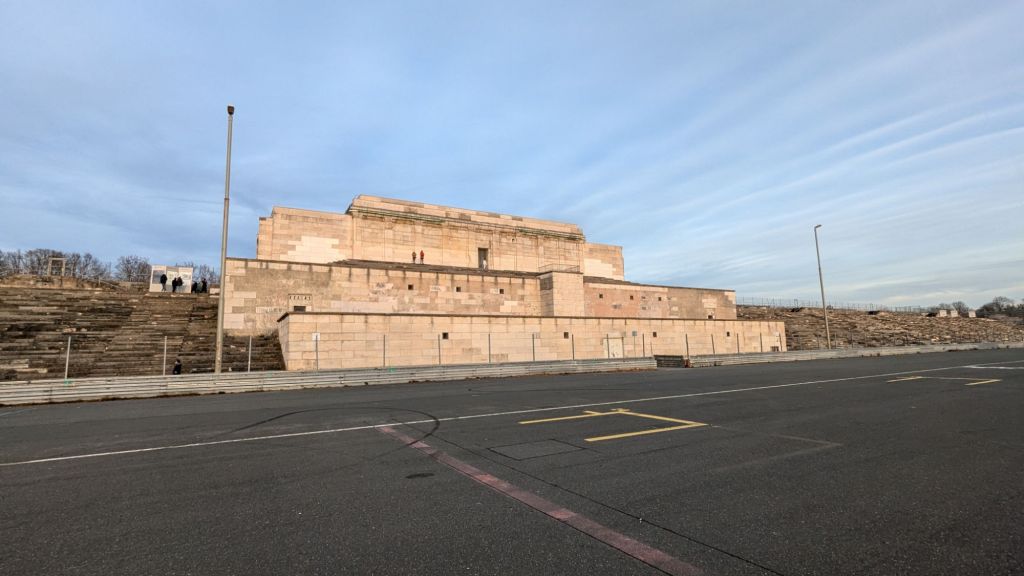
Another feature of this area is the Zeppelinfeld (Zeppelin Field), with parade grounds and a grandstand designed by Albert Speer. The location earned its name as the site of an early airship landing by Count Ferdinand von Zeppelin in 1909. It has since been used for many things, including football practices (including “American football,”) motor racing, and music festivals.
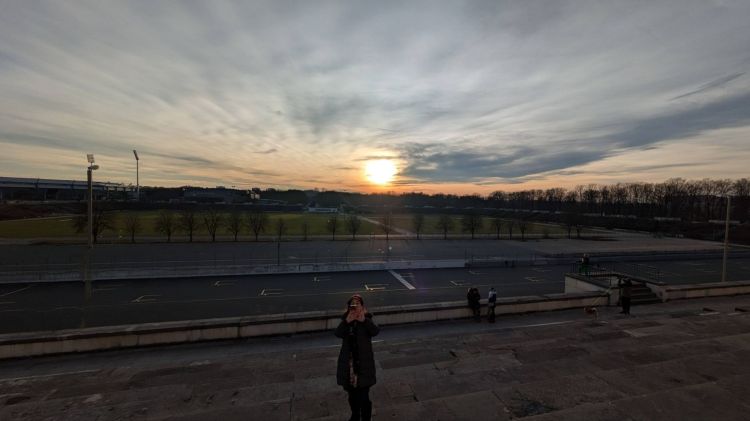
This time we actually got up and walked around. To my 7-year-old, this site was no more than a fascinating place to run up and down stairs as fast as this little legs could carry him.

The “golden hour” crept in while we were wandering around. I honestly can’t imagine a more perfect sky.

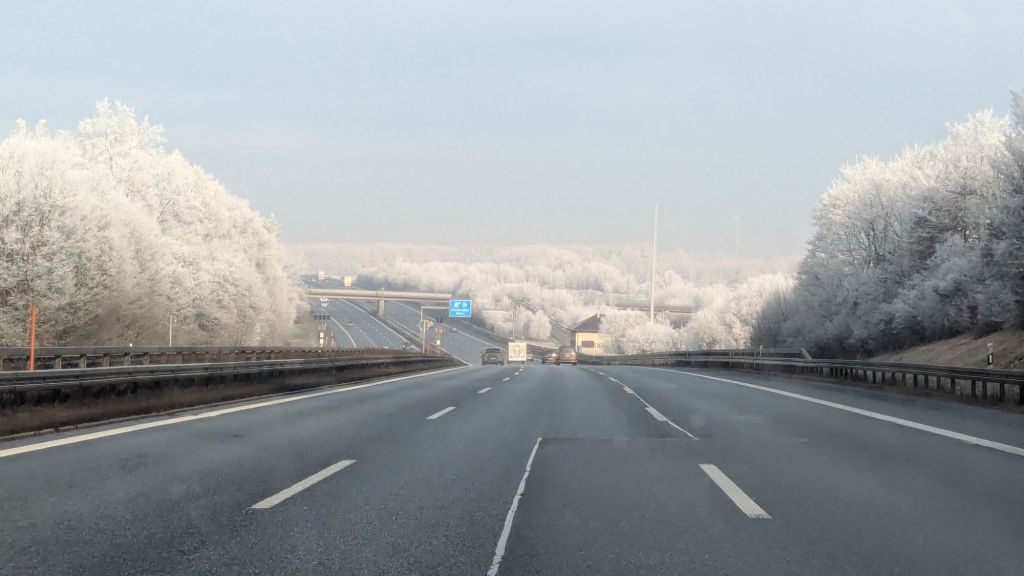
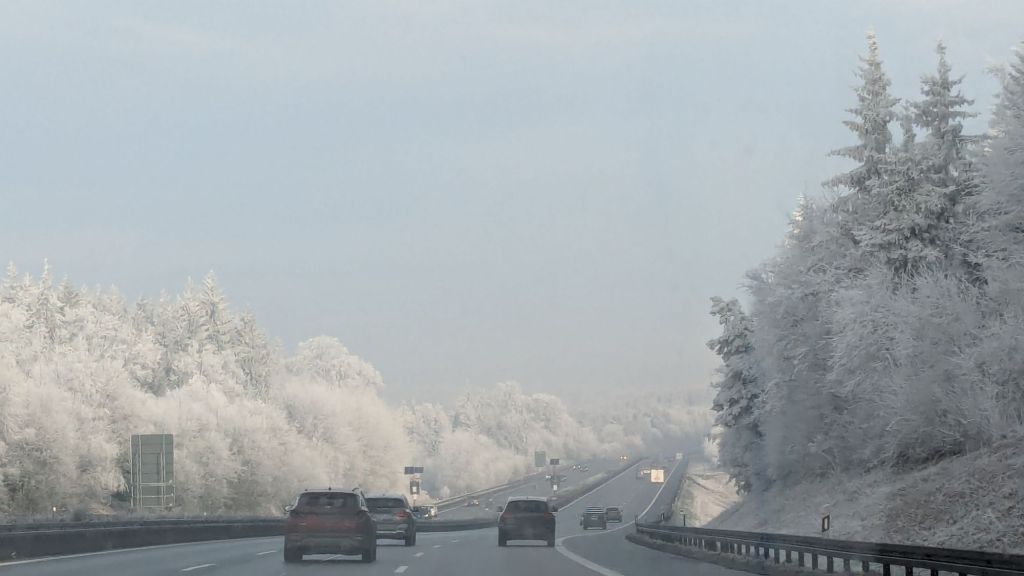
There are just a few more pictures I want to share with you. They are actually from our drive between Munich and Nuremberg. I’m not sure what to call this. It’s not snow, and the word “frost” doesn’t even seem appropriate.
My son said it was like frozen fog, and my daughter asked me “Mom, why is Germany giving Narnia?” (For those of you just getting familiar with “Gen Alpha slang,” that means giving the appearance of. Millennials might use the word “vibes.” Whatever term you want to use, she’s not wrong!)

Like Narnia, Germany is a magical and wonderful place. It is a place I feel at home. Even after this year’s trip, which was nothing like I had anticipated or hoped, and at moments was downright depressing, if I had it to do all over again, I certainly would.


Dearest Gunter releases March 28th. If you’re an eBook lover, you can order your copy TODAY, and it will be delivered to your Kindle that morning. Just click below… and stay tuned for the cover reveal on social media, February 13th!
If you want to be informed about the latest on the Aubrey Taylor Books Blog, sign up below. Posts happen between 1 and 3 times a month, and focus primarily on writing, German history and travel, as well as films and books. I will also introduce you to other authors in a variety of genres, so drop your email to stay up-to-date!

 Aubrey Taylor Books
One thought on “Wandering Around Germany: Nuremberg”