
It seems like WWII films that come out of Europe tend to be more authentic than films that come out of Hollywood, even if they were made by nations that were occupied by or allied against Germany in WWII. While Hollywood tends to focus on a good-versus-evil trope, I prefer these foreign films because they often focus on the humanity of both sides.

Into the White originated in Norway, Sweden and France, and from what I can see on IMDB, it was highly underrated, grossing a mere $704 in the US and Canada.
Sometimes I feel like “based on a true story” is an obligatory tagline for WWII media, but with a war that stretched across the globe, there are countless stories to be told. This one is poignant, and portrayed in a way that is both humorous and deeply effective.
Into the White is no epic war drama. It handles the subject with a lighter touch. Perhaps that is because of Norway’s place in WWII history, being occupied by Germany but in the end a point of contention between Germany and Britain. More on that in a moment.
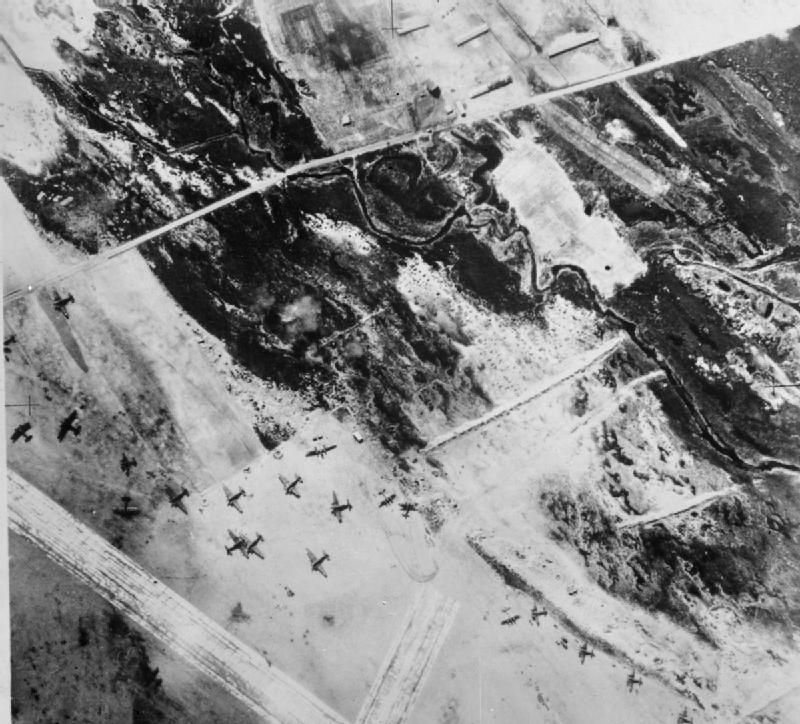
After chasing each other over the windswept mountains of Norway, a British plane and a German plane crash land. The crews struggle through a blizzard only to find their way to the same empty hunting lodge. Since the Germans find the shelter first, of course, they make the British their prisoners.
Naturally, the British stereotype the Germans as humorless and rule-following, and the youngest of the three Luftwaffe airmen is pinned as a dedicated Nazi. You can already sense that the other two Germans tolerate his beliefs, though they are old enough to know better themselves. The British are humorous but also zealously dedicated to their Empire–an empire which the Germans point out is just as interested in Norway’s raw materials as Germany is. It is how the British Empire was built, after all.
As someone who is fascinated by the German perspective of 20th Century history, and for the sake of understanding the whole story of the war, I appreciate that this perspective was added, however briefly. It was very much a part of what was going on at the time, but it is usually overlooked in retrospect because there is so much focus on the charges against Germany.
The British, however, were very aware of why they were fighting. It was not primarily to stop a man they perceived as mad and bent on world domination. It was, as the teacher says in Hope and Glory, “to save all the pink bits.” (The pink bits being parts of the still-dominant British Empire shown on a world map). Britain feared that its hegemony would be brought to an end.
Despite the fact that Germany was eventually defeated, the war did bring about the end of the British Empire. An empire whose growth and rule had been built and maintained on the same principles that the world was charging Germany with.
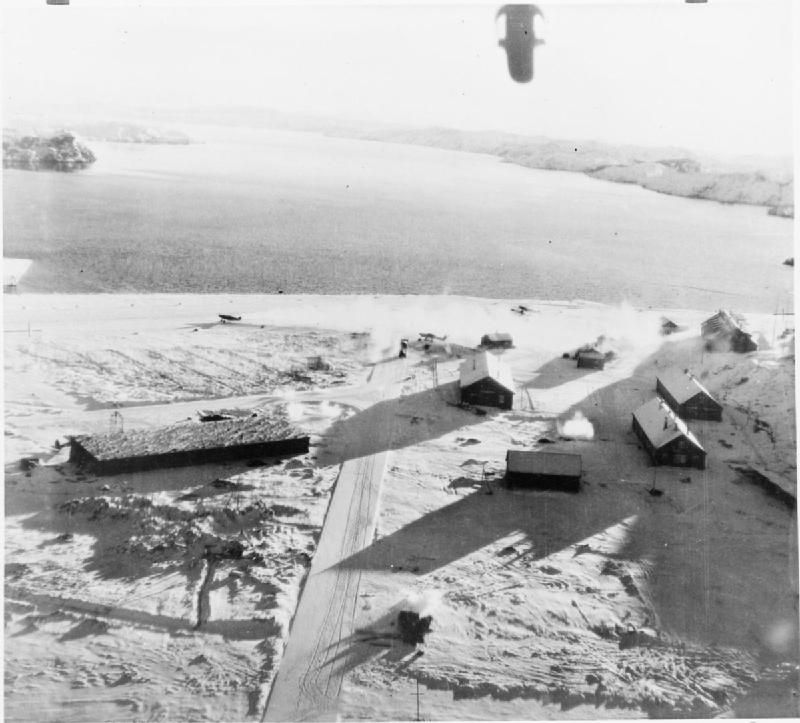
Perhaps Into the White is lighter than some of the other films I’ve watched and reviewed, but it still gives the viewer things to chew on. In the beginning of their stay, there is that mutual mistrust between German and Englishman, vying for power and refusing to discuss politics. Personalities clash. But as they are stuck together and dependent upon each other for survival, all the outward biases begin to fall away, and they become comrades in the greatest sense.
Without giving away spoilers, there does come a shattering moment when the viewer is reminded that the Germans are still the “enemy.”
This is not a high-budget, special effects film. It is chiefly a dialogue/survival film, with plenty of banter and male bonding. The filmmakers capitalized on interactions between the mismatched British gunner Smith and the hulking, silent German Strunk, who are destined to become a sort of odd couple–which makes the return to wartime enmity that much harder.
The film is available on Prime. There is minimal violence, and what there is is due to survival, not battle. For sensitive viewers, there is a lot of cursing and a few dirty jokes (the aforementioned male bonding). The language is probably what earned it an R-rating.
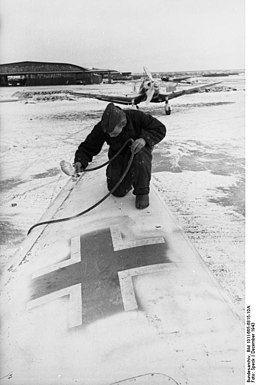
Bundesarchiv, Bild 101I-665-6815-10A / Speck / CC-BY-SA 3.0, CC BY-SA 3.0 DE <https://creativecommons.org/licenses/by-sa/3.0/de/deed.en>, via Wikimedia Commons
If you want to be informed about the latest on the Aubrey Taylor Books Blog, sign up below. Posts happen between 1 and 3 times a month, and focus primarily on writing, German history and travel, as well as films and books. I will also introduce you to other authors in a variety of genres, so drop your email to stay up-to-date!

 Aubrey Taylor Books
Thanks for the movie review!
I didn’t know the German planes were painted white in snowy areas, but it totally makes sense.
LikeLiked by 1 person