When I was young, my mom sent me for ballet and tap lessons. We were poor, I didn’t have the right clothes or the right shoes, and I was a chubby kid. I was self-conscious just walking in. Then the teacher told me to walk like an elephant. I’m sure all the other girls felt silly too, but for me, it was nothing short of mortifying.
Needless to say I never went back to that dance class. Unfortunately, mom never pushed me, either.
Later in life, after a failed attempt at partner dancing lessons with my boyfriend (whom I later married), I decided that dancing was just something other people do. With the exception of Zumba classes, my dancing days were done.
Then came the deep dive into my German heritage. Somewhere in the recesses of my memory, I probably knew about German men in Lederhosen slapping their shoes, but when we attended our first Oktoberfest two summers ago, I realized how entertaining and beautiful Bavarian dancing could actually be.

As I got more involved with the community, I toyed with the idea of joining the dancers, but again: dancing is one of those things other people do. Besides, I’m super busy.
Somehow, I allowed myself to be roped in. It might’ve been because I met a few of the younger women at a little Oktoberfest gathering that I was playing music at. They were sweet and urged me to check it out. Or it might have been because the lead dancer of one of our groups has a charismatic personality that can get you excited about just about anything.
Dancing
You might be more familiar with the specifically male component of Bavarian dancing. A Schuhplattler is “a dance in which men hop, jump and slap their knees and shoes with the palms of their hands.” It sounds funny to our American ears, but truly, it can be quite entertaining, and originally served the purpose of attracting the attention of young ladies!
The young men of a village would dress in their Tracht (traditional clothing) and dance for the young women. Naturally, they also wanted to dance with the young women! So there are also popular partner dances, such as the Boarischer or Bavarian Polka, a slow polka in 2/4 time, and the Ländler, played slowly in 3/4 time. (Ländler derives from ländlich, which means rural, so these particular dances originated in rural areas).
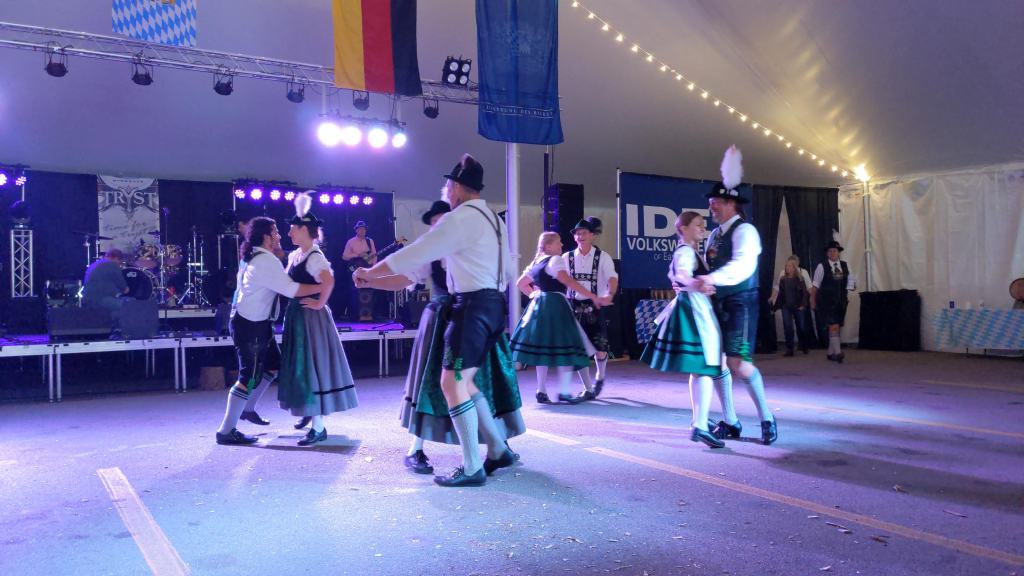
I am still a novice, so you are learning along with me. I pulled some info from this website and from the 10 months of experience I’ve had dancing with our clubs.
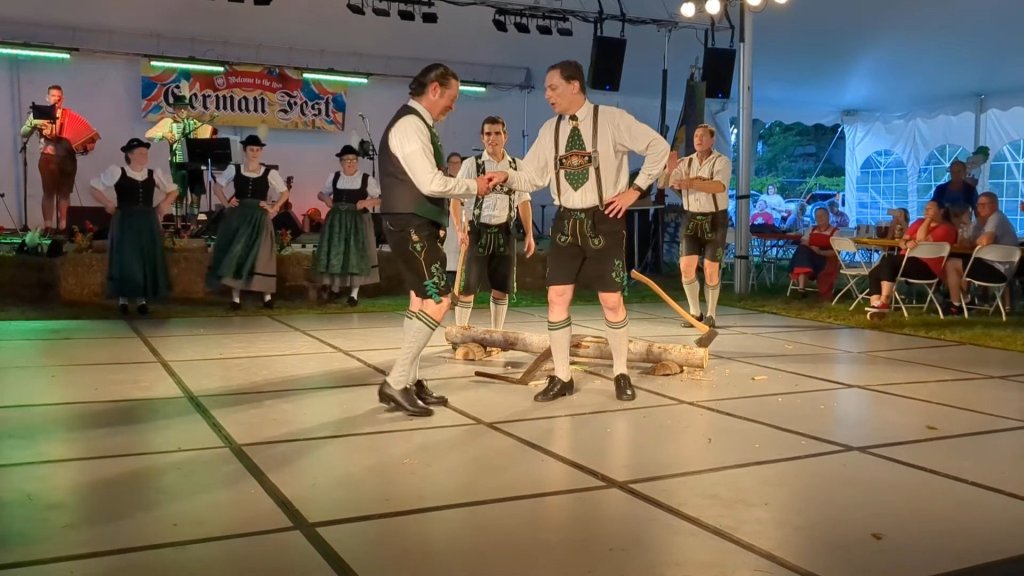
There are also dances that celebrate particular trades, such as the Holzhacker or Woodcutter’s Dance, and Amboss Polka, which celebrates the blacksmithing (an Amboss is an anvil).
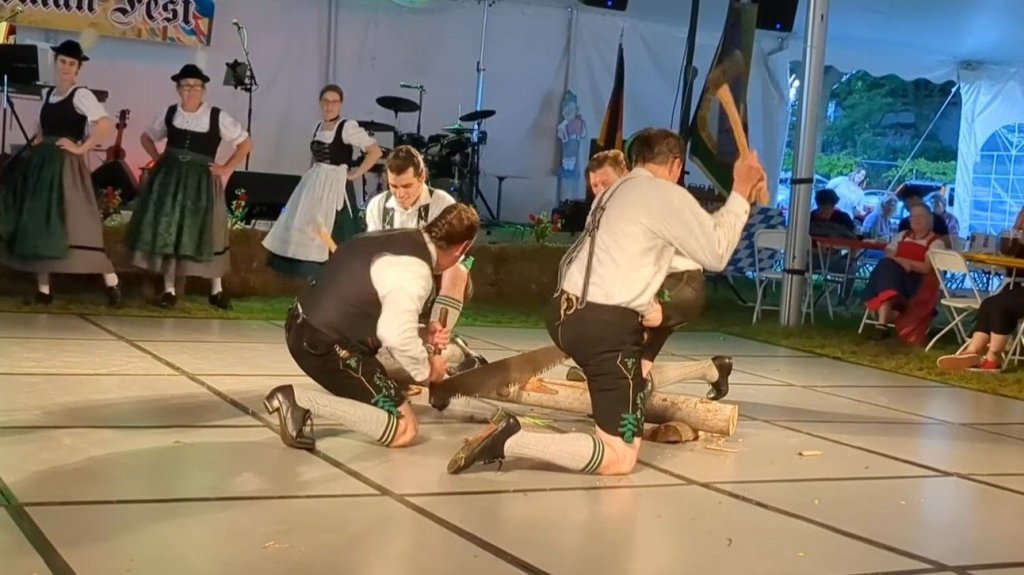
These days, much of this is being done for the purpose of keeping traditions alive, and because people love to do it. It is also very entertaining. You will notice dramatized flirting between the men and women, and the occasional dramatized sparring between the men.

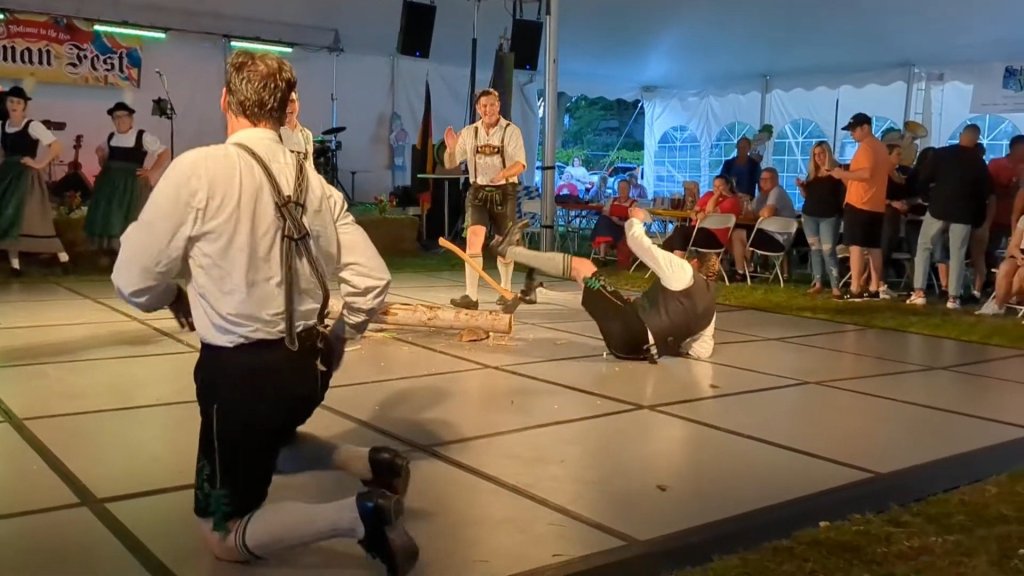
I have never had so much fun in my life, and I’m actually learning to dance! Many of the partner dances include a basic waltz component. There are men and women there who have been doing it for years, and they always have wisdom to share, coupled with gentle reminders (“keep your hand on your hip!” “Smile!”) As a single dancer, I get to enjoy the benefit of dancing with a number of different partners, and that forces me to become a better dancer.
Much of what Americans think of as “German” is specifically Bavarian or even Austrian. This is true with this type of dancing, the consumes, and even things like Oktoberfest, which originated in Munich as a wedding celebration for the crown prince of Bavaria in 1810. People enjoyed the festivities so much that they decided to celebrate every year as a harvest festival.
A note for those who are into genealogy, I come by the Bavarian thing only somewhat honestly: part of my family is from the Pfalz, which was under Bavarian control for a period of time. It is not just about ancestry, though, it’s about appreciation and celebration of a culture that you enjoy, whether you are Bavarian or German or nothing of the sort. I have an aunt who did Greek dancing for years… and we are not at all Greek.
Tracht
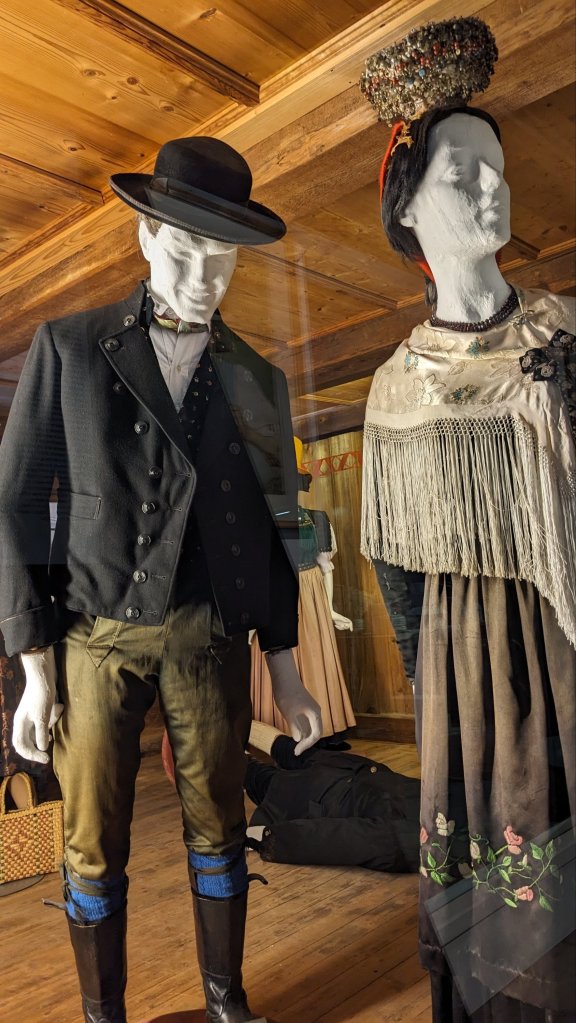
Again, Tracht is the German word for traditional clothing. Again, when most people think of Dirndls and Lederhosen, they are thinking of traditional Bavarian or Austrian clothing. Only a little over 150 years ago, Germany was still an assortment of individual kingdoms, so naturally, each region had it’s own variety of Tracht. As an example, here are a few shots of traditional costumes from the Black Forest region of Germany:

And here is a photo of my club from our Spring Dance this year. We have two local clubs, and because the number of dancers in both groups has diminished over the years, both clubs dance together. Some of our members belong to the other group as well, so here you see Tracht from both clubs represented.
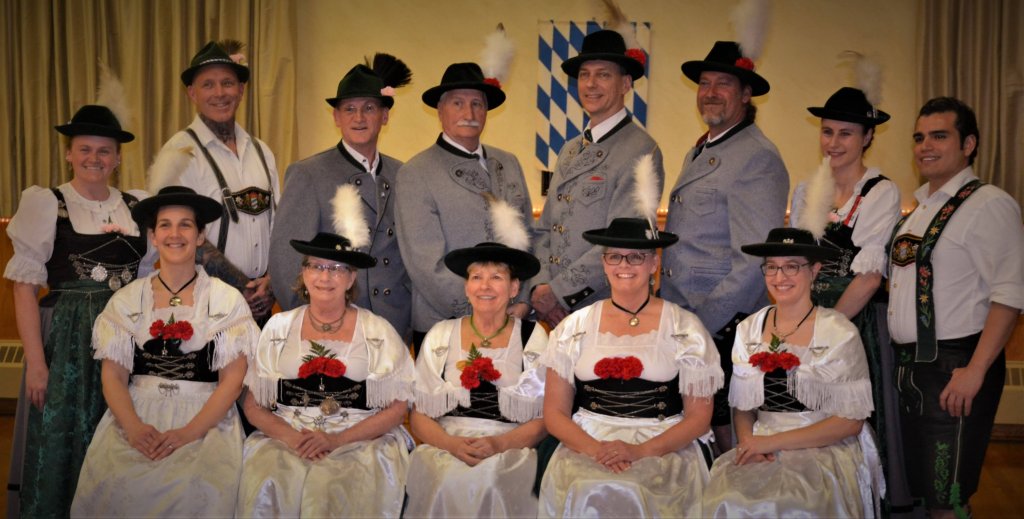
When it comes to club Tracht, it represents the club, its members, its founders, and the hundreds of years of tradition that lay behind it. In our particular club, there are a number of members who don’t usually dance, but who support the club and wear the Tracht. It is a unique feeling of pride and unity to wear such well-made, beautiful, storied clothing.
When we perform for the general public, the Vorplattler (the male lead dancer) often explains to the crowd that what the men are wearing is actually a hunting costume. They can vary a lot depending on the region they represent. In the evenings, young men would return to the villages and, naturally, want to meet up with young women. They would wear these attractive outfits, complete with all the accoutrements that proved they were strong, capable, and possibly, wealthy. Often these would be pins and awards from hunting or other competitions. And don’t forget a feather or a Gamsbart!
Wait, what?
When I first started attending German events, I laughed when I saw some men wearing big “feather dusters” on their hats. Come to find out, the so-called feather dusters are not even feathers, but the beard of an animal (usually a mountain goat). Of course, the bigger and higher quality Gamsbart one attaches to his hat, the more successful hunter he is (or the wealthier he is, with the means to purchase one).
We joke that it is an “expensive hobby,” which is true for any kind of dance (I know, I’m a dance mom: my daughter does tap, ballet, jazz, lyrical and hip hop). At least with Trachten Verein (Tracht clubs), the club will often purchase the clothes and then offer a payment plan to their members. There are particular rules a member needs to follow when wearing their Tracht. I’ve broken a few of them, but the elder members of the group have never made me feel bad or ashamed of my mistakes! Again, one is representing the club itself, its founders, and the tradition from which it springs.
For a full treatment on what it means to wear a dirndl, check out this article on Rare Dirndl:
Over and over again, I am told how German-Americans seem to be more interested in upholding these traditions than the people in Germany are. It has given me a lot to think about. One could say it is the way of the world that most young people have lost touch with the traditions of their ancestors. The world is becoming global, but I’ve found that having roots has enriched my life. From what I’ve heard, Tracht is enjoying newfound popularity with the youth in Germany as well… at least, in Bavaria.
 Aubrey Taylor Books
Thank you Aubrey. Very interesting article. I enjoyed it and share in the joy of your happiness. God’s blessings to you and your family. Missing you. Love ,Debbie
LikeLike
Miss you too! Hope all is well!
LikeLike