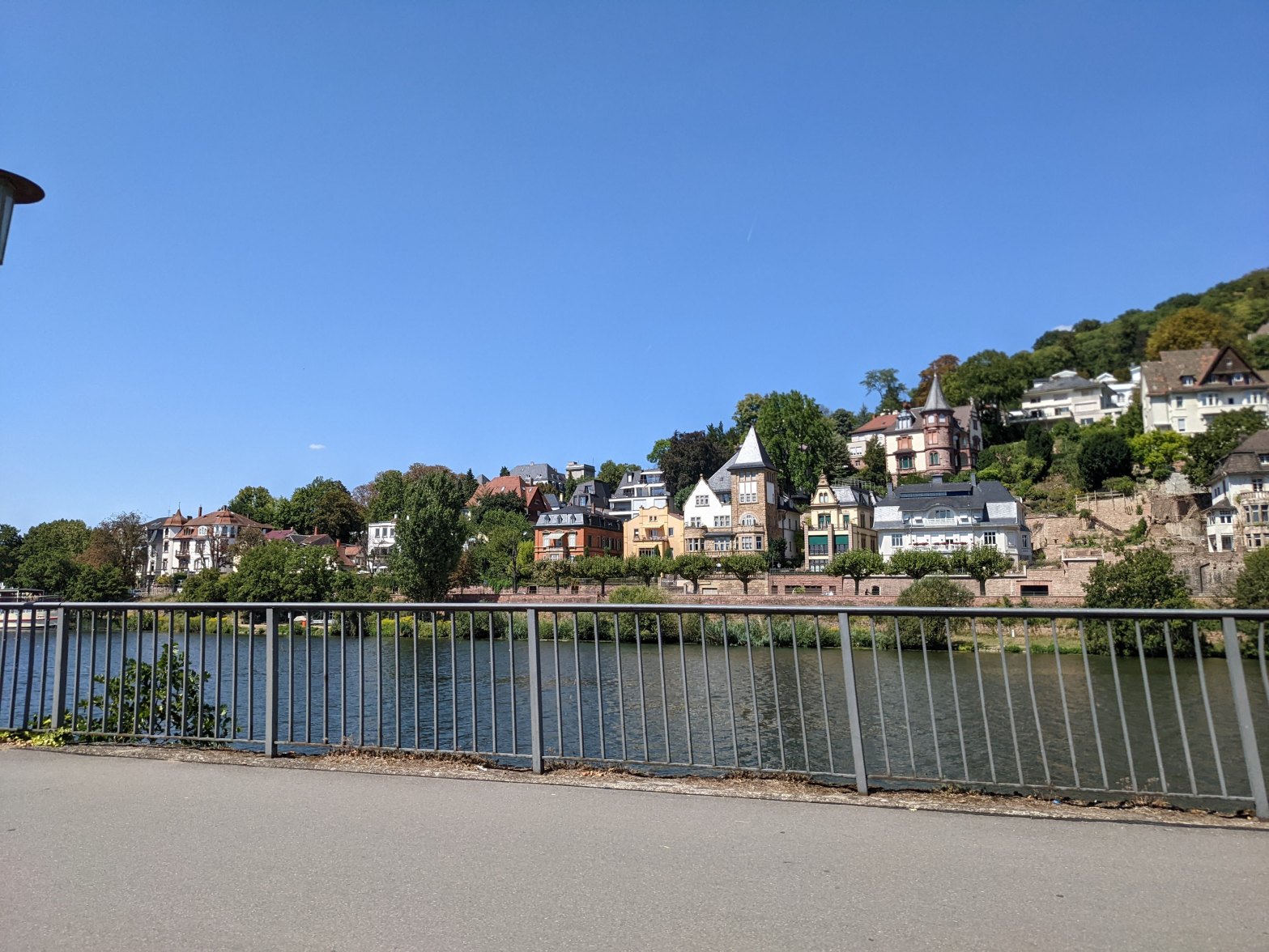
There is a reason Fritz Löhner-Beda and Ernst Neubach wrote a song entitled Ich hat’ Mein Herz in Heidelberg Verloren (“I lost my heart in Heidelberg”) because it is truly an enchanting place. Aside from flying into and out of Frankfurt, it is the only city in Germany that I’ve visited twice. And yet, due to time constraints, I still haven’t seen everything I want to.
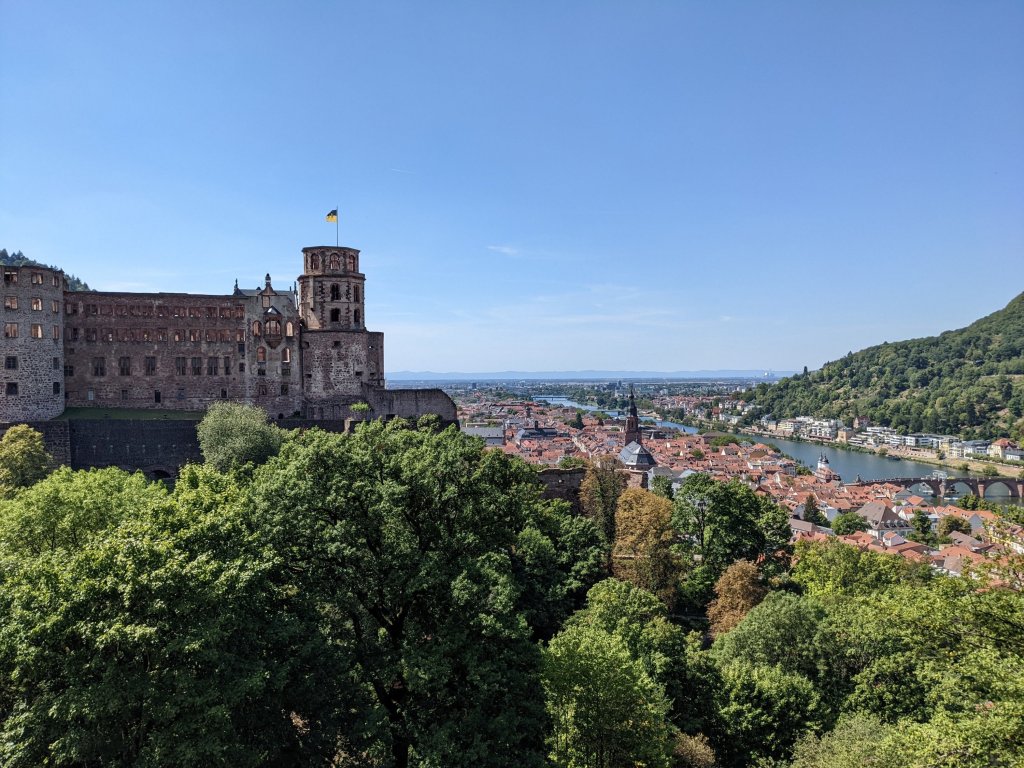
Most famous, of course, is Heidelberg Castle, a well-preserved ruin that sits atop a hill looking over the city. Of course, there are abundant castle ruins all over Germany, but this was one of the greatest of the Renaissance palaces. Thought it was damaged heavily by war in the 17th century, it was lightning that finally brought the palace to its knees in 1764.
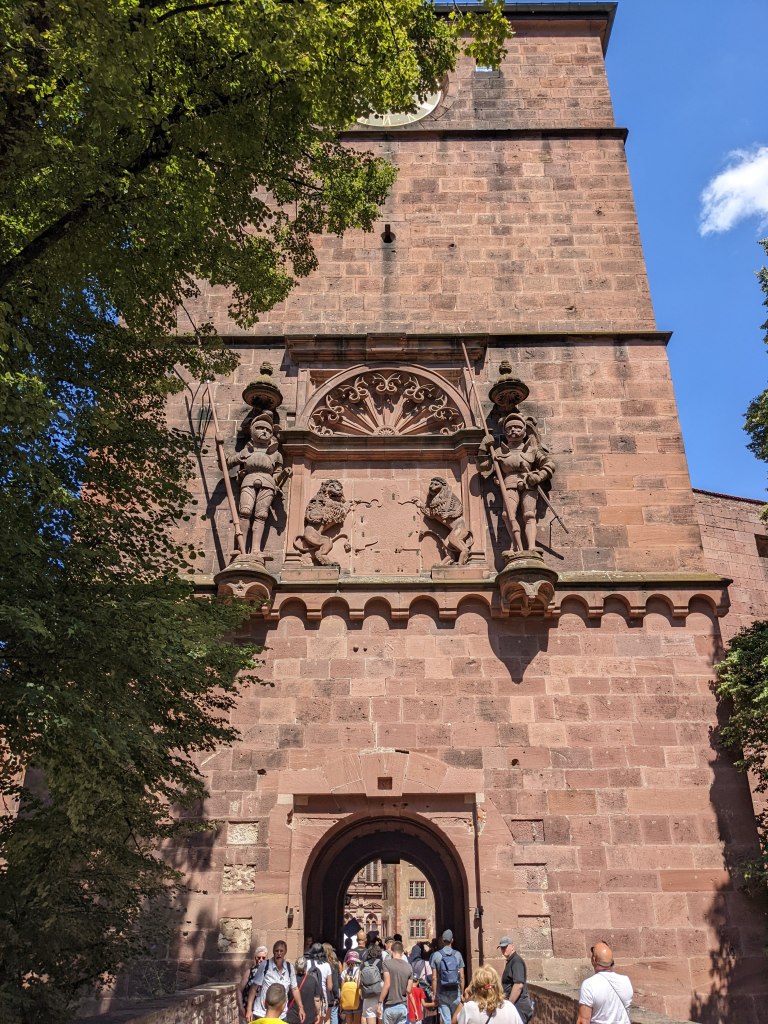
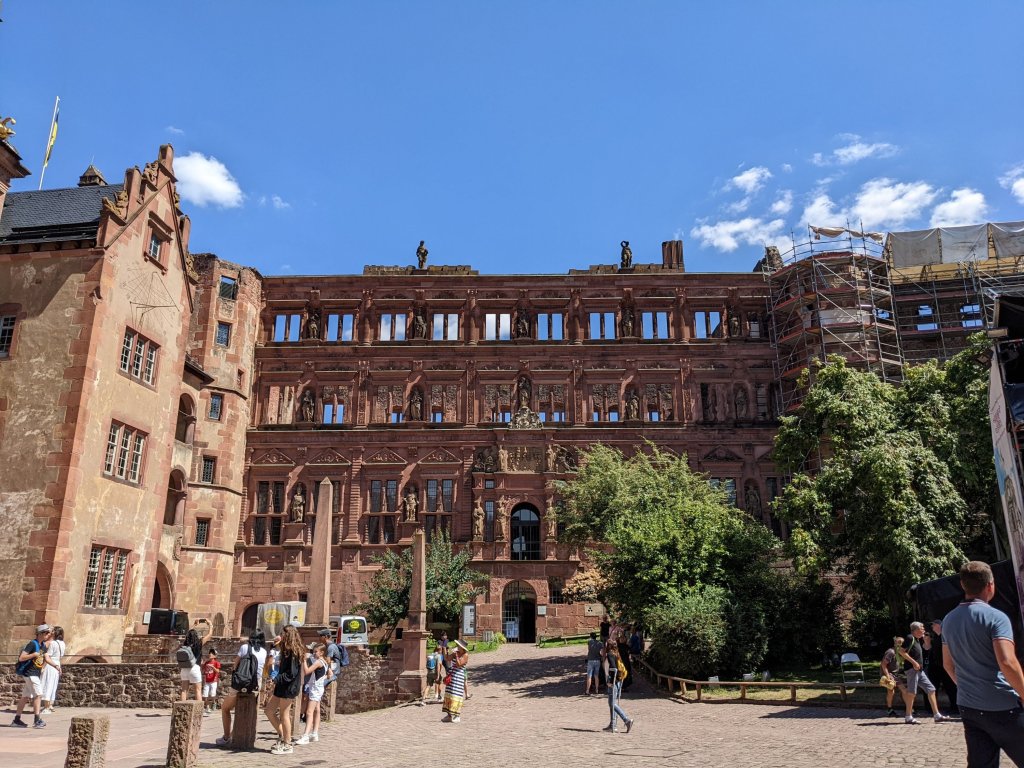
You enter the courtyard opposite rows of statues of German emperors, kings, and Prince-Electors from the House of Wittelsbach, which ruled Bavaria (and other German-speaking lands–Heidelberg is in Baden-Württemberg) for hundreds of years.

This year, I spent some time observing these statues and thinking about how some of my ancestors may have lived under the rule of these men. Then, I ventured through the archway in the bottom right hand corner of the picture above. Beyond that is a wonderful view of the town and Neckar River:


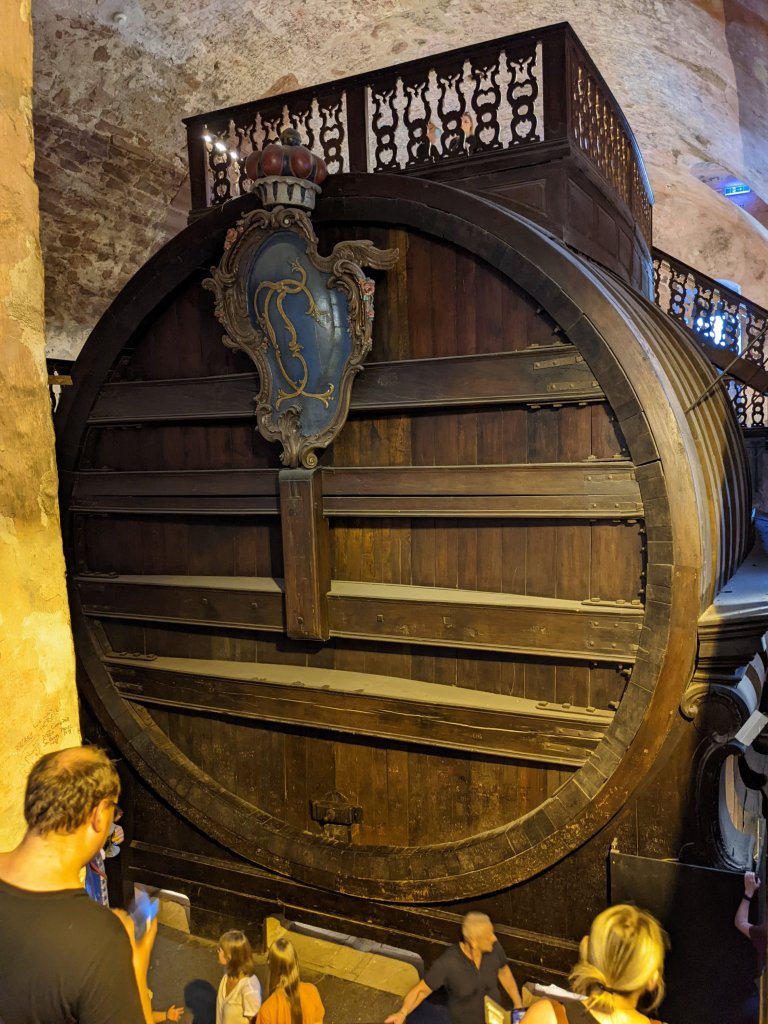
After that, it was a return to the courtyard and a trip into the Barrel Building. You are greeted by an enormous wine barrel…

…which is kind of a teaser for the 220,000 liter barrel behind it:

One of the things we did not visit last year was the German Pharmacy Museum, located within the castle grounds. It was an interesting walk-through, although I admit I did not take a lot of time to read the signage (I was accompanied by a 5 year old, after all).


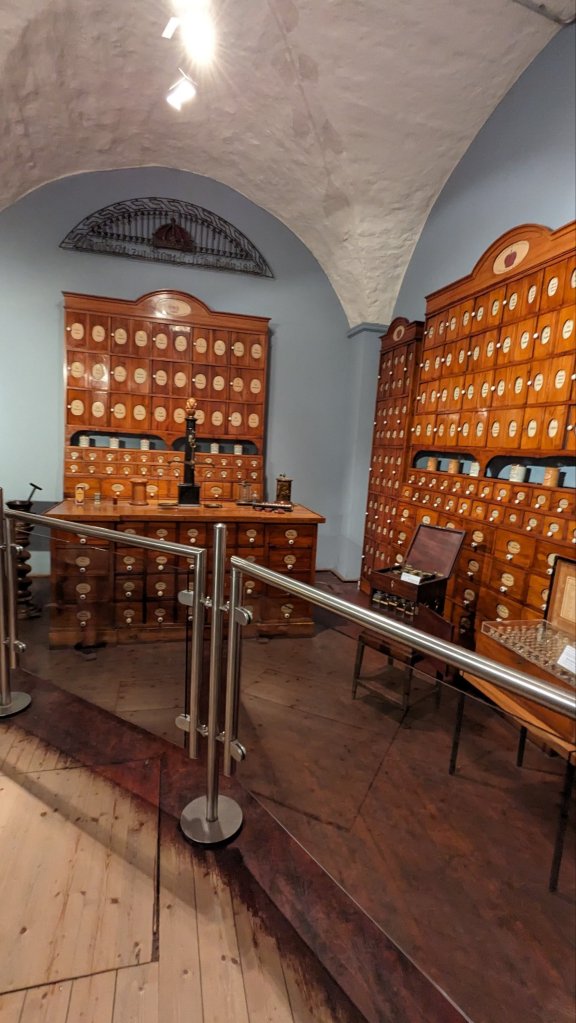


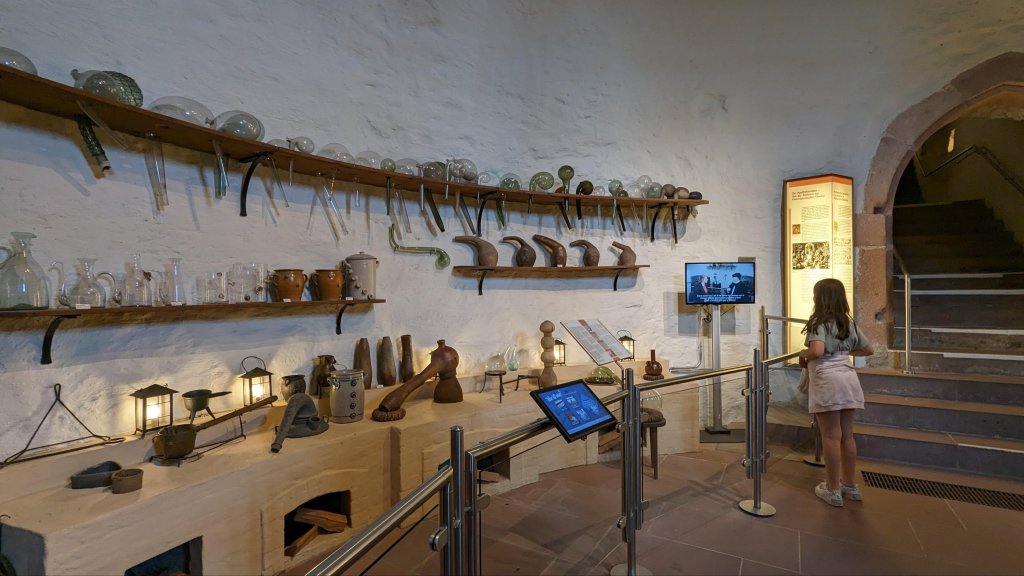
We have yet to take a paid group tour, but they are available. It is on our bucket list for our next trip to Heidelberg. On them, you can go inside the other parts of the castle, such as the Ottheinrich’s Wing, which has been very well preserved.
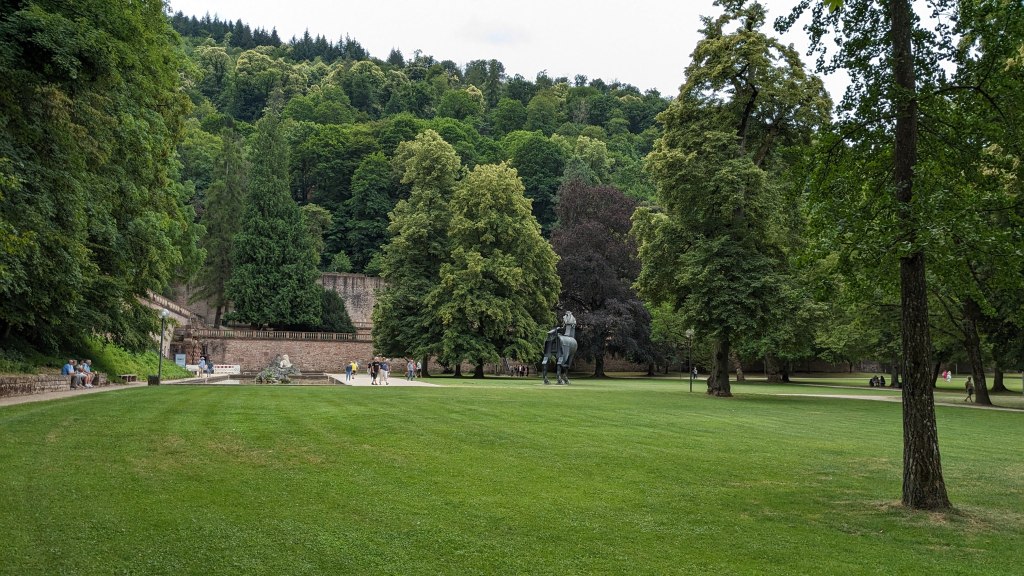

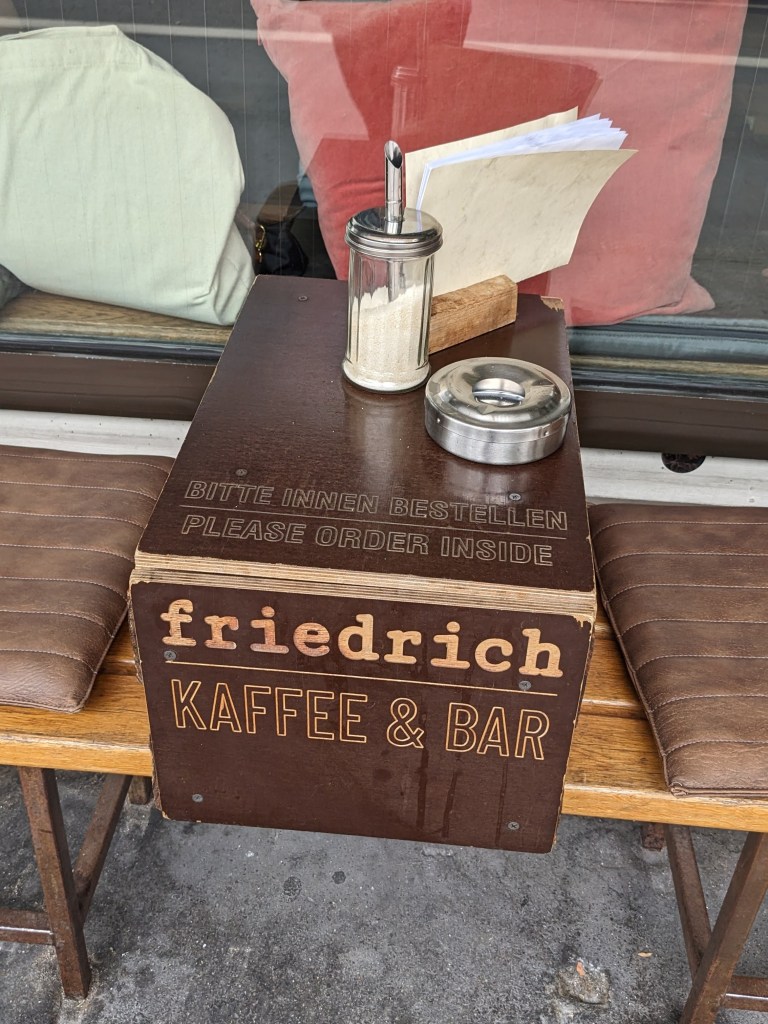
After we wandered through the gardens, we headed into town. I couldn’t resist snapping a picture from the Cafe Friedrich. (If you know my Friedrich, this should come as no surprise!)
Our days in Germany were drawing to an end, and I was not about to leave without Döner!

After that, it was on to the Thingstätte, an old Third Reich site which stands today as a park and a reminder. Its history actually goes back many hundreds of years before the Nazi regime and the site was long recognized as a place of spiritual significance. It has also been used for theatrical productions, concerts, and according to at least one website, Easter celebrations.

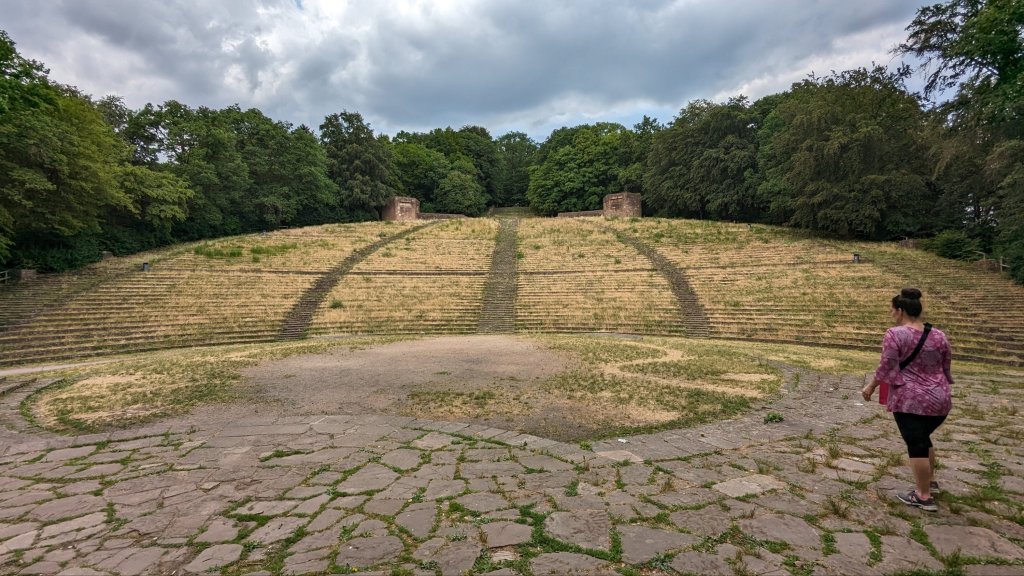
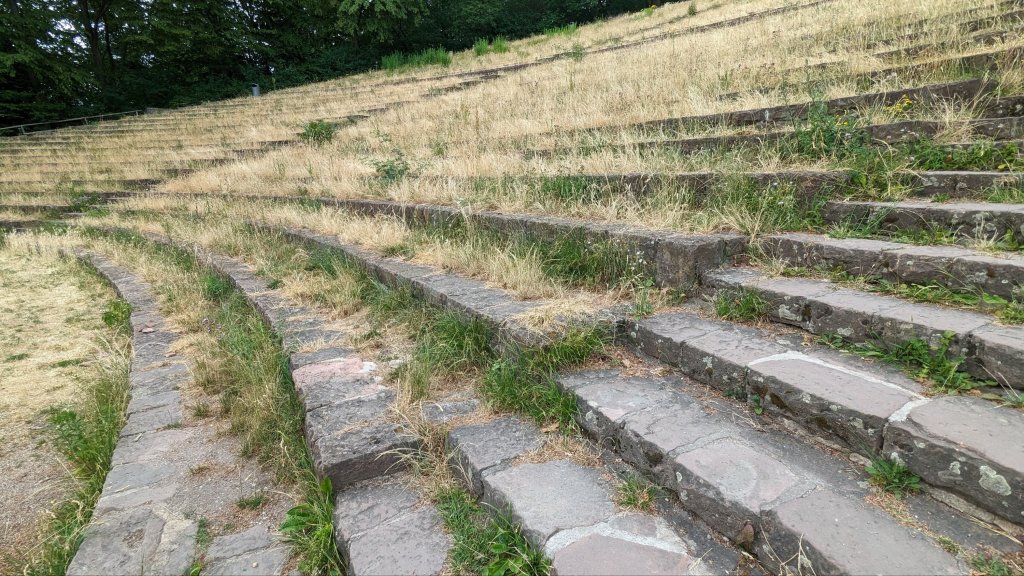

I’m not going to lie, being here helped me connect with my characters. I thought about stolzer Jake, ambivalent Christian, and stoic Friedrich. I thought about Emmy sitting at home, worrying about Jake. I thought about how unifying events like these were, like a tide carrying along the emotions of people who may not have cared so much otherwise. I thought about the way charismatic speakers play on our hearts and minds, and how they can so easily draw rational people to their cause.
Moving out of the 1930s we intended to slip back a few centuries to the ruins of a monastery up the hill, but unfortunately we arrived just as that site was closing (4 PM seemed early to me).

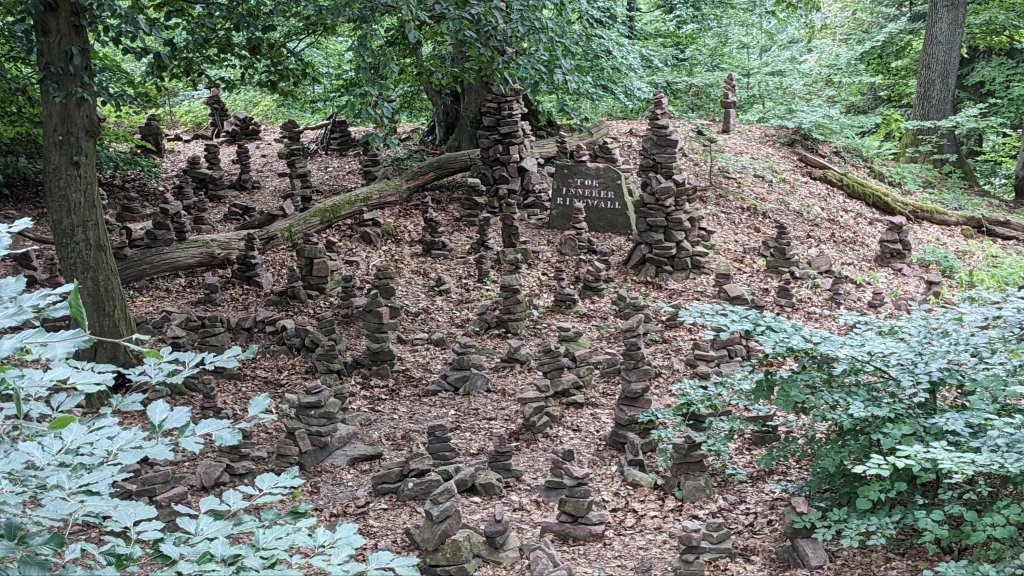
There are also some stacks of stone along the path, which are said to be the ruins of an Inner Ringwall of ancient Celtic defenses. I will be honest, I don’t know enough about Celtic war strategy to understand what these could possibly be for. Anyone with expertise in this area, feel free to share in the comments below.
What I do know is that there were three major “waves” of people groups that migrated into to Europe and basically made it what it is today. Remains like this remind us that the Celts were the first to settle in the central area of the continent. They were eventually pushed west by the Germanic tribes. Finally, the Slavs pushed into what is now Eastern Europe, causing the Germans to push the Celts even farther west.
I hope you’ve enjoyed some of the highlights from our trip to Heidelberg. Once again, not nearly enough time for such a fascinating city!

Some of the information presented on Schloss Heidelberg was found on this site: https://www.schloss-heidelberg.de/en/
 Aubrey Taylor Books
What an extraordinary trip!!!
LikeLike