This page serves as a catalogue of many of the books I’ve read in my last few years of research. Be aware, I read both mainstream and revisionist sources, because I believe they each have value and can serve to balance each other out. I also do not shy away from primary sources from the Third Reich, though most of those are not truly “books or films” and therefore are not listed unless they’ve been bound into a volume that is easily accessible.
***My belief is simply this: if we truly want “Never Again,” we have to be willing to look at the whole story. Otherwise we are just perpetuating the cycle.***
I’ve included books that I have not (yet) finished in their own category, along with some of the novels I have read, and some of the films that have most informed my work, whether directly or indirectly. In some cases, what a resource lacks in historical accuracy, it makes up for in milieu.
Works that have a hyperlink have been given a more thoughtful review on my blog in the Book and Film Reviews and Reflections series.
This page will be updated as often as possible, and I will highlight new additions or changes in a separate color.
NONFICTION & MEMOIR: FULL READS
An Artilleryman in Stalingrad: Memoirs of a Participant in the Battle – Wigand Wüster
An artillery officer’s behind-the-scenes experiences on the Eastern Front, especially during the Battle of Stalingrad. The book boasts great pictures, and you have to love Wüster’s sense of humor! Note: this is an abridgement of a longer work that is available in German.
Battle for Berlin – Josef Goebbels
When we realize that every nation used extensive propaganda, this book seems a little less threatening and a little more interesting. It primarily focuses on the years 1927 and 1928, when the NSDAP was still trying to gain a foothold in the capital of Germany. If you want a “primary source” from the Third Reich, this is a good one.
Blood and Iron: The Rise and Fall of the German Empire 1871-1918 – Katja Hoyer
This book provides a fascinating romp through the German Empire from its foundation to its demise.
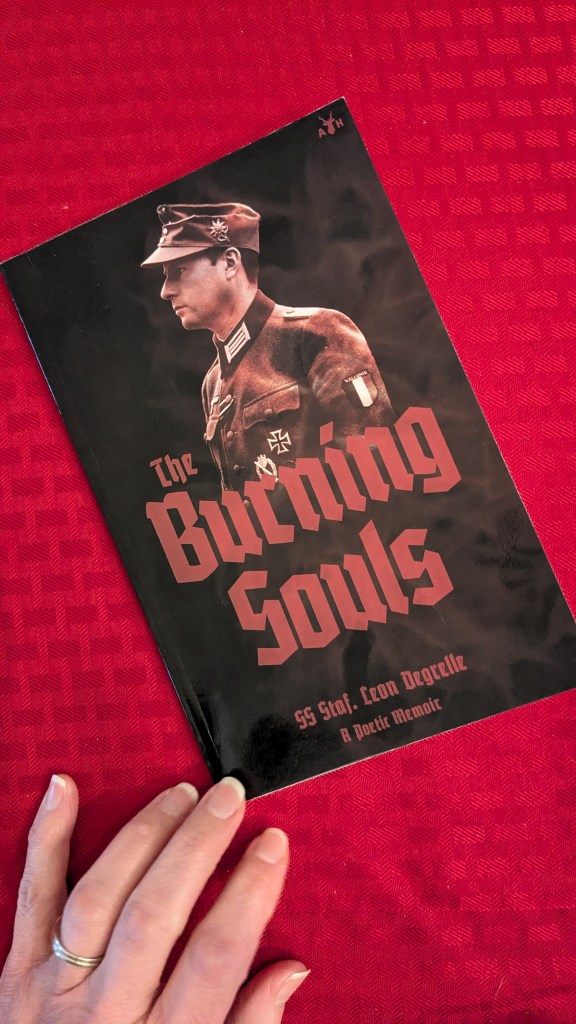
The Burning Souls – Léon Degrelle
Léon Degrelle was an influential Belgian politician. If you want to call him an unrepentant Nazi sympathizer, I guess that’s understandable, but in reality, he was a strong Catholic and member of the Rexist party, which advocated for corporatism/royalism. His faith is clearly evident in this reflective book, in which he shares about childhood, his thoughts on the beauty of motherhood, as well as honor, duty, sacrifice, and Christ’s cross. Honestly, it is not so much political or historic as it is devotional. Leaving politics aside, it wrecks my heart every time I pick it up–which is frequently.
Death in the Baltic – Cathryn J. Prince
A piece of little-recognized German history: the tragic sinking of the MV Wilhelm Gustloff. The numbers of lives lost were more than three times those of the Titanic. Some critics of this book have issues with some of the statements contained therein, but we know that individuals remember the same event in different ways. Even with some potential inaccuracies, the book is one of the few non-fiction works about the event available in English. It also provides insight into the plight of Germans living in East Prussia toward the end of the war.

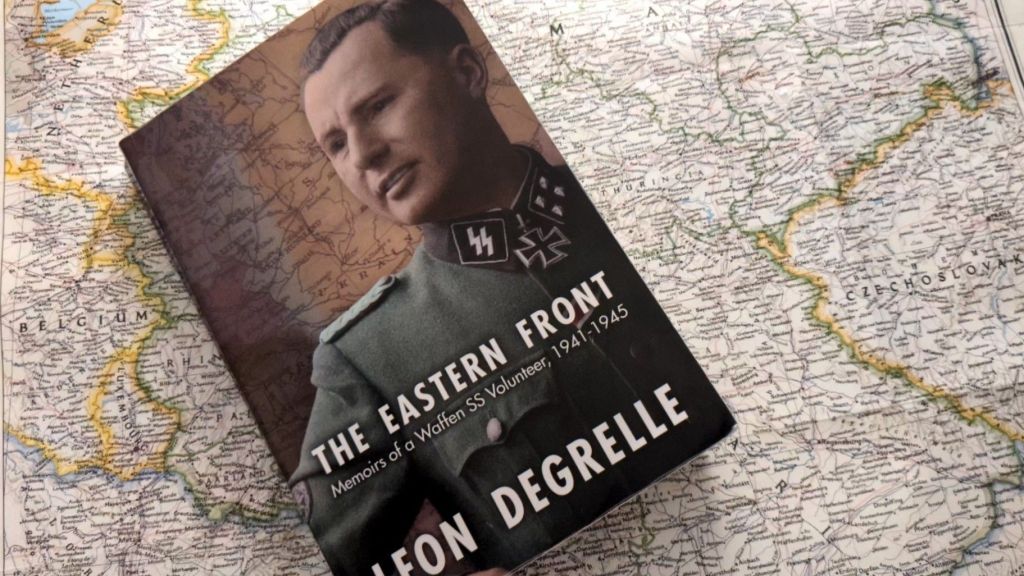
The Eastern Front – Léon Degrelle
Degrelle gives the reader his unique perspective as a Belgian volunteer in the German army and SS during the war on the Eastern Front from 1941 to 1945. He knew what it was to see the Germans as an invading enemy, but he also understood their cause in a unique way. He had a passion to see a free and united Europe–something most Americans can’t comprehend because of the belief that Hitler wanted to wipe out every culture that wasn’t German. As someone who started out as a foot soldier and rose to the rank of Colonel (some sources say General), he can provide unique views from every level at the front. *A MUST READ*
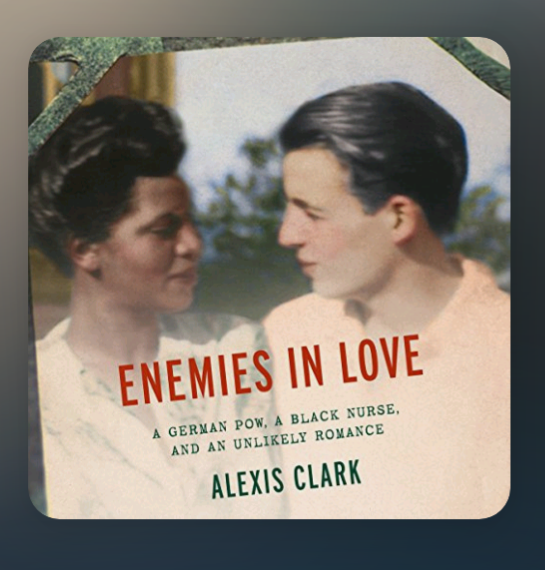
Enemies in Love – Alexis Clark
The fascinating and unique love story between a German POW and a black nurse. (Side note: Isn’t she beautiful?!)
Europe on Trial: The Story of Collaboration, Resistance, and Retribution During World War II – Deák István
This book was handed to me by a friend. It was written to fill a niche and felt like something I might read for college coursework, but it was interesting nonetheless. The title and subtitle explain the book excellently, as it brings European culpability into focus as it investigates how each European country/region dealt with the German occupation.
Fur Volk und Fuhrer: The Memoir of a Veteran of the 1st SS Panzer Division Leibstandarte SS Adolf Hitler – Erwin Bartmann
Bartmann tells an incredibly detailed and memorable story–sometimes too detailed in that Bartmann is not afraid to talk openly about his various sexual encounters. Aside from the TMI’s, I have referred back to this memoir on numerous occasions for input on my SS characters because it gives good insight into the life of a man of the Waffen-SS.
The Forgotten Soldier – Guy Sajer
Probably the most well-known memoir by a German soldier (who was, in this case, half French), Guy Sajer tells the story of his service in the Großdeutschland Division on the Eastern Front. Because of his French upbringing, he struggled to feel like he was truly part of the German cause. What is most gripping about this memoir, to me at least, is his recounting of the fight at Memel towards the end of the war. Raw and gritty. Not to be missed, even though some critics contend that it is somewhat “fictionalized.” *A MUST READ*
Germany: Memories of a Nation – Niel MacGregor
The history of Germany told through pieces of art, architecture, and technology. Fascinating. You will want a hard copy of this book, or at least a way to reference the pictures. The audiobook is not sufficient.
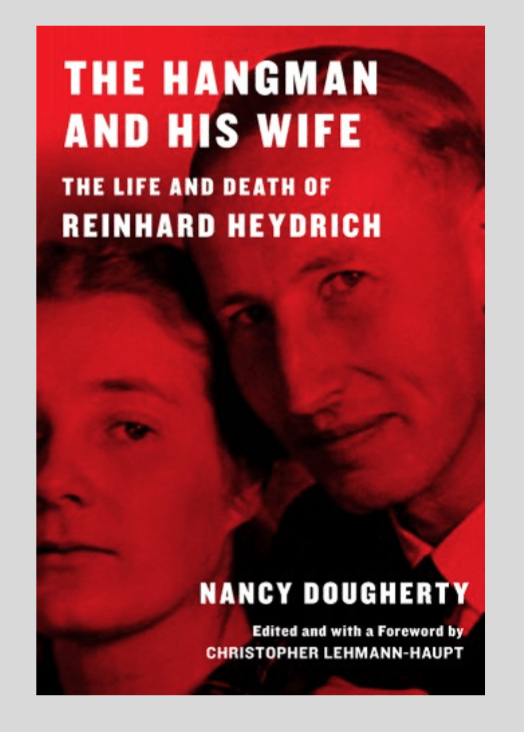
The Hangman and His Wife: The Life and Death of Reinhard Heydrich – Nancy Dougherty, Christopher Lehmann-Haupt
Well worth the 26 hours I spent listening to it. I still think about it two years later. This book is truly about of both Heydrich and his wife Lina, and stands unique among the various biographies of Heydrich. As a woman, Ms. Dougherty was able to elicit things from Frau Heydrich that other interviewers could not. It also provides a fascinating introduction to the Nazi Secret Service (Sicherheitsdienst or SD) as a whole, and insight into the lives of many of the top Nazi players. *A MUST READ*
Heydrich: Pursuit of Total Power – Gunter Deschner
An excellent and “balanced” biography of Reinhard Heydrich. The book is a little older, but Deschner takes the time to correct misconceptions and elaborate on information which came to light by the 1970s. An easy and fascinating read. Highly recommend if you are interested in the life of one of the most fascinating figures of the Third Reich.
The Hiding Place: The Triumphant True Story of Corrie Ten Boom
Corrie was not simply a woman who lived through the German occupation of her homeland, actively resisted, and was eventually put in a concentration camp. Following the example of her sister, she became a woman who was unafraid to extend grace, love, and forgiveness to her enemies and former captors. If for no other reason, it deserves a place on everyone’s TBR.
The History of the SS – G.S. Graber
This is as much a history of the SS as it is a short biography of Heinrich Himmler. There is much more to the organization than what we think we know from film and fiction. It is not a long book, I read through it rather quickly.
Hitler’s Children: Spitting Fire (Eyewitness Accounts – 12th SS Panzer ‘Hitler Youth’ in Normandy 1944)
This volume by Sprech History offers firsthand accounts of the battles in Normandy from members of the 12th SS Panzergrenadier Division, and the Allies who fought them. It is a short book with short accounts, less of a commitment than a full-length memoir.
Hitler’s Cross: The Revealing Story of How the Cross of Christ was Used as a Symbol of the Nazi Agenda – Erwin Lutzer
This book is written by a pastor and theologian, and is spiritual in nature. (You have been informed!) That said, I feel that it is an important read for people of the Christian faith who are looking for a more spiritual take on the Nazi period. It also serves to challenge the modern church. Have we withdrawn too far from the world?
Hitler’s Warrior: The Life and Wars of SS Colonel Jochen Peiper – Danny S. Parker
Absolutely well-written. The author seems to be fair in his estimation that no one knows the truth about Peiper’s direct or indirect involvement in the war crimes at places like Malmedy and Boves. How much blood is truly on Peiper’s hands? Did he pay for his crimes at Landsberg or did he deserve to burn to death in his home 30+ years later? Who killed him? Did he actually or did he escape as so many other SS fugitives? Without answering these questions with finality, Parker gives a very in-depth analysis of the available information through extensive research, newspaper articles, records, letters, and years of interviews.
Messages to the Youth of Europe – Alexander Jakob, Prince Friedrich Christian and Léon Degrelle
This small book is simply a collection of speeches–warnings–from two men who remained firm in their convictions long after the war. Regardless of what the reader feels about their ideology, it is chillingly applicable to what is going on in Europe and the world today.
My Father Joachim von Ribbentrop – Rudolf von Ribbentrop
This is absolutely one of the best memoirs/biographies I have ever read, though it is lengthy and I would not call it a “must read” unless your interest truly lies in foreign policy or you are looking for a valuable alternative view of the period. Indeed, it convinced me of the value of reading accounts of history that do not line up with the mainstream. There’s no mistaking that there was a great love and respect in this family and that the author was looking to clear his father’s name, but the fact is, he also had a close-up view of events that have been remembered differently in the eyes of history. It is right that Rudolf von Ribbentrop would feel the burden to explain things from his father’s point of view. Plus, Ribbentrop the Younger seems to have been incredibly personable. I missed him when the book was over.

Mission at Nuremberg: An American Army Chaplain and the Trial of the Nazis – Tim Townsend
This is a perspective rarely considered in the study of the Third Reich, the Second World War, and the Nuremberg Trials. A caveat is that I do feel it is presumptuous for anyone to call men’s standing before God into question based solely on their involvement with the National Socialist regime.
The Myth of German Villainy – Benton L. Bradberry
We all know there are lies and distortions on both sides, and it is worth reading for no other reason than to get a good dose of the opposite perspective. Unfortunately, it is hard to come by.
Obedient Unto Death: A Panzer-Grenadier of the Leibstandarte-SS Adolf Hitler Reports – Werner Kindler
This memoir is the stark opposite of Erwin Bartmann’s in that Werner Kindler says little about life outside of combat. Kindler served in an armored personnel carrier (APC) unit, and though his commanding officers changed throughout the book, he was often under the leadership of Joachim Peiper, whom one gets to know rather well through Kindler’s book. Indeed, this book repeatedly gives the reader a sense of the unique relationship that existed among soldiers of the Waffen-SS and their superiors.
The Other Trench – Lt. Alexander Pfeifer and Philipp Cross
I have to applaud this young man, Philipp Cross, because he meticulously compiled, edited, translated, and published his great-grandfather’s WWI memoirs all on his own. Further, he did a beautiful job, including countless photographs from his father’s service. The book offers a glimpse into both the Western and Eastern fronts of the First World War from the perspective of a German officer.

The Red Fighter Pilot: The Autobiography of the Red Baron – Manfred von Richthofen
How can you not love the Red Baron? I admit it, I’m kind of a fangirl. I loved this brief account of his time in the war, and the light heart with which he wrote it: “My dear reader, I hear you laughing at my story.” I only wish there had been more to add.
Reinhard Heydrich: The Biography Volumes 1&2 – Max Williams
Rather than starting from the premise that “he was a monster,” Max Williams casts Heydrich as a human being. To me, the problem with a lot of WWII biographies is that, even if historians are supposed to be objective, when it comes to the Nazis, they just aren’t. The second thing to note is how much space is allotted to photographs and documentation. Williams provides access to the protocols of the Wannsee Conference–the only remaining copy in existance–as well as an autopsy of Heydrich after his death. Yes, I read them both in full and plan to include them in an upcoming Book and Film Review, coupled with The Man With the Iron Heart.
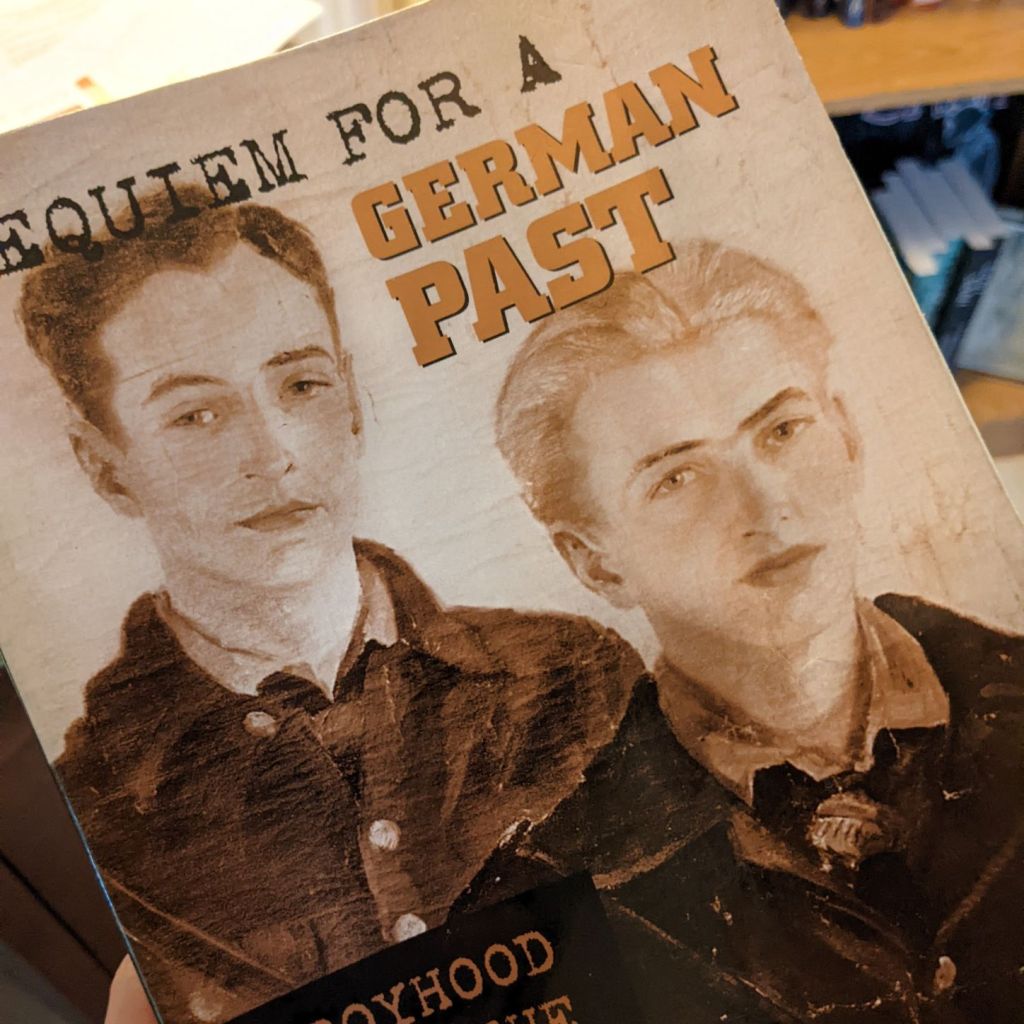
Requiem for a German Past: A Boyhood Among the Nazis – Jurgen Herbst
A memoir written by a former member of the Deutsches Jungvolk–the 10 to 13 year old organization that fed into the Hitler Youth. As an older teen, Jurgen stayed on in the DJ as a leader, but as with many other young men, eventually found himself at the front. A very moving memoir.
The Shadow of His Wings: The True Story of Fr. Gereon Goldmann, OFM – Gereon Goldmann
A priest-in-training’s journey through the Second World War. He served in both the SS and the Wehrmacht. I was very encouraged by his faith and God’s provision, and enjoyed the insight into the war in Italy, which I had not studied very much. I will confess I did not go on to read all of what he wrote about his ministry in Japan.
Soldat: Reflections of a German Soldier, 1936-1949 – Siegfried Knappe
This was recommended to me alongside The Forgotten Soldier because it gives an officer’s perspective of the war on the Eastern Front. This memoir also covers years prior to the war, and gives insight into the German Labor Service, officer training, the last battle in Berlin, and life in a Soviet POW camp. Very detailed. I’ve read quite a bit of it a second time.
Storm of Steel – Ernst Jünger
A WW1 classic. For those who have read Erich Maria Remarque’s antiwar All Quiet on the Western Front, Jünger writes from the opposite end of the spectrum, where soldiers are hailed as “princes of the trenches.” Here, war is glorious, and battle exciting. Both authors’ perspectives deserve to be read alongside each other.
The Vanquished: Why the First World War Failed to End – Robert Gewarth
This book goes far beyond Germany to every player in the First World War. More specifically, those who lost the First World War, and the effects on the subsequent years of history.
We Will Not Go to Tuapse – Fernand Kaisergruber (Read by Paul Woodson)
One cannot help but be fascinated by the story of this Belgian collaborator and soldier of the Belgian Waffen-SS. Paul Woodson’s reading gives life to this story which is already filled with animated anecdotes and dry humor. Kaisergruber takes the reader from realizing that his politics did not line up with the majority, through battle, wounding, imprisonment, and release. While some reviewers label this “pure propaganda” in that Kaisergruber never changed his beliefs even decades later, I believe he provides an excellent and necessary piece of the intricate, nuanced puzzle forms a more complete understanding of World War II.
NONFICTION & MEMOIR: PARTIAL READS
Note that a DNF does not necessarily mean I don’t intend to finish the book in the future. Some possible reasons for a DNF include:
They were used as a reference
They were no longer relevant to my research
They’re low priority
I just haven’t finished them yet
Yes, sometimes, I do just lose interest!
Blood, Dust, and Snow – Friedrich Sander
I’m still listening to the audio edition of this book, but I heartily recommend it if for no other reason that the narrator nails Herr Sander’s snarky sense of humor. Plus, he has an authentic German accent. A MUST-LISTEN.
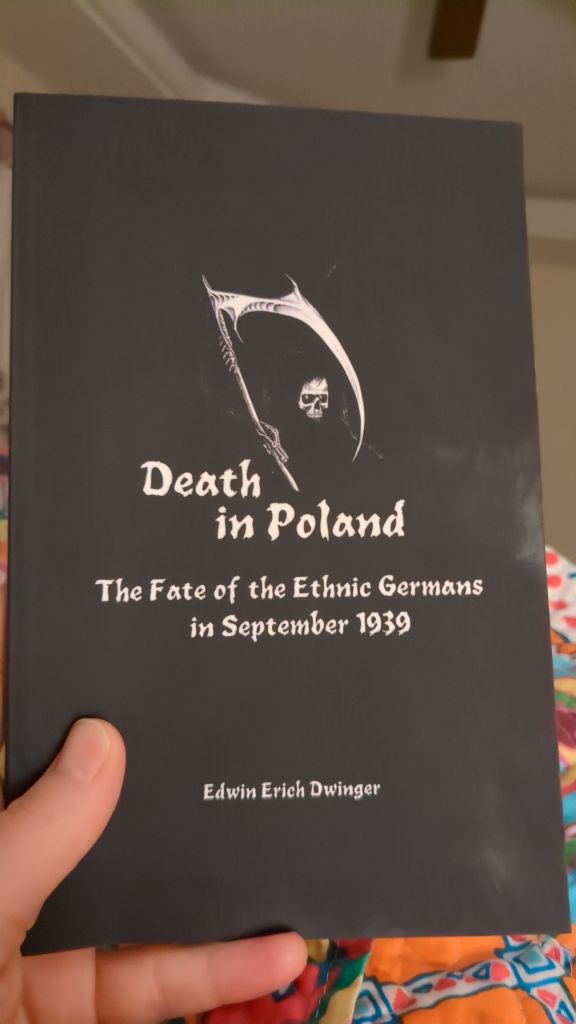
Death in Poland – Edwin Erich Dwinger
Admittedly not an easy read. It’s not supposed to be. Graphic accounts of attacks on German civilians living in Polish lands before war broke out in 1939. I know, this is controversial, but these were not the first anti-German attacks in the region.
Founding Weimar: Violence and the German Revolution of 1918-1919
This is a scholarly read, to be sure, but I gleaned so much from the 45% of it that I read, and I fully intend to go back to it at some point. What is most shocking is how much this could’ve been written today–no, not the machine guns in the street, but the hysteria created by sensationalism in the news. Truly a fascinating work on the months immediately following the First World War.
German Military Chaplains in World War II – Mark Hayden
I haven’t read this cover to cover, but used it heavily for reference when I was researching the role of Chaplain Friedrich Schmidt in Sani: The German Medic. If nothing else, it has great pictures, and wonderful firsthand accounts from those who served as chaplains in the Wehrmacht (as well as in the First World War, and other SWW Axis nations).
The Hitler Youth: Origins and Development, 1922 to 1945 – H.W. Koch
Again, while I have not read this cover to cover, it was hugely informative for me as I worked on the character Jakob Schmidt in The Prodigal Sons. An important read by a former member of the Hitler Youth.
The Rise and Fall of the Third Reich – William Shirer
This book seems to be the “consummate” work on the Third Reich, and I admit to having only read parts of it. Perhaps it is something I will work my way through over the course of years, but it is a good volume to have on hand. One thing I appreciate is Shirer’s occasional comic relief, which helps with the heavy topic at hand.
Stalin’s War – Sean McMeekin
I’ve only begun this book, but we have to start to realize that the Western perspective on the war is only a narrow view of what was going on in the first half of the last century.
FICTION
A Time to Love and a Time to Die – Erich Maria Remarque
Eastern Front, WWII: Ernst Graber has finally received his three weeks leave and returns to a war-torn hometown. Unable to find his parents, he runs into a girl he used to know. Naturally, they fall in love–but he must return to the front. One can truly feel the drudgery of war and the desolation of the home front.
All Quiet on the Western Front – Erich Maria Remarque
There is a reason this book is a WWI classic. It is one of the few books I ever plan to read a second time. Of the three movies made, none of them completely do it justice, although the 1930 film comes the closest (in my opinion). The story line has to be taken as a whole, from the battle scenes to the camaraderie and fraternizing, to Paul’s trip home, his tender love for his mother and his frustration over civilians’ lack of understanding.
Choosing Sides – David K. Wessel
A fictional book based on the author’s family story: one side of the family living safely in America, the other in National Socialist Germany. I was privileged to read an advanced copy of this book and found it insightful and educational. Though my family emigrated to the US before the beginning of the 20th Century, it still gave me a good understanding of the struggles of German immigrants during both the First and Second World Wars.
Even a Sparrow – Virginia Hall-Apicella
Moving away from 20th century German history for a moment, this novel is an important read for anyone whose ancestors moved from Europe to the United States in the early 1800s. Specifically those of German descent. It is a well-written, well-researched tale of life before immigration, during the travel across the ocean, and trying to find a home in the new world. Happens to be about a real family that settled in Upstate New York, which is where I grew up.

I Am Germany – Michael Witt
This book is currently undergoing a rewrite, but I enjoyed the story as it was originally released. While I detected a few historical errors (namely, the German army was not known as the Wehrmacht until the mid-1930s), it is an incredibly sensitive story about the T-4 euthanasia program, a young girl who loved her nation, and two old friends who reunite long after the war. Heart-wrenching in some places.
The Last Hours in Paris – Ruth Druart
This book was recommended to me by a German friend, and she enjoyed it because it portrays a German character more sympathetically, and is more objective in general.

The Outlaws – Ernst von Salomon
This is perhaps the best book to read if you are interested in the German Freikorps. There is some debate as to whether it is more fiction or memoir, but as I said in my review, to write as vividly as he did, and to follow historical events with such accuracy, the author had to have been there. I listened to the audio book (as I did for many of the other books listed here) and even though I had some issues with the narrator initially, it is undeniably gripping.
Prince of Death: An Arminius Novel – Leah Moyes
Another book set outside of the 20th Century, this takes the reader back to the Roman period and the famous (or infamous) ambush in the Teutoburg Forest.
The Prussian Prince – Cody Engdahl
There are two books by this name. This one takes place in the 1800s, around the time of Bismarck and the wars of unification. A veteran of the American Civil War returns to Germany to search for his wife–only to be tricked by his brother in law into joining the Prussian Army. A great read, though some readers will want to be aware of sexual content and cursing.
The Road Back – Erich Maria Remarque
This is a “sequel” to All Quiet, and deals more specifically with a soldier’s inability to adjust to civilian life. It confirmed my love for Remarque’s work and fascination with the post-WW1 years in Germany. Another I will need to read again.
Sergei and Hans – Dennis Santaniello
I include this fictional book because it gave an interesting and unique insight into the First World War on the Eastern Front. This is perhaps a less well-known part of the conflict, with all the attention in 1916 having been in France and Belgium. As the name hints, it centers on the experiences of two soldiers, one Russian and one German. Their paths cross a few times in the story–and Mr. Santaniello truly leaves you hanging until the last minute. A shorter read set during Christmastime, but not exclusively Christmas-themed.
Souvenirs from Kyiv: Unforgettable stories based on the heartbreaking experiences of Ukrainian families during WWII – Chrystyna Lucyk-Berger
Though these are Ukrainian stories, I feel these are very timely and worth mentioning. The Ukrainians were in a unique position, having looked on the Germans both as heroes and as enemies and occupiers during the Second World War.
Three Comrades – Erich Maria Remarque
Ok, Remarque’s books just get better and better. I don’t know if it has been “too long” since I read All Quiet on the Western Front, but as far as I can remember, Three Comrades has become my favorite. If you like stories about sincere friendship, cars, slow burn romances, the misery of life–it has everything (although don’t look here for happily ever afters–he doesn’t write them). The passion with which Remarque writes is unique–using Deep POV long before it became a thing. Though I have not yet, I intend to create a post about this book because it is well-deserving of more than a few lines here.

FICTION: YOUNG ADULT
A Night Divided – Jennifer A. Nielsen
This book is YA fiction, but even as an adult I enjoyed it and listened to it twice with my children. It is about a young girl who is trapped behind the Berlin Wall with her mother and brother–and their daring attempt at escape. I would highly recommend it to anyone who has an interest in teaching their children about the division of Germany and the Berlin Wall.
Berliners – Vesper Stamper
Another great YA read that kept the attention of this adult reader. Also another highly recommended piece of literature for those with an interest in the summer the Berlin Wall was put up. This story is about fraternal twin brothers–who are as different in their skills and beliefs as they are in appearance. Their parents wrestle through their Nazi past, and their great grandmother lived through four different Germanies. A very rich story that deserves more attention.
Freedom’s Fire – Katelyn Douglas
I appreciate any author that is willing to take on WWII from the German perspective. She is in the process of releasing a revised edition of this book, which shows how important this project is to her, and I hope this is just the beginning. She has a flair for writing complex, memorable characters and beautiful stories of redemption.
Gentlehands – M.E. Kerr
This is a book I found in a Little Library. I was going to give it to my 13yo but decided to read it first. As a review says, it’s not perfect. Dated, and the characters are believable but a little annoying. However, I LOVED Buddy’s grandfather. More importantly, I loved the questions the book begged readers to ask themselves.
Projekt 1065: A Novel of World War II – Alan Gratz
The son of the Irish ambassador to Nazi Germany has joined the Hitler Youth… as a spy. He obtains plans for a secret weapon… and also befriends a downed British pilot, hiding him in his family’s apartment.
FILMS
I do not watch a lot of movies, primarily because I think Hollywood has gone too far in its portrayal of the “evil Nazis” and are themselves a source of the worst kind of propaganda, not just as it pertains to WWII but in general.
All Quiet on the Western Front
The question is, which adaptation of Remarque’s famous novel is the one to watch? They each have their merits, and until I get around to blogging about all three of them, I recommend the 1930 edition. It is true to the narrative and incredibly well made for a 100 year old film. Its special effects were new at the time, and it opened many eyes to the reality of war. All three screenplays are all worth watching–the 2022 version if for no other reason than it was made by German filmmakers. They tell their side of the story best; with their unique and brutally honest perspective.
Before the Fall (NAPOLA)
The story of a young German who is recruited by an elite school because of his boxing skills. The film is an important insight into the elite SS schools that existed in large number late in the war–particularly heart-wrenching to me because of my association with a man who was once taken to one of these schools.
Die Brücke (1959)
Seven friends are conscripted late in the war, but given the pointless task of guarding a bridge that is destined to be blown up anyway. Because of their camaraderie and fervent devotion to Volk and Führer, they defend the bridge quite literally to the death.
The Captain
Based on the true story of the Executioner of Emsland, this unique WWII film is directed by the German-born, American-trained Robert Schwentke, and gives a nod to film noir.
The Defeated
An excellent miniseries that depicts the state of Berlin in the months immediately following the end of the Second World War. If you don’t mind the almost constant dropping of F-bombs, this series is worth a watch both for its historical setting and as a “cop show.”
Downfall
If you only watch one German-made WW2 film, make it this one. Excellent acting, and honesty that can only come from the Germans themselves. *A MUST WATCH*

Enemies
One of those rare things you find on YouTube in the middle of the night. This is a Russian (Belorussian?) film about a small village in which a German unit is barracked. While I can’t say it is flattering to the Germans, I appreciate the fact that they are treated primarily as “foolish” instead of evil. The way the women tolerated their captors, did their laundry and cooked for them–even maintaned “relationships” with them but also hung in the hopes that they would leave. A very fascinating glimpse into the Belorussian homefront during the war.
Generation War
This is often considered the “German Band of Brothers,” and the quintessential WWII series to come out of Germany. I have to confess I was a little put-off by the preponderance of sex scenes in the first episode, but was glad to find that they fell off in number as the series progressed. *A MUST WATCH*
Into the White
From my review: After chasing each other over the windswept mountains of Norway, a British plane and a German plane crash land. The crews struggle through a blizzard only to find their way to the same empty hunting lodge. Since the Germans find the shelter first, of course, they make the British their prisoners. It an underrated film that handles the subject with a lighter touch that remains poignant.

Land of Mine
This is a Danish-German collaboration, heart rending because like Die Brucke and Before the Fall, it deals with Germany’s youngest soldiers. These young men are POWs, forced to clear German mines from a Danish beach after the war.
Lost in Klessin
This film is a good choice if you want something to share with your children. Yes, there is still a bit of violence and some cursing, but it is a war movie, after all. In 1945, a small detachment of Wehrmacht soldiers is left to guard the small town of Klessin in East Prussia, and protect a handful refugees as the Russians are advancing on Germany. It is typically German in its lack of glory and heroism, with a strong sense of defeat and loss, while reminding viewers of the humanity of the men who are remembered in Hollywood-style productions as simply “the bad guys.”
The Man with the Iron Heart
I was finally able to view this in the United States this year. While it juxtaposes Reinhard Heydrich’s life as a loving father against his wicked reputation incredibly well, what I don’t like about it is that it is based on a novel that is based on a true story, rather than being based on a true story. (The novel in question is HHhH by Laurent Binet, not another novel with the same name.) Secondly, I think they could have done a much better job portraying Heydrich’s marriage to Lina. But I’ll save all that for the post I’m still working on…

My Honor Was Loyalty
I love that Alessandro Pepe was willing to take on a film about the SS that does not just paint them simply as evil, fanatical soldiers, but as men who wrestled with their conscience. This film is beautiful in its simplicity and I am glad that history is coming to a place where we can acknowledge that innocence and evil existed on both sides of the war. *A MUST WATCH*
Persian Lessons
A young man in a concentration camp fools an SS officer by pretending to teach him Persian.
Stalingrad (1993) – I love this movie’s depiction of the desperation and hopelessness of this battle which was more a turning point against Germany than we realize, with the American focus on D-Day. I love the camaraderie of Hans von Witzland’s men, and the fact that German movies do not have to have a happy ending to leave a powerful lasting impression. From the carefree German soldiers on the beach in Italy, to the scene of the last desperate airlift out of Stalingrad, to the infantry battling Russian tanks in subzero weather, to the well-stocked bunker in which Witzland’s chivalry is on full display, it is this movie whose scenes play over and over again in my head. *A MUST WATCH*
The Silence of the Sea
Loosely based on Beauty and the Beast, a German officer is billeted in the home of a French woman and her father. He is kind, respectful, and though he accepts that the two will not converse with him, he shows them kindness anyway–and naturally the young woman falls in love with him.
Suite Française
Similar in theme to The Silence of the Sea, this is a wonderful, romantic film about a young French woman who falls in love with Bruno von Falk, the German officer who is billeted in her home. Bruno is a musician in civilian life, and the film is named for the piece he composes while in her home.
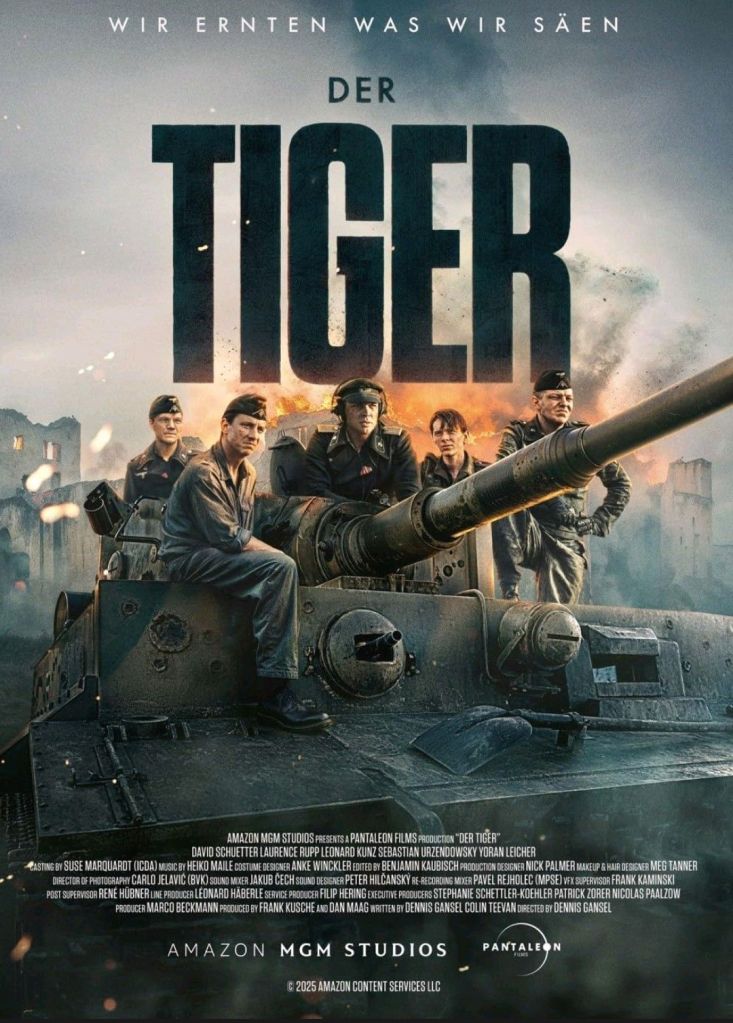
Der Tiger/The Tank
In less than a month after its release, this movie became the most-watched German language film on Amazon Prime. It also created a ton of controversy. Why? Because people don’t get it. They expect a war film, instead they get a speculative piece that touches on all kinds of uncomfortable subjects. They raise the issue of “historical inaccuracy.” In my book, it is a MUST WATCH. Find out why here.
Über Galgen wächst kein Gras
This documentary comes with implications that far outlive the Second World War. Based largely on the 1946 trials for the alleged Malmedy Massacre, it calls into question imprisonment and interrogation methods used by the US Army–and doesn’t hesitate to suggest that the things done to the 74 men accused set a standard for future behavior in places like Vietnam, Abu Ghraib and Guantanamo Bay.
Again, I have not included any speeches or files I’ve accessed from internet archives, but those primary sources are also important to my work.
Follow me on Goodreads as well, although I can’t guarantee my records there are as comprehensive as this page.

 Aubrey Taylor Books